
Adelaide: The Most Underrated Migrant City in Australia
Nobody puts Adelaide first. It's the city that comes up after you've already talked about Sydney, Melbourne, Brisbane, and Perth — the afterthought capital, the one people add to the list to be thorough. That reputation is genuinely unfair, and the people who've worked it out are living in a city with the lowest cost of living of any Australian capital, a Mediterranean climate, a world-class wine region twenty minutes from the CBD, and a defence and technology sector growing faster than most people outside South Australia realise. This is the honest 2026 guide — including the real weaknesses, because there are some.
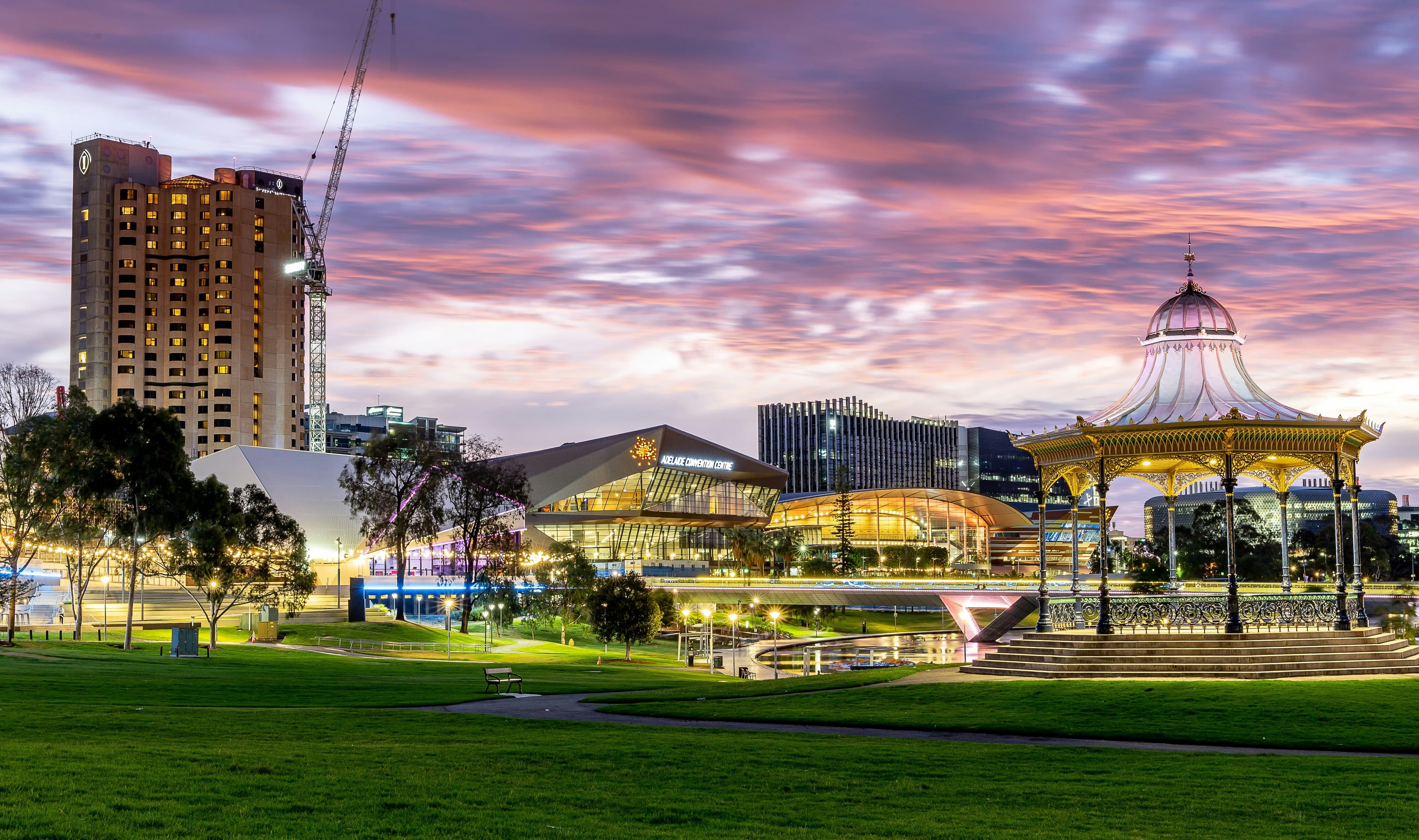
Adelaide has a population of approximately 1.4 million — large enough to function as a complete city with all the infrastructure, dining, culture, and employment you'd expect, but small enough that commutes are short, crowds are manageable, and the pace of daily life is genuinely different from what you experience in Sydney or Melbourne. The city sits on a coastal plain between the Mount Lofty Ranges and the Gulf St Vincent — geographically compact, logistically sensible, and surrounded by some of the most productive agricultural and wine-producing land in Australia.
The honest summary: Adelaide is a city for people who've stopped optimising for status and started optimising for quality of life. If those two things have always been the same to you, move on to the next city. If the distinction makes sense, read on.
The Number That Makes People Pay Attention
In Sydney, a salary of AUD $100,000 leaves most single people with approximately $1,000–$1,200 in monthly savings after rent, transport, groceries, and basic lifestyle costs. In Adelaide, a salary of $85,000 — noticeably lower — leaves the same person with $2,000 or more per month. The lower salary produces higher savings because the rent difference between the two cities swamps the wage difference.
This is the single most useful fact about Adelaide for anyone making a city decision based on financial outcomes. The wages are lower — that is real and worth acknowledging. But the costs are lower by a larger margin, and the net result is that Adelaide consistently produces better savings rates than Sydney or Melbourne for people on mid-range incomes.
Cost of Living: The Real Numbers
| Category | Adelaide | Sydney | Difference |
|---|---|---|---|
| Share house room (inner) | $190–$290 pw | $380–$450 pw | Approx. 40% cheaper |
| 1-bed apartment (inner) | $350–$480 pw | $600–$780 pw | Approx. 35% cheaper |
| 2-bed apartment (inner) | $450–$600 pw | $800–$1,000 pw | Approx. 40% cheaper |
| Groceries (weekly, solo) | $85–$115 | $85–$120 | Broadly similar |
| Public transport (monthly) | Approx. $120 | Approx. $200 | Approx. 40% cheaper |
| Dining out (casual dinner) | $20–$32 | $25–$45 | Slightly cheaper |
One caveat worth noting: Adelaide's grocery prices sit approximately 5–6% above the national average according to recent ABS data — a quirk of the city's logistics costs as a distribution endpoint rather than a hub. This is more than offset by the rent savings, but it's worth knowing if you were expecting groceries to be significantly cheaper than in Sydney. They aren't — they're comparable, maybe very slightly higher. The rent is where the real savings come from.
💡 Adelaide's rental market has tightened — but it's still the most affordable capital Adelaide's rental prices rose approximately 5–6% in the past year, and the days of finding inner-city accommodation for $150–$180 per week are gone. The median weekly rent for a unit now sits around $528. Despite this increase, Adelaide remains the most affordable Australian capital city for renters — the gap between Adelaide and Sydney is still $150–$200 per week for equivalent properties, which is $600–$800 per month, which is $7,200–$9,600 per year. Even after the recent rent increases, Adelaide's affordability advantage over the eastern capitals is substantial.
The Job Market: Defence, Healthcare, and a Growing Tech Sector
Adelaide's job market has a reputation — somewhat outdated — for being limited and underpowered compared to the eastern capitals. The reality in 2026 is more nuanced, and for specific industries, Adelaide's job market is genuinely strong.
Defence: Adelaide's Hidden Economic Engine
South Australia hosts approximately 40% of Australia's defence industry — the largest concentration in the country. The Australian Submarine Agency, the Future Submarine Program (now the AUKUS nuclear-powered submarine program), BAE Systems' Hunter class frigate construction at Osborne Naval Shipyard, and a cluster of defence electronics and aerospace companies have created an engineering and skilled trades job market in Adelaide that most people outside the industry don't know exists.
The AUKUS submarine program alone is projected to sustain tens of thousands of jobs in South Australia over the coming decades — a pipeline of defence employment that is geographically locked to Adelaide and has no equivalent in any other Australian city. For engineers, naval architects, systems integrators, IT security specialists, and skilled tradespeople willing to work in the defence sector, Adelaide's outlook is stronger than its general reputation suggests.
Healthcare: Consistent and Growing
Adelaide has a strong healthcare employment base anchored by the Royal Adelaide Hospital — one of Australia's largest and most modern public hospitals, opened in 2017 — and a cluster of specialist hospitals, research institutes, and aged care facilities. Nursing, allied health, and healthcare support roles are consistently available, and South Australia's state government has been active in recruiting internationally for healthcare positions.
Wine, Agriculture, and Food Manufacturing
The Barossa Valley, McLaren Vale, Clare Valley, and Adelaide Hills wine regions — all within 45–90 minutes of the city — are among the most productive wine regions in the world. The agricultural and food manufacturing industries that surround Adelaide create consistent employment in logistics, processing, viticulture, and agribusiness that simply doesn't exist at the same scale near Sydney or Melbourne. For people with backgrounds in agriculture, food science, or logistics, South Australia's food and wine sector is worth investigating.
| Field | Adelaide Job Market | Outlook |
|---|---|---|
| Defence / Naval engineering | Strong — AUKUS pipeline for decades | Excellent long-term |
| Healthcare / Nursing | Consistent — large public hospital system | Stable and growing |
| Construction / Trades | Moderate — growing with defence infrastructure | Positive |
| Wine / Agriculture / Food | Good — unique to SA's regional economy | Stable |
| Education / Research | Moderate — University of Adelaide, UniSA | Stable |
| Finance / Banking | Limited — most senior roles in Sydney | Flat |
| Tech / Software | Growing but smaller than eastern capitals | Improving |
⚠️ Adelaide's wages are lower — this is real and worth factoring in The median full-time salary in Adelaide sits approximately 10–15% below Sydney and Melbourne. For most industries, Adelaide employers pay less than their eastern capital counterparts for equivalent roles. This is partly offset by the cost of living advantage — and as shown above, the net savings rate often favours Adelaide despite the lower wages. But if you're in a field where the highest-paying roles in Australia are concentrated in Sydney (investment banking, senior tech, media), Adelaide's wage ceiling is genuinely lower. Know your industry before making the decision.
Climate: Mediterranean and Genuinely Excellent
Adelaide's climate is one of its strongest selling points and one of its least-marketed. The city has a classic Mediterranean climate — hot, dry summers, mild winters, and more than 300 days of sunshine per year. It is the driest Australian capital city, which means lower humidity than Brisbane or Sydney in summer and less rain than Melbourne throughout the year.
The trade-off is genuine summer heat. Adelaide regularly reaches 40°C+ in January and February, and extreme heat events — several consecutive days above 40°C — occur most summers. Air conditioning is not optional in an Adelaide summer; it is a utility cost you need to budget for. The heat is dry rather than humid, which most people find more manageable than Brisbane's subtropical summer, but at 42°C it is 42°C regardless of humidity.
Adelaide's winters are mild by Australian standards — average temperatures of 8–15°C, occasional rain, no frost in the city itself. Coming from Melbourne or Canberra, Adelaide's winters feel genuinely pleasant. Coming from Southeast Asia or equatorial Africa, they may require a coat you haven't needed before. The spring and autumn seasons are exceptional — warm, clear, and long — and widely regarded as the best weather of any Australian capital city during those months.
Lifestyle: The Wine Region City
Adelaide's lifestyle advantage over other Australian cities is difficult to quantify but consistently reported by people who've lived there. The combination of a compact city that takes 25–30 minutes to cross by car, world-class wine regions within an hour, beaches along the Gulf St Vincent, and national parks in the Adelaide Hills creates a quality of outdoor life that larger cities can't replicate at the same proximity.
The Barossa Valley — one of the world's great wine regions, home to Penfolds Grange and dozens of other internationally recognised producers — is 75 minutes from the CBD. McLaren Vale is 40 minutes. The Adelaide Hills, with their cool-climate wines, artisan food producers, and hiking trails, are 25 minutes. For people who enjoy wine, food, and regional weekend escapes, Adelaide's geography is exceptional.
Adelaide also has a genuine food culture that is underappreciated nationally. The Central Market — one of the largest covered fresh produce markets in the Southern Hemisphere — has been operating in the city since 1869 and remains a genuine daily shopping destination rather than a tourist attraction. The restaurant scene is strong, informed by the food and wine culture that surrounds the city, and significantly more affordable than equivalent dining in Sydney or Melbourne.
The Festival City: More Cultural Events Than Its Size Suggests
Adelaide has a cultural event calendar that punches above its weight for a city of 1.4 million. The Adelaide Festival and Adelaide Fringe — held annually in February and March — together constitute one of the largest arts festival events in the Southern Hemisphere, attracting international performers, artists, and audiences. WOMADelaide brings world music to Botanic Park each March. The Clipsal 500 (now the Adelaide 500) brings the motorsport audience. The Adelaide Oval — one of the most beautiful cricket grounds in the world — hosts Test cricket, AFL, and major concerts.
None of this makes Adelaide equivalent to Melbourne for cultural density throughout the year. But it does mean the assumption that Adelaide is culturally barren is wrong — it has a concentrated festival culture that creates a few extraordinary months each year rather than the year-round programming of a larger city.
Visa Pathways: South Australia State Nomination
South Australia operates an active state nomination program — the South Australian Skilled and Business Migration Program — for subclass 190 (State Nominated) and subclass 491 (Regional Skilled Work) visas. SA nomination has historically prioritised healthcare, engineering, trades, and agriculture roles that align with the state's economic needs.
For skilled migrants whose occupation appears on SA's occupation list, the state nomination pathway through South Australia can be faster and less competitive than NSW or VIC nomination for certain roles. The nomination requirement to live and work in South Australia is actively monitored and enforced — Adelaide is the base, and regional SA is available for 491 pathway nominees willing to live outside the capital.
Working Holiday Makers: An Honest Assessment
Adelaide is not a traditional working holiday hub — it doesn't have the backpacker density of Sydney or Melbourne, and the casual hospitality and retail job market is smaller simply because the city is smaller. That said, the lower cost of living means a working holiday maker's savings rate on a standard hospitality or retail wage is genuinely better in Adelaide than in Sydney, and the city's smaller scale means less competition for available work.
For working holiday makers completing the 88-day regional work requirement for a second-year visa, South Australia's regional areas — the Barossa Valley, Clare Valley, Riverland, and Fleurieu Peninsula — offer seasonal agricultural, viticultural, and hospitality work that qualifies. The proximity of these regions to Adelaide (45–90 minutes) means it's possible to base yourself in the city and travel to regional work rather than relocating entirely.
I came to Adelaide because a nursing job came up and I couldn't afford Sydney anymore. Two years later I own a car, I've been to the Barossa Valley more times than I can count, and I'm genuinely saving money for the first time since I arrived in Australia. I tell everyone to consider it. Nobody believes me until they visit.
The Honest Weaknesses
Adelaide's weaknesses deserve honest coverage, not dismissal.
The job market's ceiling is lower than Sydney or Melbourne. If you're targeting the most senior roles in finance, media, tech, or creative industries — the roles where Sydney pays $200,000+ and Melbourne pays $160,000+ — those roles are thinner or absent in Adelaide. The city's economy is strong but specialised, and career ambitions that require the density of a top-tier financial or media capital will hit a ceiling in Adelaide that they wouldn't hit in Sydney.
The social scene has the characteristics of a city of 1.4 million — it's complete, it's good, and it closes earlier and gets quieter than you might be used to if you're coming from a major European city or Sydney. The nightlife is not Adelaide's strength. The restaurant scene is strong; the late-night culture is modest.
Interstate and international travel is more expensive than from the eastern capitals. Flights from Adelaide to Melbourne and Sydney are competitive, but the range of direct international routes is more limited than from Sydney or Melbourne. If frequent international travel is part of your life, Adelaide adds cost and connection complexity that Perth shares.
The Honest Verdict: Who Adelaide Is For
| Adelaide is a strong choice if you: | Adelaide may not suit you if you: |
|---|---|
| Want the lowest cost of living of any Australian capital | Need the highest-paying roles in finance or tech |
| Work in healthcare, defence, or trades | Depend on dense nightlife and late-night culture |
| Love wine, food, and accessible regional escapes | Travel internationally very frequently |
| Want a short commute and a manageable city scale | Need the energy of a large, dense city to feel motivated |
| Are targeting SA state nomination for PR | Are a WHM without a specific job — smaller casual market |
| Want to actually buy a house in Australia one day | Work in media, advertising, or creative industries |
The Bottom Line
Adelaide is the city that rewards people who've stopped caring what other people think of their city choice. It doesn't have Sydney's harbour or Melbourne's laneway bars. It also doesn't have their rent, their commute times, or their cost of a flat white on a Tuesday morning.
For healthcare workers, defence engineers, tradespeople, and anyone who's realised that a lower salary with a lower cost of living can produce better outcomes than a higher salary in an expensive city — Adelaide makes a compelling case. The wine region is real, the climate is real, the savings rate is real, and the lifestyle is genuinely good in a way that doesn't require a large budget to access.
The people who dismiss Adelaide have usually never lived there. The people who've lived there are often the last to leave.
Explore careers in South Australia
Search 1,020 Australian occupations — salary ranges, shortage ratings, and visa pathways in one place.
Explore Australian Careers →