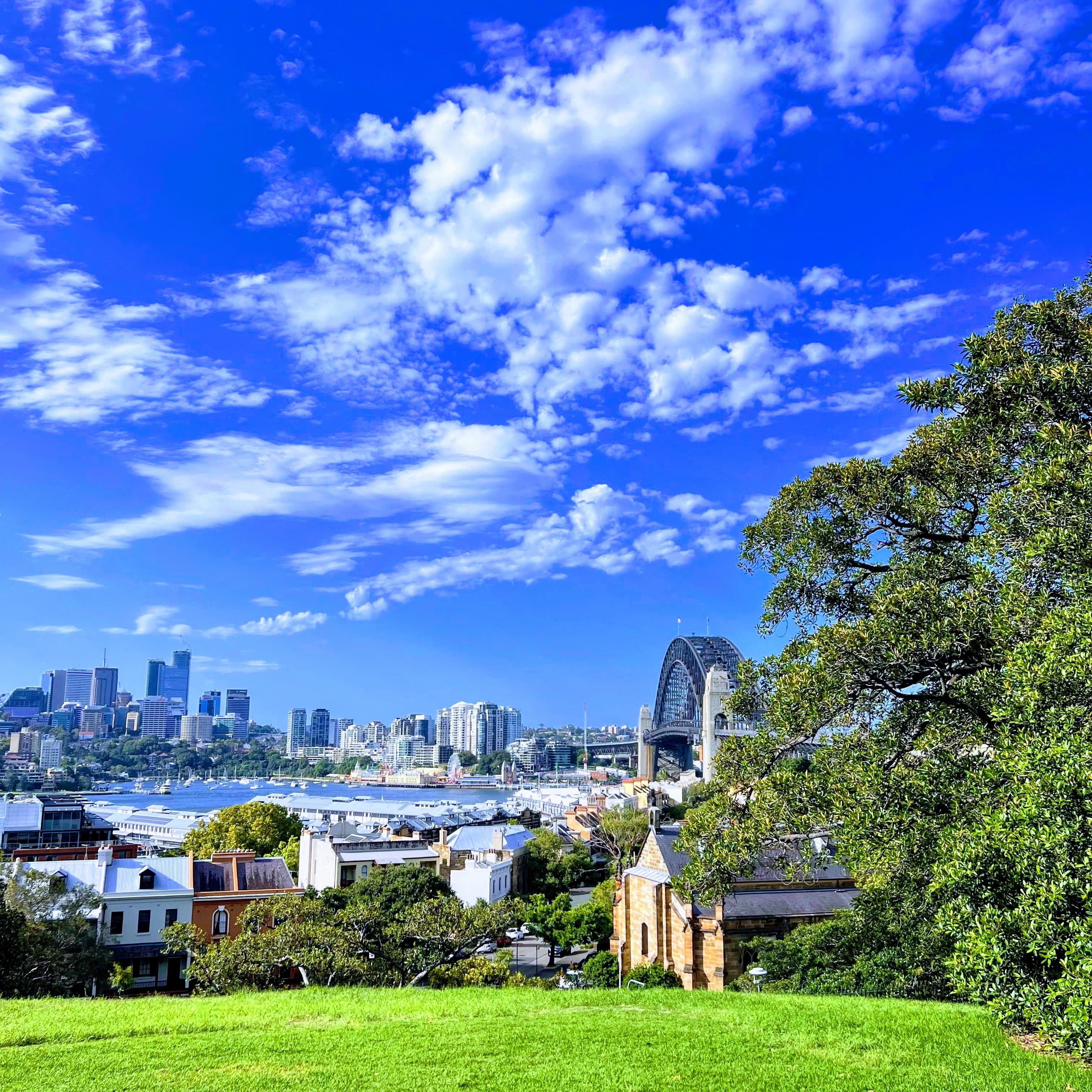
Australia is consistently one of the top three most popular study destinations in the world. It has seven universities in the global top 100, one of the most generous post-study work visa systems among English-speaking countries, and a minimum wage of AUD $24.10 per hour that makes part-time work during study genuinely meaningful. For students from India, Korea, China, Vietnam, and across Southeast Asia, Australia offers something rare: world-class education, a clear and proven path to permanent residency, and a quality of life that ranks among the world's highest.
This guide covers everything — universities, tuition, living costs, visa requirements, work rights, scholarships, and the most direct path from graduation to permanent residency. All figures are updated for 2026.
Why international students choose Australia
Australia is not the cheapest option. Tuition is higher than Canada or Ireland, and Sydney and Melbourne are genuinely expensive cities. The case for Australia rests on a different set of factors.
Post-study work rights are among the most generous in the world. Graduates of Group of Eight universities receive a four-year work visa — the subclass 485. That is four years of full Australian work rights with no employer sponsorship and no minimum salary requirement. The UK offers two years. Ireland offers one to two. Canada offers up to three years but with location and program restrictions. For students planning to work toward permanent residency, Australia's extra time is decisive.
Permanent residency pathways are real and well-documented. Australia's points-based immigration system — SkillSelect — gives genuine weight to Australian study and Australian work experience. Many fields in global demand (nursing, engineering, accounting, IT, teaching, social work) are on Australia's skilled occupation lists. The pathway from graduation to a 485 visa to state nomination to permanent residency is a documented route used by thousands of graduates every year. It is not guaranteed — but it is achievable in a way that the UK or USA simply is not for most international graduates.
Wages are genuinely high. Australia's minimum wage of AUD $24.10 per hour is the equivalent of roughly €14, £12, or ₩22,000. Part-time work during semester covers a meaningful portion of living costs. Graduate salaries for in-demand fields are competitive with the UK and meaningfully higher than Ireland or Canada in nominal terms.
University rankings are strong. Eight Australian universities sit in the global top 100. The University of Melbourne ranks #13 globally. Three Australian universities are in the top 20. For students from countries where employer brand recognition matters — South Korea, India, China — Group of Eight credentials carry weight both at home and internationally.
English is the language of instruction everywhere. Unlike Canada (bilingual), the UK (with its geographic spread and cultural particularities), or the US (with its cost and visa complexity), Australia offers a single language environment. International students from Asia consistently rate Australia as culturally accessible and relatively easy to integrate into.
Australia's top universities: the Group of Eight
The Group of Eight is Australia's coalition of leading research universities. Every Go8 university ranks in the global top 100, and Go8 graduation unlocks the four-year 485 post-study work visa — one of the most important factors in the university decision for students planning to stay.
| University | QS 2026 | City | Strongest Fields |
|---|---|---|---|
| University of Melbourne | #13 | Melbourne, VIC | Medicine, Law, Business, Engineering |
| University of Sydney | #18 | Sydney, NSW | Medicine, Architecture, Arts, Business |
| UNSW Sydney | #19 | Sydney, NSW | Engineering, Business, Law, IT |
| ANU | #30 | Canberra, ACT | Politics, Sciences, International Relations |
| Monash University | #36 | Melbourne, VIC | Pharmacy, Nursing, Engineering, Business |
| University of Queensland | #40 | Brisbane, QLD | Veterinary Science, Mining, Business |
| UWA | #72 | Perth, WA | Mining, Marine Science, Agriculture |
| Adelaide University | #82 | Adelaide, SA | Medicine, Engineering, Agriculture |
ℹ️ The Go8 visa advantage — 4 years vs 2
Graduating from any Group of Eight university unlocks the 4-year post-study work visa (subclass 485), compared to 2 years for standard metropolitan non-Go8 graduates. Over a residency application, that extra time — more Australian work experience, more time to secure state nomination — can change the entire outcome. If permanent residency is part of your plan, Go8 status should be a significant factor in your university decision, not an afterthought.
Beyond the Go8, Australia has 35 additional universities that offer strong programs at lower price points. RMIT University (Melbourne) is particularly well-regarded for design, architecture, and engineering. University of Technology Sydney (UTS) produces strong employment outcomes in IT and business. Griffith University (Brisbane and Gold Coast) has one of Australia's best law programs outside the Go8 and a growing health sciences faculty.
How much does it cost to study in Australia?
Tuition fees by field
International student tuition in Australia is set by each university independently. The figures below are annual rates for 2026 intakes. Go8 universities typically sit at the top of each range; non-Go8 universities are 15–25% lower for comparable programs.
| Field of Study | Annual Tuition (AUD) |
|---|---|
| Arts / Humanities | $28,000 – $38,000 |
| Business / Commerce | $33,000 – $48,000 |
| Computer Science / IT | $33,000 – $48,000 |
| Engineering | $35,000 – $50,000 |
| Nursing / Allied Health | $28,000 – $40,000 |
| Law | $35,000 – $52,000 |
| Science | $30,000 – $46,000 |
| Medicine (MBBS) | $65,000 – $95,000 |
Medicine is a separate category: places are extremely limited for international students and the cost reflects that scarcity. For most fields, total tuition for a two-year master's program runs AUD $66,000–$100,000. A three-year bachelor's degree runs AUD $84,000–$150,000.
Living costs by city
Where you live is the biggest variable in your total cost of studying in Australia. Rent is the dominant expense, and it varies enormously between cities.
| City | Rent (shared room) | Monthly Total | Notes |
|---|---|---|---|
| Sydney | $300–$450/wk | $3,200–$4,200 | Most expensive; best finance and tech jobs |
| Melbourne | $230–$370/wk | $2,900–$3,700 | Student-friendly; strong hospitality work |
| Brisbane | $220–$340/wk | $2,600–$3,400 | Fastest growing; solid affordability |
| Perth | $240–$360/wk | $2,700–$3,500 | High wages in resources offset living costs |
| Adelaide | $190–$290/wk | $2,400–$3,100 | Most affordable major city; accessible SA nomination |
Monthly totals include rent, groceries, transport, utilities, and modest dining. They assume shared accommodation, which is the norm for most international students.
⚠️ Budget for bond before you arrive
When you sign a lease in Australia, you pay four weeks' bond upfront plus two weeks' rent in advance. On a Melbourne share house at AUD $300/week, that is AUD $1,800 before you have spent a single night. Budget AUD $3,000–$5,000 for your first-month setup costs — separate from your ongoing monthly budget. This amount is not included in most published cost estimates and surprises almost everyone arriving for the first time.
Financial proof required for the student visa
To apply for an Australian student visa, you must demonstrate you can cover:
- AUD $24,505 for your own living costs per year (the current threshold set by Home Affairs)
- Your full annual tuition fee
- Travel costs to and from Australia
- School costs for any accompanying dependants
For a typical one-year master's program at AUD $40,000 tuition, you would need to demonstrate approximately AUD $65,000 in accessible liquid funds. Credit card limits do not count. Bank statements are the standard proof; parent guarantees and term deposits are also accepted.
The student visa (subclass 500)
Every international student studying a CRICOS-registered course in Australia needs a Student visa (subclass 500). This covers full-degree programs and courses longer than three months.
Key requirements:
- Confirmation of Enrolment (CoE) from your institution — issued after you accept your offer and pay the deposit
- Genuine Temporary Entrant (GTE) statement — a brief written explanation of why you intend to return home after study
- English language test score (IELTS, PTE Academic, TOEFL iBT, or Cambridge C1)
- Financial evidence covering tuition plus AUD $24,505 living allowance per year
- Overseas Student Health Cover (OSHC) — mandatory health insurance, approximately AUD $600–$700/year
- AUD $1,600 visa application fee (2026)
Processing time: 4–8 weeks for most nationalities. Apply at least 12 weeks before your course start date. Apply online through ImmiAccount on the Australian Home Affairs website.
English for the visa itself: Home Affairs typically accepts IELTS 5.5 overall for the visa application. Your university will have its own, higher English requirements — usually 6.5 overall — which you must meet before receiving your CoE.
⚠️ OSHC is mandatory — it is not optional insurance
Overseas Student Health Cover is legally required for the full duration of your student visa. You cannot lodge a visa application without it, and your visa can be cancelled if it lapses. The cost is approximately AUD $600–$700 per year for a single student. Factor this into your total budget from day one.
Work rights while studying
International students on a Student visa (subclass 500) can work up to 48 hours per fortnight during the semester. During scheduled course breaks — summer, winter, and mid-semester breaks — there is no work hours limit.
At AUD $24.10/hour minimum wage, 48 hours per fortnight is approximately AUD $576 per week gross before tax. In practical terms this covers groceries, transport, and a meaningful share of rent in most cities.
Hospitality, retail, and warehouse work are the most common sectors for international students in their first year. Melbourne and Sydney have the largest hospitality sectors; Brisbane and Perth have significant warehouse and logistics work.
Tax: You will need a Tax File Number (TFN), applied for online through the ATO website after arriving. Tax is withheld automatically from your pay. Most students working part-time are entitled to a tax refund when they file at the end of the financial year (July–October). Keep your payslips and group certificates.
Post-study work visa (subclass 485)
This is the most important visa to understand when evaluating Australia as a study destination. The Temporary Graduate visa (subclass 485) allows graduates to live and work in Australia after completing their degree — with unrestricted work rights, no employer sponsorship, and no minimum salary threshold.
Duration depends on degree level, study location, and whether you attended a Group of Eight university:
| Degree Level | Metro Non-Go8 | Regional Study | Go8 University |
|---|---|---|---|
| Bachelor's degree | 2 years | 3 years | 4 years |
| Graduate certificate / diploma | 2 years | 3 years | — |
| Master's (coursework) | 2 years | 3 years | 4 years |
| Master's (research) | 3 years | 4 years | 4 years |
| PhD | 4 years | 4 years | 4 years |
The Go8 differential is significant. A standard bachelor's from Melbourne or UNSW gives four years on the 485 versus two years from a comparable non-Go8 metropolitan university. Those two extra years — spent working in your field, building Australian work experience, building a points score — are often the difference between a state nomination and a missed invitation round.
Cost: AUD $1,895 application fee (2026). Apply within six months of receiving your final academic results.
For a complete breakdown of 485 requirements, eligible occupations, and state-specific advice, see our dedicated guide: Australia 485 Post-Study Visa: Complete Guide 2026.
Pathway to permanent residency
Australia's PR system is points-based and genuinely accessible for university-educated professionals in shortage occupations. The standard pathway for international graduates:
- Graduate with an Australian degree — eligible for the 485 visa
- Work in your field on the 485 for one to three years, building Australian work experience and skill assessment eligibility
- Skills assessment by the relevant authority for your occupation (Engineers Australia, CPA Australia, AHPRA for healthcare, VETASSESS for others)
- Submit an Expression of Interest (EOI) through SkillSelect with your points total
- Receive a state nomination (subclass 190) or Skilled Independent invitation (subclass 189)
- Apply for PR — processing typically takes 6–12 months from invitation
Occupations receiving regular state nominations for international graduates include: registered nurses, civil and structural engineers, software engineers, accountants, social workers, early childhood teachers, occupational therapists, and pharmacists.
💡 State nomination adds 5 points — and changes outcomes
Being nominated by a state or territory for the subclass 190 adds 5 points to your SkillSelect score. In competitive invitation rounds for popular occupations, 5 points can be the difference between receiving an invitation and not. South Australia, Tasmania, and the Northern Territory have historically had the most accessible nomination programs for recent graduates. State lists open and close regularly — check migration.sa.gov.au, migration.tas.gov.au, and nt.gov.au/migration for current openings.
For a full breakdown of PR pathways, occupation lists, points requirements, and state-by-state nomination details: How to Get PR After Studying in Australia 2026.
Scholarships for international students
Australia's scholarship landscape spans three levels: federal government, university-level merit awards, and research funding.
| Scholarship | Provider | Value | Eligibility |
|---|---|---|---|
| Australia Awards | Australian Government | Full tuition + living stipend + airfares | Students from developing countries in Asia, Pacific, Africa — requires return-home commitment |
| Research Training Program (RTP) | Federal Government | Full tuition waiver + AUD $36,500/year stipend | PhD and research master's students at Australian universities |
| Monash International Merit Scholarship | Monash University | AUD $15,000/year, full degree | All qualifying international undergraduates — awarded automatically, no separate application |
| Adelaide Academic Excellence Scholarship | Adelaide University | 50% tuition reduction, full degree | Students with strong academic records — separate application required |
| Go8 Merit Scholarships | Individual universities | 10–30% tuition reduction | Varies by university and program |
The Australia Awards are the most valuable and the most competitive. They are specifically aimed at students from developing countries and require applicants to commit to returning home after study. Applications typically open 12–18 months before the intake date.
For students from South Korea, China, or high-income countries in Southeast Asia, university merit scholarships are the most accessible funding source. These are worth researching on each university's international admissions page. Monash's automatic AUD $15,000/year scholarship for qualifying undergraduates is particularly notable — it requires no separate application.
For a full list of available funding: Best Scholarships for International Students in Australia 2026.
English language requirements
Australian universities require proof of English proficiency for all international students. Requirements vary by university and program level.
| Level | IELTS Overall | IELTS Min Band | PTE Academic | Typical Programs |
|---|---|---|---|---|
| Standard undergraduate | 6.5 | 6.0 | 58 | Most bachelor's programs |
| Standard postgraduate | 6.5–7.0 | 6.0–6.5 | 58–65 | Most master's programs |
| Competitive Go8 programs | 7.0 | 6.5 | 65 | Law, Medicine, MBA, top engineering |
| English pathway entry | 5.5 | 5.0 | 42 | Foundation or EAP program |
PTE Academic is increasingly preferred by Australian universities and is generally faster than IELTS — results in 48 hours versus two weeks for IELTS. Many students who have found IELTS difficult to crack with repeated attempts find PTE more predictable in its scoring. TOEFL iBT (minimum 79–93) and Cambridge C1 Advanced are also accepted at most institutions.
💡 English pathway programs as a fallback
If your current IELTS score falls below the direct entry requirement, most Australian universities offer English Academic Preparation (EAP) or foundation English programs that bridge you into your degree. These run 10–20 weeks and typically take students from IELTS 5.5 to the required 6.5. Cost: AUD $8,000–$15,000. If your score is borderline, weigh the cost of an EAP program against the cost of another month of IELTS preparation — both routes are valid depending on how far below the threshold you are.
Choosing your city
The city you study in shapes your experience more than almost any other decision — cost, job availability, community, and PR pathway all vary significantly.
| City | Best For | Community | PR Advantage |
|---|---|---|---|
| Sydney | Finance, tech, media | Large Korean, Indian, Chinese communities | No specific advantage; most competitive job market |
| Melbourne | Healthcare, education, arts | Strong Korean, Chinese, Indian communities | VIC nomination open in health and engineering |
| Brisbane | Engineering, construction, trades | Growing; active Korean and Indian community | QLD nomination active in trades and engineering |
| Perth | Mining, resources, engineering | Smaller but active; high WA wages | WA nomination active for resources sector roles |
| Adelaide | Healthcare, education, international students | Accessible, welcoming | SA nomination consistently among most accessible for graduates |
Melbourne vs Sydney is the most common decision point. Sydney salaries in finance and tech average slightly higher in nominal terms. Melbourne is consistently 15–20% cheaper for rent and living, has a stronger arts and hospitality culture, and international students in surveys report higher overall satisfaction. For most fields, the career outcome difference between the two cities is negligible. The cost-of-living difference is real.
Adelaide deserves specific attention for students with PR in mind. South Australia's nomination scheme has been among the most accessible in Australia for graduates in health, engineering, and education. Adelaide University's January 2026 merger to Group of Eight status means graduates now receive the 4-year 485 visa from Australia's most affordable major city — an unusually good combination.
Most in-demand study fields
International students in Australia concentrate heavily in a small number of fields. This affects job competition after graduation, scholarship availability, and PR pathway accessibility.
Fields with the strongest PR outcomes:
- Nursing and midwifery — AHPRA registration, on shortage lists in every state
- Civil and structural engineering — Engineers Australia assessed, strong nomination access
- Accounting — CPA/CA ANZ pathway, commercial demand, nomination in most states
- Social work — AASW accreditation, genuine shortage in most states and regions
- Allied health (occupational therapy, speech pathology, physiotherapy) — AHPRA registered, high regional demand
High-enrolment fields, competitive job market:
- Business and MBA — large international cohort, competitive employment market
- Computer science and IT — strong graduate salary but very competitive job market in 2025–26, particularly for junior roles
- Architecture — long accreditation pathway; more niche demand
Lower-enrolment fields with strong career outcomes:
- Veterinary science (UQ is ranked world #1; strong global shortage)
- Pharmacy (AHPRA registered, reliable nomination)
- Radiation therapy and nuclear medicine (acute shortage; see our Radiographer in Australia guide)
Australia vs other English-speaking destinations: the honest comparison
| Factor | Australia | Canada | UK | Ireland |
|---|---|---|---|---|
| Tuition (annual) | AUD $28K–$50K | CAD $25K–$35K | £18K–£38K | €10K–€25K |
| Post-study work visa | 2–4 years | Up to 3 years | 2 years | 1–2 years |
| PR speed | Moderate (2–4 yrs) | Fast (Express Entry) | Slow, difficult | EU access only |
| Min. wage | AUD $24.10/hr | CAD $15–$17/hr | £11.44/hr | €13.50/hr |
| Cost of living | High (city-dependent) | High (Toronto/Vancouver) | Very high (London) | High (Dublin) |
Australia's primary advantages are long post-study work rights, high wages during study, and a genuinely accessible points-based PR system for skilled occupations. Canada's main advantage is the fastest PR pathway globally through Express Entry — some applicants achieve PR within 12 months of graduating. The UK offers brand recognition and proximity to Europe. Ireland offers the lowest tuition in the English-speaking world and EU mobility after graduation.
For a full side-by-side analysis: Australia vs UK vs Canada: Best Country to Study in 2026.
How to apply: step by step
12–18 months before intake:
- Research universities and shortlist 3–5 programs
- Begin IELTS or PTE preparation if your score is not yet at the required level
- Check Australia Awards scholarship deadlines — applications open 12–18 months before intake
6–12 months before intake:
- Apply directly to universities via their international admissions portal, or through a registered education agent
- Respond to conditional offers by submitting IELTS/PTE results and academic transcripts
- Accept unconditional offer and pay the deposit (typically AUD $2,000–$5,000)
- Receive your Confirmation of Enrolment (CoE) — you cannot apply for the visa without this
3–6 months before intake:
- Apply for Student visa (subclass 500) online through ImmiAccount at homeaffairs.gov.au
- Purchase Overseas Student Health Cover (OSHC) — mandatory, cannot be skipped
- Prepare financial evidence: bank statements showing AUD $24,505+ living allowance plus full tuition
1–3 months before intake:
- Book flights — Semester 1 begins in late February; Semester 2 in late July
- Research accommodation: university housing ballots open early and fill fast; private rental requires you to be present in Australia
- Prepare AUD $3,000–$5,000 cash for first rental costs (bond and advance rent)
On arrival:
- Apply for Tax File Number (TFN) at ato.gov.au — do this in your first week
- Open an Australian bank account (CommBank, ANZ, and NAB offer student accounts; Wise and Up are popular digital options)
- Register with your university's international student office
- Attend orientation — university systems, healthcare registration, transport cards
💡 Consider a registered education agent
Australia has a regulated network of registered education agents (REAs) accredited through the QEAC scheme. They guide you through university selection, application preparation, and visa lodgement — at no cost to you, because the university pays the agent commission. For students in Korea, India, China, and Vietnam navigating the application for the first time, working with a QEAC-certified agent significantly reduces errors and processing delays.
Frequently asked questions
Can I bring my family? Yes. Your spouse and dependent children can accompany you on student dependent visas. Your spouse may work 48 hours per fortnight; dependent school-age children can attend Australian state schools — usually at no additional cost.
Is Australia safe for international students? Australia consistently ranks in the global top 10 for personal safety. The Education Services for Overseas Students Act (ESOS Act) provides specific legal protections for international students, including financial guarantees and minimum service standards. Every Australian university has a dedicated international student welfare team.
What are the two main intake dates? February (Semester 1, main intake) and July (Semester 2). Most programs are available at both intakes. For competitive programs, scholarships, and university housing, Semester 1 has more places. Apply 9–12 months before your intended start for the best outcome.
Do I need to get my qualifications assessed before applying? For direct university entry, Australian institutions assess your international qualifications themselves using recognised equivalency frameworks. No separate credential assessment is needed for university admission. A separate skills assessment (through Engineers Australia, CPA Australia, AHPRA, etc.) is required later if you are applying for a skilled migration visa — but not for the university application.
Is IELTS or PTE better for Australian universities? Both are widely accepted. PTE Academic produces results in 48 hours (versus two weeks for IELTS), which matters if you are working to a deadline. Many students who struggle with IELTS find PTE's format more predictable. See our comparison: PTE vs IELTS for Study Abroad 2026.
What is the cost of the student visa? AUD $1,600 for the primary applicant (2026). Add AUD $400–$600 per dependent.
🇦🇺 Compare every Australian university by ROI
See tuition, graduate salary, and payback period for all Australian universities — filterable by field of study and city.
Will your degree actually get you a visa — and PR?
CampCareer scores any major across employment, visa pathway, market demand, AI exposure, and ROI — using verified government and labour-market data. Get your result in about a minute.
This guide is updated for 2026. Tuition fees, visa application charges, and financial thresholds are set by individual universities and the Department of Home Affairs and change annually. Always verify current figures at homeaffairs.gov.au and your chosen university's international admissions page before applying.