
Writing an Australian Resume: Why the Format You Used at Home Won't Work Here
Your resume got you jobs at home. That's evidence it worked — in your home market, for employers who shared your cultural context about what a professional document looks like. In Australia, the format norms are different enough that a resume that served you well in the UK, Korea, France, or Southeast Asia will raise quiet red flags with Australian recruiters — not because your experience is wrong, but because the document itself signals that you don't yet know how things work here. This guide fixes that, section by section.
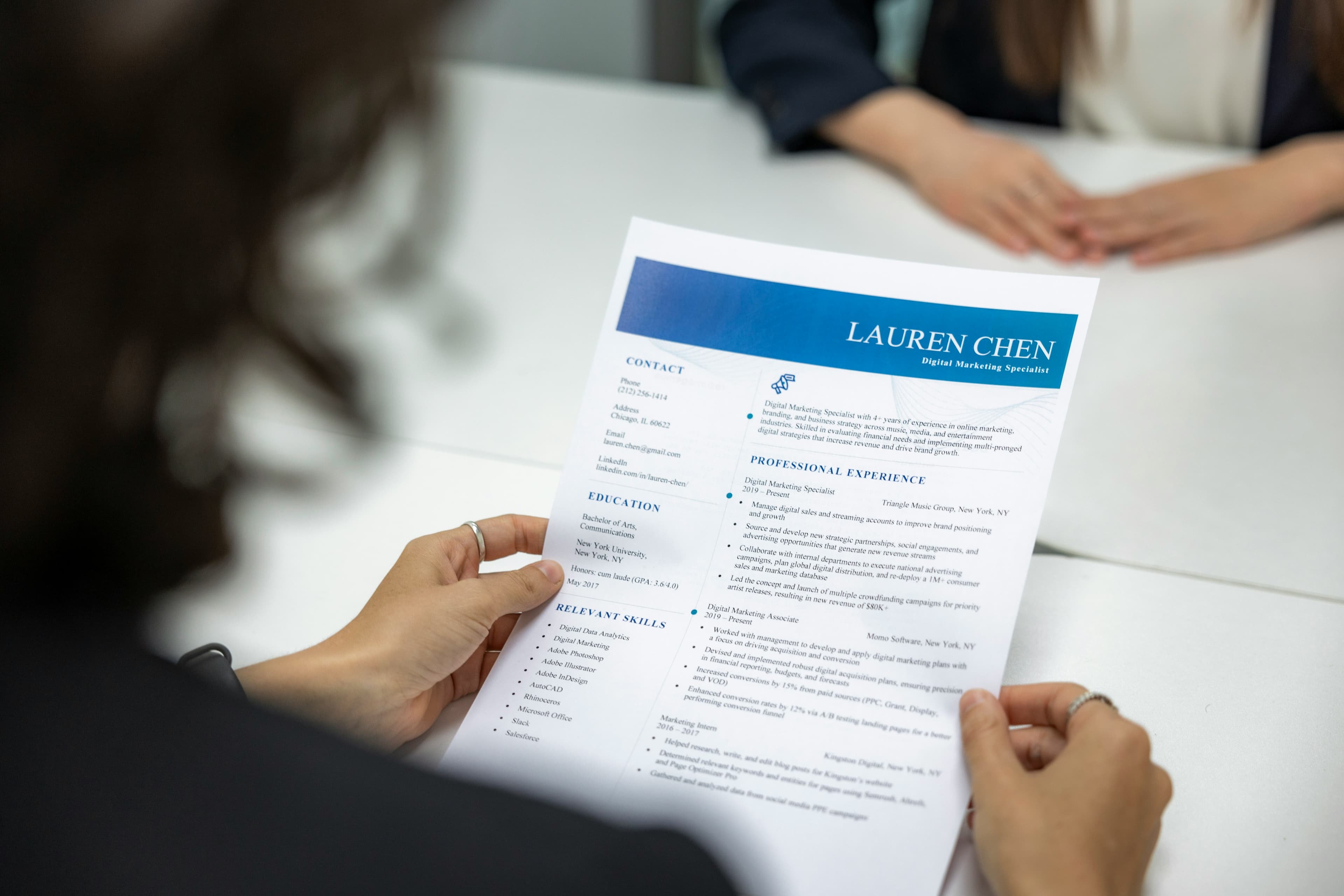
The good news about Australian resume norms is that they are consistent, well-established, and learnable in an afternoon. The bad news is that several of the most common mistakes are invisible to people coming from other professional cultures — you don't know you're making them because in your context, they're correct.
This guide is structured around the specific mistakes that workers arriving from the UK, France, Korea, and Southeast Asia most commonly make — because the wrong thing to include in your resume differs depending on where you're coming from.
The Fundamentals: How an Australian Resume Differs From What You Know
| Feature | Australia | UK / Europe | Korea | Southeast Asia |
|---|---|---|---|---|
| Length | 2–4 pages (experience-dependent) | 2 pages maximum | 1–2 pages (concise) | 2–3 pages |
| Photo | ❌ Never include | ❌ Not typical | ✅ Usually expected | ✅ Often expected |
| Age / Date of birth | ❌ Never include | ❌ Not typical | ✅ Usually included | ✅ Often included |
| Marital status | ❌ Never include | ❌ Not typical | ✅ Often included | ✅ Often included |
| Nationality / Visa status | ✅ Include visa/work rights briefly | Sometimes | Sometimes | Sometimes |
| Referees | ✅ Include 2–3 with full details | "Available on request" | Not always included | Varies |
| Achievements vs. duties | Achievements prioritised | Mix of both | Duties more common | Duties more common |
| Spelling | Australian English (colour, labour) | British English | N/A | Varies |
What to Remove From Your Current Resume First
Before adding anything, remove these items. Including them in an Australian context is not neutral — it actively signals unfamiliarity with Australian hiring norms, and in the case of the photo and personal details, it can expose employers to discrimination risk that many will avoid by simply not shortlisting your application.
- 1
Your photo Remove it completely. In Australia it is illegal for employers to discriminate on the basis of appearance, age, or race — and including a photo puts the employer in the position of having seen information they legally shouldn't be factoring into their decision. Many Australian recruiters and HR teams have a policy of not shortlisting resumes with photos for this reason. If you're coming from Korea, the Philippines, or anywhere that treats a professional headshot as standard, this feels counterintuitive. Remove it anyway.
- 2
Your date of birth, age, and marital status None of these belong on an Australian resume. Age discrimination is illegal under the Age Discrimination Act 2004. Including your date of birth or age signals that you're not aware of Australian norms. Marital status is entirely irrelevant to your professional capability and has no place on the document.
- 3
Your full home address Australian resumes include your suburb and state — enough for an employer to assess commute viability — but not your full street address. "Footscray, VIC" is the correct format. "14 Smith Street, Footscray VIC 3011" is unnecessary and a minor identity security risk.
- 4
"References available on request" This phrase is standard in UK resumes. In Australia it's considered redundant — everyone assumes references are available on request. More importantly, Australian hiring norms expect you to include your referees with full contact details at the end of the resume, not to note that you could provide them if asked. "Available on request" is one of the clearest signals that a resume was prepared for a non-Australian market.
- 5
Objectives statements written in the third person "John is a motivated professional seeking..." — this style, occasionally used in European and Asian resume formats, reads as odd in Australia. The professional summary (if included) should be written in the first person or in concise point form. Keep it to 3–5 sentences maximum.
The Structure of an Australian Resume
Australian resumes follow a consistent structure. The order below is the most widely accepted for experienced professionals. Recent graduates move Education above Work Experience.
- 1
Contact details Full name (large, at the top). Australian phone number. Professional email address. Suburb and state. LinkedIn profile URL (optional but increasingly expected for professional roles). Your visa status and work rights — one line, directly under contact details: "Australian Permanent Resident — full work rights" or "Subclass 482 visa — sponsored by [employer]." Don't bury this. Recruiters need to see it immediately.
- 2
Professional summary (3–5 sentences) A concise paragraph or bullet points summarising your professional identity, key skills, and what you bring to the role. Tailor this to each application — a generic summary that could apply to any job is no better than having no summary. Write it last, after you've tailored the rest of the resume to the specific role.
- 3
Work experience (reverse chronological) Most recent role first. For each role: job title, employer name, location, dates (month and year). Then 4–6 bullet points per role focused on achievements, not duties. This is the section most people get wrong — see the next section for how to write achievements correctly.
- 4
Education Degree, institution, year of completion. For overseas qualifications, add a brief note of the Australian equivalent if it's been assessed: "Bachelor of Engineering (Mechanical) — Seoul National University, 2018. Assessed as equivalent to Australian Bachelor degree by Engineers Australia, 2023."
- 5
Skills A brief, scannable list of technical skills, software proficiencies, languages, and certifications relevant to the role. Not a paragraph — a clean list that an ATS (applicant tracking system) can parse and a recruiter can scan in five seconds.
- 6
Referees — 2 to 3, with full contact details This is the section most different from non-Australian resume formats. Include two or three professional referees at the end of your resume, with: full name, current job title, company, phone number, email, and your relationship ("Direct manager at XYZ, 2021–2024"). Australian employers call referees before or immediately after interviews — not just to verify employment dates, but to ask substantive questions about your performance. Choose people who know your work well and will speak to it specifically.
⚠️ Australian employers call referees before interviews — not after In most countries, reference checks happen after an offer is made or at the final stage of a hiring process. In Australia, many employers call referees immediately after shortlisting — sometimes before the first interview. This means your referees need to be briefed, available, and expecting a call as soon as you submit an application — not as a late-stage formality. Contact each referee before you start applying, confirm they're willing to be contacted, and give them a brief summary of the role you're applying for.
The Achievement vs. Duty Distinction — The Most Important Writing Skill
The single most impactful change most international resume writers need to make is shifting from listing job duties to describing achievements. Australian employers — and the applicant tracking systems that filter resumes before a human sees them — are looking for evidence of impact, not descriptions of responsibility.
The difference is specific and learnable:
| Duty (weak) | Achievement (strong) |
|---|---|
| Responsible for managing the sales team | Led a team of 8 sales representatives, increasing quarterly revenue by 23% over 12 months |
| Managed patient care in the ward | Coordinated care for 12–15 patients per shift, maintaining zero medication errors over 18 months |
| Involved in software development projects | Delivered a Python-based data pipeline that reduced manual reporting time by 6 hours per week |
| Responsible for customer service | Maintained a 4.8/5 customer satisfaction rating over 2 years across 200+ weekly interactions |
| Assisted with budget management | Managed a $2.4M departmental budget, delivering 4% under target for two consecutive financial years |
The formula is simple: action verb + what you did + measurable result. If you genuinely can't quantify a result, describe the scope and impact as specifically as possible. "Trained and onboarded 14 new staff members across three departments" is stronger than "responsible for staff training" even without a percentage attached.
Length: How Long Should It Be?
Australian resume length norms are specific and differ from almost every other professional culture:
| Experience Level | Expected Length |
|---|---|
| Graduate / under 2 years experience | 1–2 pages |
| Mid-career (2–10 years) | 2–3 pages |
| Senior professional (10–20 years) | 3–4 pages |
| Executive / academic | 4–5 pages |
The one-page rule that applies in the US does not apply in Australia. A one-page resume from a professional with ten years of experience will raise questions about what you're leaving out. Conversely, padding a two-year career across four pages with inflated descriptions of minor responsibilities will be seen through immediately. The target is the minimum length needed to demonstrate your capability for the specific role — no more, no less.
Australian English Spelling — Non-Negotiable
Australia uses British English spelling, not American English. This matters because spell-check set to US English will not flag these as errors — but an Australian recruiter will notice them instantly.
| American English ❌ | Australian English ✅ |
|---|---|
| Color, Flavor, Honor | Colour, Flavour, Honour |
| Organize, Recognize, Analyze | Organise, Recognise, Analyse |
| Center, Liter, Fiber | Centre, Litre, Fibre |
| Program (non-tech context) | Programme (non-tech context) |
| Behavior, Labor | Behaviour, Labour |
Set your word processor's language to "English (Australia)" before writing or editing your resume. Run a spell check on the final document with Australian English selected. For Korean and Southeast Asian applicants writing resumes in English for the first time in an Australian context, have a native Australian English speaker review the document before submitting — not just for spelling but for natural phrasing and tone.
The ATS Problem: How Applicant Tracking Systems Filter Resumes
Most Australian employers with more than 20 employees use applicant tracking systems (ATS) to filter applications before a human sees them. An ATS scans your resume for keywords that match the job description, checks the formatting for parsability, and ranks applications before presenting a shortlist to the hiring manager. A beautifully designed resume with graphics, text boxes, and unusual formatting may look impressive to a human but be unreadable to an ATS.
- 1
Use standard formatting — no text boxes, no tables, no graphics ATS systems parse text sequentially. Text inside tables, graphics, or text boxes is often skipped entirely. Use standard paragraph and bullet point formatting throughout. Save as PDF for most applications (PDF preserves formatting) unless the application portal specifically requests a Word document, in which case the portal's own ATS needs the Word format for parsing.
- 2
Mirror the keywords from the job description Read the job advertisement carefully and identify the specific skills, qualifications, and experience they mention. Use the same language in your resume. If the job description says "stakeholder management," your resume should say "stakeholder management" — not "stakeholder liaison" or "client relationship management," which mean roughly the same thing but won't match the ATS keyword scan.
- 3
Use standard section headings "Work Experience," "Education," "Skills," "Referees" — these are the headings ATS systems are configured to recognise. Creative alternatives like "My Journey," "Professional Story," or "Capabilities" may look distinctive but confuse parsing software and end up filed incorrectly or missed entirely.
The Cover Letter: When to Write One and How
Cover letters in Australia occupy a specific and sometimes ambiguous role. For government, professional services, healthcare, and corporate roles, a cover letter is expected and read carefully. For trade, hospitality, and entry-level roles, it's often optional or not read at all. When in doubt, include one — a good cover letter helps; a missing one can hurt.
The Australian cover letter is typically one page — three to four paragraphs. The structure:
- 1
Opening paragraph — specific, not generic "I am writing to apply for the position of..." is the most common opening and the most forgettable. Open with something specific: why this role at this organisation, what you bring that is directly relevant. One or two sentences that demonstrate you've read the job description and thought about the fit.
- 2
Middle paragraphs — two or three specific examples Two or three short paragraphs, each built around a specific example of relevant experience or achievement. Not a summary of your resume — the hiring manager has your resume. The cover letter should add context that the resume doesn't: why you're making this move, what specifically draws you to this organisation, one or two achievements that are directly relevant to the role's key requirements.
- 3
Closing paragraph — confident and brief Express genuine enthusiasm for the role. Mention that you'd welcome the opportunity to discuss your application. Do not beg, over-apologise for any gaps, or include phrases like "I hope you will consider my application" — these read as lacking confidence. Close professionally: "I look forward to the opportunity to discuss how my experience aligns with your needs."
💡 The single most effective cover letter move for international applicants Address your overseas experience directly and briefly — don't leave the recruiter wondering about context. One sentence that frames your international background as a strength rather than a question mark: "Having worked as a registered nurse in the NHS for six years before relocating to Melbourne, I bring both international clinical experience and a specific interest in contributing to Australia's healthcare system." This pre-empts the recruiter's unasked question, demonstrates self-awareness, and reframes your international background as an asset.
My Korean resume had my photo, my date of birth, my university entrance exam score, and two pages of job duties written in formal language. A recruiter in Melbourne told me — very directly, which was itself an adjustment — that it read like a government form. Three days of rewriting later I had a resume that looked Australian. Got my first interview the following week.
The Quick Checklist Before You Submit
- ✓Photo removed
- ✓Date of birth, age, marital status removed
- ✓Visa/work rights status included under contact details
- ✓Suburb and state only (not full street address)
- ✓Work experience in reverse chronological order
- ✓Bullet points describe achievements, not duties, with measurable results
- ✓2–3 referees with full contact details at the end
- ✓Australian English spelling throughout (set spell check to English Australia)
- ✓No text boxes, tables, or graphics that ATS can't parse
- ✓Keywords from the job description mirrored in your resume
- ✓Saved as PDF (unless Word format specifically requested)
- ✓Cover letter tailored to this specific role and organisation
- ✓Referees briefed and expecting to be called
The Bottom Line
An Australian resume is not a difficult document to produce — once you know the rules. The format is consistent, the expectations are clear, and the differences from non-Australian formats are specific and fixable in a single editing session.
Remove the photo. Add the referees. Switch from duties to achievements. Check the spelling. Tailor the keywords. These five changes convert most international resumes into documents that read as professional and prepared to an Australian recruiter — which is the entire point of the exercise.
Your experience got you to Australia. The resume is just the format that presents it correctly in a new context.
Find your Australian career
Search 1,020 Australian occupations — salary ranges, shortage ratings, and visa pathways in one place.
Explore Australian Careers →