
Australian Workplace Culture: What Nobody Warns You About Before Your First Day
Most guides about working in Australia tell you it's "laid-back" and "egalitarian" — and then leave you to figure out what that actually means when you're sitting in your first team meeting, unsure whether to address your manager by their first name, whether to speak up with an opinion, or whether leaving at 5:15pm will be held against you. This guide is for workers arriving from the UK, France, Korea, and Southeast Asia — the four cultural backgrounds that experience Australian workplace culture most differently — with specific, honest explanations of what changes, what doesn't, and what genuinely trips people up in their first months.
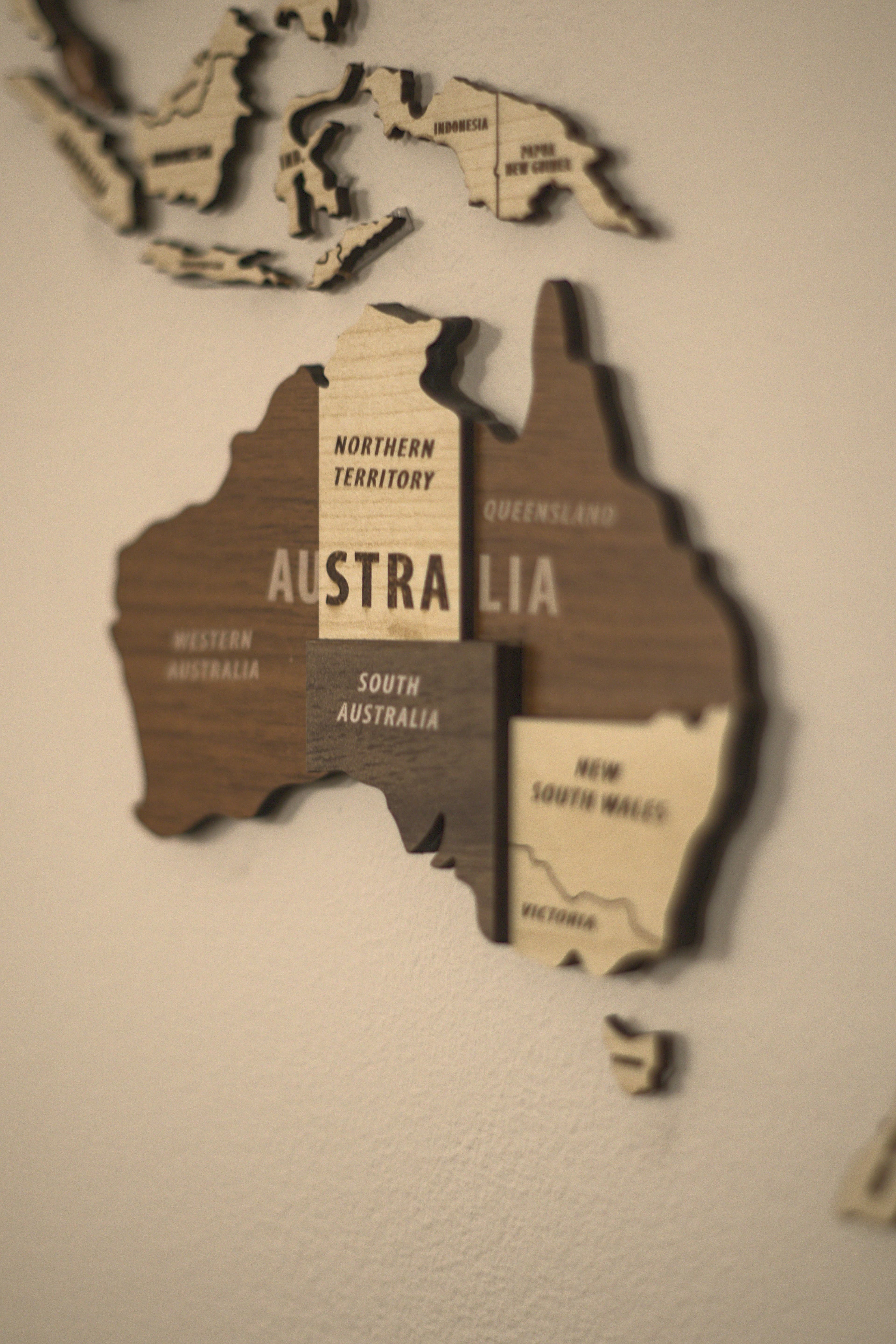
Australian workplace culture has a specific character that is neither the formality of Northern Europe nor the intensity of East Asia nor the hierarchical deference of Southeast Asia. It is its own thing — shaped by a frontier history, a strongly unionised labour tradition, a genuine cultural suspicion of pomposity and status displays, and a climate that has always made the outdoors feel more important than the office.
Understanding it is not about abandoning your own professional values. It's about knowing which of your existing instincts will serve you well in an Australian workplace, which ones will hold you back, and which behaviours — normal and respected in your home country — will be misread here.
The Foundation: What "Flat Hierarchy" Actually Means in Practice
Every guide about Australian workplaces mentions the flat hierarchy. What most of them don't explain is what it means concretely — because it's not just about calling your boss by their first name. It's a set of specific behavioural norms that run through every interaction in an Australian workplace, and they have real consequences if you misread them.
- 1
First names, always — including the CEO In Australian workplaces, virtually everyone is addressed by their first name regardless of seniority. Your manager is "Sarah," not "Ms Johnson." The Managing Director is "David," not "Mr Clarke." Using titles and surnames in a normal office context reads as stiff, overly formal, and slightly odd to Australian colleagues. The first-name norm is not a sign of disrespect toward senior people — it's an explicit cultural signal that status and rank are not supposed to govern how people relate to each other.
- 2
You can go directly to anyone — including senior management In many cultures, raising a concern or question with someone two levels above you in the hierarchy requires going through your direct supervisor first, who then escalates it. In Australian workplaces, going directly to a senior manager — as long as you're professional and respectful — is not considered bypassing the chain of command. It's considered efficient. If you have a question that your direct manager can't answer, you can generally ask the person who can. Waiting for issues to travel up a formal hierarchy frustrates Australian managers who value directness.
- 3
Your opinion is expected — not just tolerated Australian meetings function on the assumption that everyone in the room has something worth contributing, regardless of their seniority. Staying silent throughout a meeting, or only speaking when directly asked, can read as disengaged or unprepared rather than appropriately deferential. If you have a relevant perspective, contributing it — directly and concisely — is not just acceptable. It's expected.
💡 "Tall poppy syndrome" — the cultural concept that explains a lot Australia has a strong cultural norm of cutting down people who appear to think too highly of themselves — what Australians call "tall poppy syndrome." In practice, this means that employees who visibly compete for status, remind people of their credentials, or position themselves as significantly more important than their colleagues are viewed unfavourably — even if they are significantly more senior or qualified. Competence is respected. Displaying competence in a way that implicitly diminishes others is not. This is the same flat hierarchy principle applied in reverse — it's not just about treating superiors like peers, it's about not treating yourself as superior to peers.
If You're Coming from the UK
British and Australian workplace cultures share more than they differ — common language, similar legal frameworks, broadly comparable levels of professional formality in most industries. The differences that do exist are subtle but consistent enough to notice.
British workplace culture tends toward slightly more indirect communication than Australian. The British "that's quite interesting" as a form of polite disagreement, or the tendency to hedge criticism with layers of qualifications, can be misread in an Australian workplace as genuine agreement or indecision. Australians communicate more directly — not rudely, but more plainly. If an Australian colleague thinks your idea has a problem, they're more likely to say "I don't think that'll work because..." than to say "that's a really interesting angle, though one might perhaps consider whether..." Direct feedback is meant constructively, not harshly.
The class-consciousness that subtly shapes British workplace dynamics — the way educational background and accent signal status — is largely absent from Australian workplaces. A tradesperson and a corporate lawyer are genuinely treated as social equals in most Australian contexts, and overt signals of educational or class status are actively counterproductive given the tall poppy dynamic described above.
One genuine adjustment for British workers: the overtime culture. The UK work week can reach up to 48 hours, and working late is often an informal expectation in professional roles. Australian standard hours are 38 per week, and Australian employers generally wouldn't ask workers to do significant overtime and are aware of employee burnout. Leaving at 5pm is not shirking — it is the normal expectation. Staying late consistently without being asked or compensated is, in Australian workplace culture, more likely to raise questions about your efficiency than signal your dedication.
If You're Coming from France
French workplace culture is more formally hierarchical than Australian — titles, seniority, and professional credentials carry more weight in how people relate to each other, and the distinction between professional and personal relationships is maintained more carefully. The French concept of "réserve professionnelle" — a certain professional distance between colleagues, particularly across hierarchical levels — simply doesn't exist in the same form in Australian workplaces.
The adjustment most commonly reported by French workers in Australia is the level of personal informality that Australian colleagues expect. Australians ask about your weekend, your family, your plans, and consider this normal workplace sociability rather than an intrusion on professional boundaries. Participating in this — without necessarily sharing more than you're comfortable with — is part of building the collegial relationships that Australian workplaces function on. A French professional who maintains a careful personal distance can be perceived as cold or difficult, even if they are performing their job excellently.
The direct feedback norm also requires adjustment. French professional culture values a certain intellectual formality in how disagreements are expressed — a structured argument, a careful qualification, a respect for the form of the exchange as well as its content. Australian directness can feel blunt by comparison. It's worth recognising that an Australian colleague who says "I disagree with that approach" in a meeting is not being rude — they're participating in the kind of open, direct dialogue that Australian workplaces actively encourage.
One area where French and Australian workplace cultures genuinely align: the value of work-life balance. The EU average working week is closer to 36 hours, and France's strong tradition of protecting personal time from work encroachment maps reasonably well onto the Australian expectation that people have lives outside the office and that work should not routinely consume them.
If You're Coming from Korea
The gap between Korean and Australian workplace culture is one of the largest of any two developed-country cultures, and it touches almost every dimension of how work is organised and experienced.
Korean workplace culture is built on a Confucian foundation of hierarchical respect — seniors are addressed formally, juniors defer to seniors in both speech and behaviour, and the implicit social contract of the workplace involves a level of personal loyalty to the organisation and collective that has no real equivalent in Australian professional culture. South Korea has a statutory limit of 52 hours per week including overtime — and in practice, many Korean workplaces treat this as a floor rather than a ceiling. Working beyond official hours to demonstrate commitment is a genuine cultural norm in Korean workplaces. In Australia, the same behaviour is more likely to be seen as either a sign that you have poor time management skills or that you are compensating for underperformance.
The specific adjustments Korean workers most consistently need to make in Australian workplaces:
- 1
Speak up in meetings — even when you're the most junior person in the room In Korean workplaces, junior employees generally don't speak unless asked, particularly in the presence of senior people. In Australian workplaces, staying silent throughout a meeting is read as having nothing to contribute. Your perspective is genuinely wanted. Start with smaller contributions — a clarifying question, a brief observation — and build from there.
- 2
Leave on time — without guilt One of the most disorienting adjustments for Korean workers in Australia is realising that leaving the office at the official end of the working day is not only acceptable but expected. Staying late signals problems, not dedication. Take your full lunch break. Use your annual leave. These are not signs of not caring about your work — they are signs of a healthy relationship with work that Australian employers actively encourage.
- 3
Humour at work is normal — and expected In Australian workplaces, humour is one of the top traits liked by colleagues, and jokes, banter, and light conversation are part of the normal texture of a workday. In Korean professional culture, jokes at work can signal that you're not serious about your work. In Australia, the absence of any lightness or humour can make you seem tense and unapproachable. You don't need to become a comedian — but laughing at others' jokes, engaging in small talk, and not treating every interaction as purely transactional will build the collegial relationships that Australian workplaces run on.
- 4
Disagreement is not disrespect Expressing a different opinion from your manager in a meeting — done professionally and constructively — is not considered insubordinate in Australian workplaces. It's considered engagement. If you believe an approach has a flaw, raising it is the expected behaviour. If you stay silent and the approach fails, the question will be why you didn't flag it earlier.
⚠️ The "과로" (overwork) instinct is actively counterproductive in Australia The Korean cultural norm of demonstrating commitment through visible long hours — staying after the manager, being first in and last out — does not translate to Australian workplaces. It can actively concern Australian managers, who may interpret consistent overtime as a signal that you're struggling with the workload or have poor time management. If you genuinely need extra time to complete work because you're still building language or technical skills, communicate this directly to your manager rather than silently working extra hours and hoping it signals dedication.
If You're Coming from Southeast Asia (Philippines, Vietnam, Indonesia, Thailand)
Southeast Asian workplace cultures share several characteristics — a respect for hierarchy and seniority, an emphasis on group harmony and avoiding direct confrontation, a tendency toward indirect communication in sensitive situations, and in many countries, a strong overlap between professional and personal relationships. All of these differ meaningfully from the Australian norm.
The harmony-preservation instinct — the tendency to avoid saying something that might create tension or conflict, even when a direct response would be more useful — is one of the most consistent adjustments Southeast Asian workers report making in Australian workplaces. Australians interpret silence or vague agreement as genuine agreement. If you say "yes" or "that's fine" to a request you actually have concerns about, the Australian interpretation is that you have no concerns. The discomfort of raising a concern directly is less damaging to the working relationship than an Australian manager discovering later that you had reservations you didn't share.
The deference-to-seniority norm also requires active recalibration. In Australian workplaces, colleagues are treated respectfully regardless of their country, culture or background — everyone is treated equally. This means that junior employees are expected to contribute their perspective, challenge assumptions respectfully, and take ownership of decisions within their scope — rather than waiting for direction from above. Managers who are used to Southeast Asian team dynamics sometimes find Australian teams surprisingly assertive. Australian teams find Southeast Asian team members surprisingly quiet until they understand the cultural context.
One area of genuine strength for many Southeast Asian workers in Australian workplaces: relationship-building. The emphasis in many Southeast Asian cultures on maintaining warm, personal relationships with colleagues and clients — remembering birthdays, asking about families, maintaining connection outside purely transactional interactions — aligns well with the Australian workplace value of genuinely knowing your colleagues as people. The skill translates; it just needs to be expressed more directly and without the formality that hierarchical contexts at home might require.
The Five Things That Apply to Everyone
Regardless of where you're coming from, these five aspects of Australian workplace culture are universal enough to affect almost every new arrival:
- 1
Punctuality is taken seriously — especially for meetings Australian professional culture expects you to be on time for meetings — arriving 5 minutes early is normal, arriving at the scheduled time is acceptable, arriving 10 minutes late without communication is rude. This applies even in casual workplace environments. Arriving late to a job interview or a first meeting with a client is a significant negative first impression that Australian professionals are slow to revise.
- 2
Your rights at work are strong — and you're expected to know and use them Australia's Fair Work Act gives employees significant protections: minimum wage, penalty rates for overtime and weekend work, four weeks of paid annual leave, ten days of personal/sick leave, and protection against unfair dismissal. Using your sick leave when you are genuinely sick is not considered weakness or disloyalty — it's a legal entitlement that Australian workers use without apology. Taking your annual leave is similarly expected. Employers who pressure employees not to use their entitlements are in breach of the law, and Fair Work Australia is a functional and accessible avenue for resolving workplace disputes.
- 3
Australian English at work is full of slang — and it's worth learning Australian professionals shorten words constantly — "doco" for document, "spreadies" for spreadsheets, "preso" for presentation. "No worries" means "that's fine." "Yeah, nah" means no. "Arvo" is the afternoon. "Reckon" means think or believe. This linguistic compression is consistent across almost all Australian workplaces and social settings, and fluency in it signals that you've genuinely integrated into the culture rather than remaining at arm's length.
- 4
The coffee run is a social institution — participate In Australia, coffee is used as a way to break down social hierarchies — it's normal to chat with a senior manager over coffee, and some workplaces even hold performance reviews in cafés. The morning coffee run, the 10am break, the "anyone want anything from the café?" round are part of the daily social fabric of Australian workplaces. Opting out consistently marks you as someone who isn't integrating. Participating — even if you don't drink coffee — is a small act of workplace relationship maintenance that has a disproportionate return.
- 5
Discrimination protections are real and enforced Australian workplaces are legally required to be free from discrimination on the basis of race, nationality, religion, gender, age, disability, and sexual orientation. Workplace bullying is defined and prohibited under the Fair Work Act. If you experience discrimination or harassment at work, you have legal recourse — through your employer's HR process, through Fair Work Australia, or through the Australian Human Rights Commission. The system is imperfect, but it exists and is used. Knowing your rights before you need them is more useful than discovering them in the middle of a problem.
In Korea, I never once disagreed with my manager in a meeting. In my first Australian job, my manager specifically asked why I hadn't raised a concern I clearly had. I said I didn't want to cause problems. She said: "Raising problems is your job. That's what I hired you for." It took me six months to really internalise that. But once I did, everything about working here made more sense.
The Bottom Line
Australian workplace culture is not inherently better or worse than the cultures most international workers arrive from. It is different in specific, learnable ways — and understanding those differences before your first day matters more than most pre-arrival preparation.
The flat hierarchy is real. The direct communication is not aggression. The expectation that you leave on time and use your annual leave is not a lack of work ethic. The first-name culture is not disrespect. And the expectation that you speak up, contribute, and express genuine opinions — even when they differ from your manager's — is the most important single adjustment that workers from hierarchical cultures need to make.
Australian workplaces reward people who engage directly, take ownership of their work, maintain collegial relationships without excessive formality, and treat their colleagues — at every level — as genuine equals. That's it. Everything else follows from those fundamentals.
Find your Australian career
Search 1,020 Australian occupations — salary ranges, shortage ratings, and visa pathways in one place.
Explore Australian Careers →