
Buying a Car in Australia: The Real Costs Nobody Adds Up Before They Sign
Everyone tells you to do a PPSR check, get a roadworthy certificate, and check the service history. That advice is correct. What's missing from most car-buying guides for people new to Australia is the full picture of what a car actually costs once you own it — registration, CTP, comprehensive insurance, fuel, servicing, and the licence conversion deadline that voids your insurance if you miss it. This guide adds it all up honestly, state by state, for working holiday makers and new arrivals.
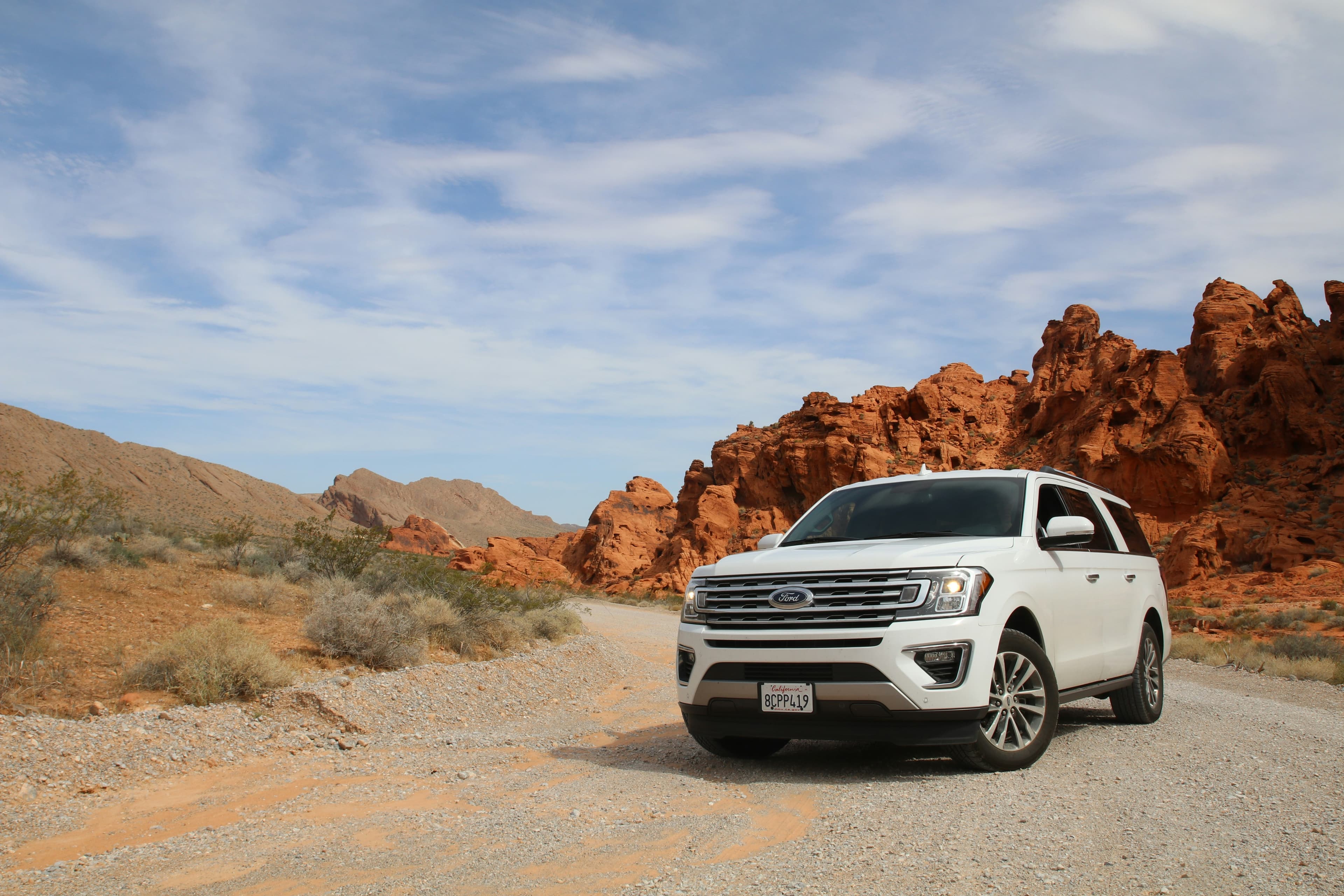
Owning a car in Australia is expensive. That statement needs quantifying, because the word "expensive" covers a lot of ground. The purchase price of a second-hand car is comparable to — sometimes cheaper than — equivalent vehicles in the UK or Europe. What catches people out is the ongoing cost stack: registration fees that vary dramatically by state, compulsory third party insurance that's structured differently in every state, comprehensive insurance that treats new arrivals as high-risk, and fuel prices that swing with global markets.
For working holiday makers and new arrivals deciding whether to buy a car or rely on public transport, the honest calculation is: a car makes sense if you're in a regional area, doing a long road trip, or working in a location without adequate public transport. In Sydney, Melbourne, and Brisbane with functional PT networks, the total cost of car ownership is often higher than the cost of renting a car for specific trips combined with public transport for daily commuting.
That said, the freedom a car provides in Australia — a country where the distances are genuinely vast and the regional areas genuinely spectacular — has a value that doesn't show up in a spreadsheet. This guide gives you the numbers. The decision is yours.
Do You Actually Need a Car?
Before buying anything, this question is worth answering honestly for your specific situation.
- 1
You probably need a car if: You're working in regional or rural Australia. You're completing the 88 days of specified regional work for a second-year working holiday visa. You plan to road trip between cities. You're working night shifts or early mornings when public transport doesn't run. You're living somewhere suburban without good PT connections.
- 2
You probably don't need a car if: You're living in inner-city Sydney, Melbourne, or Brisbane with access to trains and trams. You're working standard business hours near public transport. You plan to stay in one city for less than six months. Your workplace is within cycling distance.
The Purchase: New vs Used
The Australian used car market is active, well-organised, and — with the right checks — a safe place to buy. Facebook Marketplace, Gumtree, CarsGuide, and CarSales are the main platforms. Dealer sales offer statutory warranty protection; private sales are cheaper but carry no warranty beyond the general consumer guarantee provisions of the Australian Consumer Law.
Used Car Price Ranges (2026)
| Budget | What You Can Expect | Risk Level |
|---|---|---|
| Under $5,000 | High-mileage older vehicles (pre-2010), some mechanical issues likely | High — budget for repairs |
| $5,000–$10,000 | Reliable runabouts (2010–2015 Corolla, Mazda 3, Yaris), higher mileage | Moderate — inspect carefully |
| $10,000–$18,000 | Solid used cars (2015–2019), lower mileage, some dealer stock | Low-moderate — good value range |
| $18,000–$30,000 | Late model used (2019–2022), near-new condition, dealer warranty | Low — near-new reliability |
💡 Toyota and Mazda hold value better than anything else in Australia Australia's vast distances, rough regional roads, and strong cultural preference for reliable off-road-capable vehicles have created a market where Toyota (HiLux, LandCruiser, Corolla, Camry) and Mazda (Mazda 3, CX-5) hold their value far above global averages. For someone on a fixed-term visa planning to sell in 1–2 years, buying a high-retention vehicle is a hedge against capital loss. A 2018 Toyota Corolla bought for $16,000 today is more likely to sell for $13,000–$14,000 in two years than a comparable European vehicle, which might sell for $10,000–$11,000.
The Checks You Must Do Before Buying Any Used Car
- 1
PPSR check (Personal Property Securities Register) — AUD $2 at ppsr.gov.au. Tells you whether there is finance owing on the vehicle (meaning the bank, not the seller, legally owns it), whether the car has been written off, stolen, or has a compliance plate issue. Do this before you negotiate. If a PPSR check reveals outstanding finance and you buy the vehicle anyway, the finance company can repossess it from you — legally, even though you paid for it.
- 2
Independent mechanical inspection — AUD $150–$250 from a licensed mechanic, or through NRMA/RAA/RAC/RACQ roadside assistance clubs. For any vehicle above $5,000, the inspection cost is trivial relative to the repair bills it might reveal. Most sellers will allow a pre-purchase inspection by an independent mechanic if they're selling in good faith.
- 3
Roadworthy or Safety Certificate — Required in most states when transferring registration. In Victoria, it's called a Roadworthy Certificate (RWC); in Queensland, a Safety Certificate; in NSW, it's only required for vehicles over five years at rego renewal, not at point of sale. In states where it's required, the seller typically provides it — confirm before purchase.
- 4
Stamp duty on transfer — Often overlooked in the purchase budget. Victoria charges approximately 4.2% of market value — on a $20,000 car, that's $840 in stamp duty at the point of registration transfer. NSW charges approximately 3% on vehicles up to $45,000. Budget for this separately from the purchase price.
⚠️ Facebook Marketplace PayID scam — targeting newcomers specifically A common scam targeting people new to Australia on car-buying platforms: the seller asks you to pay via PayID, then sends a fake email claiming your PayID payment is "pending" and requires you to "upgrade to a business account" by sending money first. PayID is free and instant — there is no upgrade process, no pending status that requires a payment. If anyone asks you to send money to "unlock" a PayID transaction, it's a scam. Pay in person, in cash or bank transfer, when you have the keys in your hand and the transfer paperwork signed.
Registration: The Annual Cost That Varies by State
Vehicle registration in Australia is an annual state government fee that covers your right to drive on public roads. It's not optional, and driving an unregistered vehicle carries significant fines and voids your insurance. The cost varies significantly by state and vehicle type.
| State | Approx. Annual Rego (standard passenger car) | CTP included? |
|---|---|---|
| NSW | $380–$500 (rego only, Green Slip separate) | ❌ Green Slip $500–$850 extra |
| VIC | $930 total (TAC charge + rego) | ✅ TAC charge = CTP |
| QLD | $829–$844 total | ✅ CTP included |
| WA | $700–$900 total | ✅ ICWA charge included |
| SA | $600–$800 total | ✅ CTP included |
| TAS | $626 (4-cylinder vehicle) | ✅ MAIB premium included |
NSW is the most expensive state for registration when you include the Green Slip — the separately purchased CTP insurance that costs AUD $500–$850 per year depending on your age, driving history, and vehicle location. In all other states, CTP is bundled into the registration fee. NSW drivers effectively pay registration twice — once to Service NSW for the rego, and once to a private insurer for the Green Slip. Both are mandatory before you can legally drive.
The CTP Trap: What It Covers and What It Doesn't
Compulsory Third Party insurance covers one thing only: personal injury or death to other people if you cause an accident. CTP does not cover damage to other vehicles. CTP does not cover damage to your own vehicle. CTP does not cover damage to property.
If you rear-end a $180,000 Mercedes at a set of traffic lights and have only CTP insurance — which is the legal minimum — the Mercedes driver's injuries are covered. The $180,000 car is not. You are personally liable for that repair bill. This is why Third Party Property insurance (covering damage to other people's property but not your own car) is the minimum most financial advisers recommend, and Comprehensive insurance (covering your car and others' property) is what most experienced Australian drivers carry.
| Insurance Type | Covers Your Car? | Covers Others' Injuries? | Covers Others' Property? | Annual Cost |
|---|---|---|---|---|
| CTP only (legal minimum) | ❌ | ✅ | ❌ | Included in rego |
| Third Party Property | ❌ | ✅ | ✅ | $300–$600 |
| Third Party Fire & Theft | Partial | ✅ | ✅ | $400–$700 |
| Comprehensive | ✅ | ✅ | ✅ | $800–$2,000+ |
Comprehensive insurance premiums in Australia are heavily influenced by your age (under-25 drivers pay significantly more), your driving history, your postcode (inner-city postcodes have higher theft and accident rates), and — critically for new arrivals — your claims history in Australia. Most Australian insurers will accept a "Letter of Claims History" from your overseas insurer to award a Rating 1 (maximum no-claims discount), significantly reducing your premium. Request this letter before you leave your home country.
The Licence Conversion Deadline: The Rule That Voids Your Insurance
This is the rule that costs people money and causes genuine stress — and it's not well-publicised.
NSW and Victoria now mandate that temporary visa holders who have been residing in the state for more than six months must convert their overseas licence to a local licence. Driving beyond this period on an overseas licence renders you unlicensed in the eyes of the law — not an infringement, but legally unlicensed.
The insurance implication is severe. If you are involved in an accident while driving on an invalid overseas licence, your insurer can deny all claims. Comprehensive insurance that you paid for becomes worthless. You become personally liable for all damage and injury costs. The six-month clock starts from the date you establish residency in the state — not from your visa grant date.
- 1
Check your state's specific requirement — NSW and VIC have the most explicit six-month rules. QLD, WA, SA, TAS, and ACT have varying requirements. Check with your state's transport authority directly rather than relying on general advice.
- 2
Book your licence conversion early — Most states require you to visit a transport service centre in person with your overseas licence, passport, and proof of residency. In some states, an English translation of your overseas licence is required if it's not in English. Processing times and appointment availability vary — book well before your six-month deadline, not after.
- 3
Some countries have licence recognition agreements — The UK, USA, Canada, New Zealand, and several European countries have reciprocal licence recognition with most Australian states, meaning you may be able to convert directly without a driving test. Check the list for your home country and your specific Australian state — the agreements vary by state.
The Full Annual Cost Stack: What a Car Actually Costs
Here's the honest annual cost for a typical used car in Australia in 2026 — a 2016 Toyota Corolla purchased for AUD $14,000 in Victoria:
| Cost Item | Annual Cost (AUD) | Notes |
|---|---|---|
| Registration (VIC, incl. CTP) | $930 | TAC charge + rego |
| Comprehensive insurance | $1,100 | Experienced driver, Rating 1 |
| Fuel | $2,600 | 15,000km/year at $1.90/L, 9L/100km |
| Servicing (annual) | $400 | One service per year |
| Tyres (amortised) | $300 | Set of 4 every 4 years, approx. $1,200 |
| Miscellaneous repairs | $400 | Older car — budget for minor issues |
| Parking (work/city) | $600–$2,400 | Highly variable — some workplaces free |
| Total (excl. parking) | $5,730 | $478/month |
| Total (incl. city parking) | $6,330–$8,130 | $527–$678/month |
AUD $478–$678 per month — not including the purchase price depreciation — is the realistic ongoing cost of car ownership in a major Australian city. Compare this to a Melbourne Myki public transport monthly equivalent of approximately AUD $185, and the financial case for car ownership in a city with functional PT is not strong unless the convenience and freedom it provides is worth the $300–$500 per month premium to you personally.
Car Loans: The Visa Problem
Getting a car loan as a new arrival in Australia is difficult. Australian banks use Comprehensive Credit Reporting — your credit score is based on your history of Australian credit products. A new arrival appears as a "thin file" — no history, statistically indistinguishable from a high-risk borrower regardless of your actual financial situation. Many lenders also treat temporary visa holders as flight risks and restrict loan terms to not exceed your visa expiry date.
The practical result: most new arrivals buy used cars with cash rather than finance. This is actually a healthy default — buying a car you can afford without debt is financially sound, and the AUD $8,000–$15,000 range produces reliable used vehicles with sufficient history to inspect properly. If you need finance, credit unions and smaller lenders are more flexible than major banks for temporary visa holders.
The Best Time to Buy
End of financial year (June) and end of calendar year (December) are when dealers discount most aggressively to hit sales targets. New model releases — typically announced at the end of the calendar year for the following year — create a period where outgoing model year vehicles are discounted to clear stock. For used cars from private sellers, there's no strong seasonal pattern — but the best deals on Facebook Marketplace and Gumtree are typically found on vehicles that have been listed for more than two weeks, where the seller is motivated.
I bought a 2015 Mazda 3 for $10,500 cash, drove it for 14 months around Australia, and sold it for $9,200 before I flew home. After registration, insurance, fuel, and one service, my total transport cost for 14 months was about $7,500. That's less than $540 a month for unlimited freedom. Worth every dollar.
The Bottom Line
Buying a car in Australia is straightforward if you know the checks to run, the costs to budget for, and the licence conversion deadline to track. The purchase process itself — PPSR check, mechanical inspection, roadworthy certificate, registration transfer — takes a weekend and a few hundred dollars to do properly. The ongoing costs are the part most people underestimate, and the part that determines whether car ownership makes financial sense for your specific situation.
For regional work, road trips, and locations without public transport: buy the car. For city living with functional PT: do the maths before you commit. And wherever you are: convert your licence before the six-month deadline, get at least Third Party Property insurance on top of CTP, and do the PPSR check before you hand over a single dollar.
Planning your Australian career?
Search 1,020 Australian occupations — salary ranges, visa pathways, and shortage ratings in one place.
Explore Australian Careers →