
Buying a Home in Australia After Permanent Residency: What It Actually Takes in 2026
Permanent residency is the moment the Australian property market opens to you on the same terms as a citizen. No FIRB approval, no surcharge, no restricted loan products — just the same market that Australians have been trying to navigate for the past decade. And the honest assessment of that market in 2026 is this: Sydney is out of reach for most single-income earners at any realistic savings rate. Brisbane is heading the same way. But Melbourne's outer suburbs, Adelaide, and Perth still have entry points that a skilled worker on $70,000–$90,000 can realistically reach within five to eight years of focused saving — especially with the government schemes that now significantly reduce the deposit requirement. This guide does the actual maths.
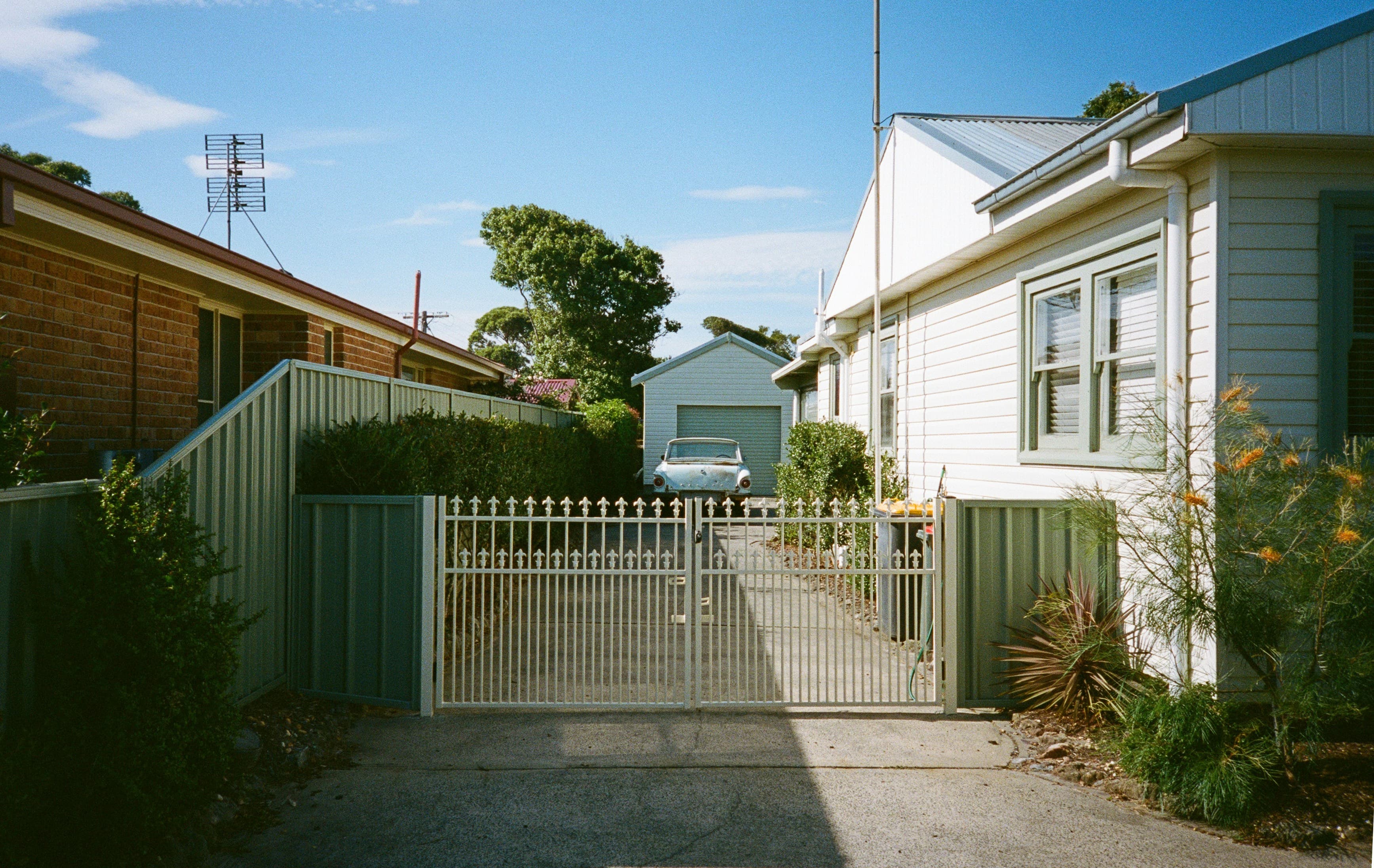
Australian median house prices crossed $1 million in early 2026 for the combined capital cities — a number that sounds conclusive until you look at what it actually means city by city and suburb by suburb. The median in Sydney is approximately $1.62 million. The median in Adelaide is approximately $980,000. The outer western suburbs of Melbourne have entry-level houses at $550,000–$680,000. Darwin's median is $578,000. The national figure, like most averages, obscures as much as it reveals.
This guide is built around one specific scenario — a single person earning AUD $70,000 per year with permanent residency, saving consistently, and aiming to buy their first home. The numbers are real, the timeframes are honest, and the government assistance available in 2026 is genuinely significant — more so than at any previous point in Australian history.
What Permanent Residency Actually Changes
The difference between a temporary visa and permanent residency in the property market is significant and immediate:
- 1
No FIRB approval required — Foreign nationals and temporary visa holders must apply to the Foreign Investment Review Board (FIRB) before purchasing residential property, paying an application fee of $14,100–$42,300 depending on property value. Permanent residents are exempt. This saves thousands in fees and weeks of waiting.
- 2
No foreign purchaser stamp duty surcharge — Most states charge foreign buyers an additional 7–8% stamp duty surcharge on top of the standard rate. On a $700,000 property in Victoria, that's an extra $56,000. Permanent residents pay standard stamp duty rates — the same as Australian citizens.
- 3
Access to all standard home loan products — Most major lenders treat permanent residents the same as citizens. You can borrow up to 95% of a property's value (with lenders mortgage insurance) or 80% without LMI, on standard interest rates. Temporary visa holders are typically restricted to 80% LVR regardless.
- 4
Eligibility for all first home buyer grants and schemes — The First Home Owner Grant (FHOG), the Federal Government's First Home Guarantee Scheme (5% deposit, no LMI), stamp duty exemptions, and the Help to Buy shared equity scheme are all available to permanent residents who have never previously owned a home in Australia.
⚠️ One trap: the stamp duty surcharge timing rule In Queensland and Victoria, you need to be physically present in Australia at the time of contract exchange to avoid the foreign purchaser stamp duty surcharge — even if you are a permanent resident. In NSW, you must be present at both contract exchange and settlement. If you have been in Australia for fewer than 200 days since receiving your PR visa, some states may still apply the surcharge. This catches some new permanent residents by surprise. If your PR was recently granted, confirm with a conveyancer or mortgage broker before signing any contract.
Median House Prices by City: The Honest 2026 Numbers
These are current median figures as of early 2026, based on Cotality and Domain data. Prices are still rising in most cities — the numbers below reflect the start of 2026, and by the time you read this they may have moved further.
| City | Median House Price | Median Unit/Apartment | Realistic Entry Point (outer suburbs) |
|---|---|---|---|
| Sydney | Approx. $1,620,000 | Approx. $794,000 | $750,000–$900,000 (Penrith, Liverpool, Campbelltown) |
| Melbourne | Approx. $940,000 | Approx. $626,000 | $530,000–$680,000 (Sunshine, Werribee, Cranbourne) |
| Brisbane | Approx. $1,050,000 | Approx. $680,000 | $620,000–$780,000 (Logan, Ipswich, Caboolture) |
| Perth | Approx. $1,032,000 | Approx. $726,000 | $550,000–$720,000 (Armadale, Rockingham, Mandurah) |
| Adelaide | Approx. $980,000 | Approx. $676,000 | $480,000–$640,000 (Salisbury, Elizabeth, Morphett Vale) |
| Canberra | Approx. $1,052,000 | Approx. $598,000 | $620,000–$780,000 (Tuggeranong, Gungahlin) |
| Darwin | Approx. $578,000 | Approx. $390,000 | $400,000–$520,000 (most suburbs accessible) |
The "realistic entry point" column is the most useful for first home buyers. The median tells you the middle of the market — half the properties sold above that price, half below. A first home buyer doesn't need the median — they need to know what the lower end of the market looks like in suburbs that are liveable and have reasonable transport access. Those numbers are the ones in the right-hand column.
💡 Units and apartments: the realistic first step for most single buyers For a single person on $70,000–$90,000 in Sydney, Melbourne, or Brisbane, a house is almost certainly not the first property. A unit or apartment — particularly in outer suburbs — is the realistic entry point and a legitimate first step into the property market. Sydney units at a median of $794,000 are still expensive, but Melbourne units at $626,000 median and Adelaide units at $676,000 are within reach of a focused saver with government assistance. Many people who now own houses in Australia got there by buying a unit first, building equity, and upgrading — not by saving for a house deposit from scratch.
Borrowing Capacity on $70,000: The Real Numbers
How much can a single person earning AUD $70,000 per year actually borrow for a home loan in Australia? This is the question that determines what's possible.
Australian lenders use a serviceability assessment rate — typically the actual loan rate plus a 3% buffer — to test whether you can afford repayments if rates rise. At current rates of approximately 6.0–6.5% for standard variable loans, the serviceability rate used for assessment is approximately 9.0–9.5%. The exact borrowing capacity depends on your expenses, debts, credit card limits, and the number of dependants — but for a single person with moderate expenses and no existing debts, the estimates are:
| Annual Income | Estimated Borrowing Capacity | Monthly Repayment (Approx. 6.2% rate, 30yr) |
|---|---|---|
| $70,000 | Approx. $390,000–$430,000 | Approx. $2,380–$2,630/month |
| $85,000 | Approx. $470,000–$520,000 | Approx. $2,870–$3,175/month |
| $100,000 | Approx. $560,000–$620,000 | Approx. $3,420–$3,785/month |
| $120,000 | Approx. $670,000–$750,000 | Approx. $4,090–$4,580/month |
| Two people on $70K each | Approx. $750,000–$840,000 | Approx. $4,580–$5,130/month |
A single person on $70,000 can borrow approximately $390,000–$430,000. Add a 10–20% deposit and the total purchasing power is $430,000–$535,000. This rules out most of Sydney, most of Brisbane, and most of Perth at current prices. It makes Adelaide's outer suburbs, Darwin, some of Melbourne's outer west, and regional areas across all states genuinely accessible.
Two people on $70,000 each — a couple buying together — can borrow $750,000–$840,000, which opens up significantly more of the market including units in most cities and houses in outer suburbs of Melbourne, Brisbane, and Adelaide.
How Long Does It Take to Save a Deposit?
The deposit calculation is where the government schemes introduced in 2025–26 make a transformative difference. The traditional advice was to save a 20% deposit to avoid Lenders Mortgage Insurance (LMI). On a $600,000 property, that's $120,000 — on a savings rate of $1,000/month, a ten-year project.
The 2025–26 policy changes have fundamentally changed this calculation.
The 5% Deposit Scheme (First Home Guarantee — from October 2025)
From October 2025, the First Home Guarantee Scheme was expanded with no income caps and no annual place limits. Under this scheme, eligible first home buyers — Australian citizens or permanent residents who have never owned property in Australia — can purchase with a 5% deposit, and the federal government guarantees up to 15% to the lender, eliminating the requirement for Lenders Mortgage Insurance. LMI on a $600,000 property with a 5% deposit would typically cost $15,000–$22,000 — the scheme eliminates this cost entirely.
| Property Price | 5% Deposit Required | Time to Save (saving $1,000/month) | Time to Save (saving $1,500/month) |
|---|---|---|---|
| $450,000 | $22,500 | Approx. 23 months | Approx. 15 months |
| $550,000 | $27,500 | Approx. 28 months | Approx. 19 months |
| $650,000 | $32,500 | Approx. 33 months | Approx. 22 months |
| $750,000 | $37,500 | Approx. 38 months | Approx. 25 months |
On a $70,000 salary in Adelaide (monthly take-home approximately $4,600 after tax), a realistic monthly savings rate after rent, food, transport and basic living costs is $1,000–$1,500 per month. That puts a 5% deposit on a $550,000 Adelaide outer suburb property 19–28 months away — not a decade. The scheme doesn't make property cheap. It makes the entry point achievable without waiting for a 20% deposit that keeps receding as prices rise.
The First Home Super Saver Scheme (FHSS)
The FHSS allows you to make voluntary contributions to your superannuation and then withdraw them for a first home deposit, taking advantage of the 15% tax rate inside super rather than your marginal income tax rate. On a $70,000 salary with a 32.5% marginal rate, every dollar saved through the FHSS effectively earns a 17.5% tax saving compared to saving in a regular bank account. The scheme allows withdrawals of up to $50,000 in total ($15,000 per financial year maximum). Combined with the standard deposit requirement, this is a meaningful accelerator.
Government Grants by State: The Cash That Reduces Your Deposit
| State | First Home Owner Grant (new builds) | Stamp Duty Exemption Threshold | Maximum Combined Benefit (est.) |
|---|---|---|---|
| QLD | $30,000 (until June 2026) | Full exemption under $700,000 | Approx. $55,000–$60,000 |
| VIC | $10,000 | Full exemption under $600,000 | Approx. $41,000–$50,000 |
| NSW | $10,000 | Full exemption under $800,000 | Approx. $41,335–$50,000 |
| WA | $10,000 | Concessions available | Approx. $20,000–$30,000 |
| SA | $15,000 | Full exemption under $650,000 | Approx. $35,000–$45,000 |
Queensland's combination of a $30,000 First Home Owner Grant (for new builds, available until June 2026), full stamp duty exemption under $700,000, and the federal 5% deposit guarantee creates the most generous package currently available for first home buyers in Australia. An eligible buyer purchasing a new $650,000 home in Queensland's outer suburbs with a 5% deposit ($32,500) can effectively receive $55,000–$60,000 in combined grants, concessions, and LMI savings — reducing their net deposit requirement significantly.
The City-by-City Reality: Where Can a $70,000 Earner Actually Buy?
| City | Realistic for $70K earner? | What's accessible | Deposit timeline (5% scheme, saving $1,200/month) |
|---|---|---|---|
| Sydney | ❌ Very difficult | Far outer west units ($700K+), exceeds borrowing capacity | Deposit saveable but loan size unaffordable alone |
| Melbourne | ⚠️ Possible — outer suburbs only | Units in outer west/north ($530K–$650K) | Approx. 2.5–3 years for 5% deposit on $580K unit |
| Brisbane | ⚠️ Difficult — rising fast | Logan, Ipswich outer suburbs ($620K–$700K) | Approx. 3 years — loan size borderline at $70K income |
| Perth | ✅ Possible — outer suburbs | Armadale, Mandurah, Rockingham ($520K–$650K) | Approx. 2.5 years for 5% deposit |
| Adelaide | ✅ Most accessible capital | Salisbury, Elizabeth, Morphett Vale ($470K–$580K) | Approx. 2–2.5 years for 5% deposit |
| Darwin | ✅ Most affordable capital | Most suburbs accessible ($400K–$520K) | Approx. 1.5–2 years for 5% deposit |
⚠️ The borrowing capacity ceiling is as important as the deposit The 5% deposit scheme solves the deposit problem. It doesn't solve the borrowing capacity problem. A $70,000 earner can save a 5% deposit on a $700,000 Sydney unit in three years — but they can only borrow $390,000–$430,000. The gap between the deposit ($35,000) plus borrowing ($410,000) and the purchase price ($700,000) is $255,000 that doesn't exist. The scheme only works when the property price is within your borrowing capacity. In Sydney, the maths simply doesn't work for a single $70,000 income regardless of the deposit scheme. In Adelaide, it does.
Upfront Costs Beyond the Deposit
A first home buyer's budget needs to include more than the deposit. Budget separately for these upfront costs — they are in addition to the deposit and cannot be financed through the mortgage:
- 1
Stamp duty — Varies by state and property value. First home buyers are exempt in most states under specific thresholds. Above the threshold, standard rates apply — approximately 3–5.5% of property value. On a $650,000 property in NSW above the exemption threshold, standard stamp duty would be approximately $24,677. Know your state's threshold before budgeting.
- 2
Legal and conveyancing fees — $1,500–$3,000 for a standard residential purchase. Required to review the contract and manage settlement.
- 3
Building and pest inspection — $400–$800 for both combined. Non-negotiable for established houses. Not required for off-the-plan purchases but worth considering.
- 4
Loan establishment fees — $0–$600 depending on the lender. Many competitive home loan products now have no establishment fees.
- 5
Moving costs and initial setup — $500–$2,000 for a standard move, plus any furniture and appliances if moving from a share house without your own belongings.
The standard advice is to budget an additional 5% of the property's purchase price for all transaction costs combined. On a $550,000 property, that's $27,500 in transaction costs — separate from your deposit. Total cash required at purchase: $27,500 (5% deposit) + $27,500 (transaction costs) = $55,000, significantly reduced if stamp duty is fully exempt in your state.
I got my PR in 2023 and bought in Adelaide's northern suburbs in 2025. Took me two years of saving $1,400 a month while renting a cheap share house. Used the 5% deposit scheme, got the $15,000 SA first home owner grant, and paid zero stamp duty. My deposit was $26,000 and I was in the door. It's not a glamorous suburb and it's not a big house. But it's mine and the mortgage is less than the rent I was paying in Melbourne.
The Bottom Line
Buying property in Australia after permanent residency is not impossible — but it requires honest city selection and realistic expectations about what $70,000 per year can and cannot buy.
Sydney and central Brisbane are genuinely out of reach for most single-income first home buyers in 2026. That's not a failure of effort or savings discipline — it's an arithmetic problem that no deposit scheme fixes when the borrowing capacity gap is $200,000+.
Adelaide, Darwin, Perth's outer suburbs, and Melbourne's outer west are different calculations. With the 5% deposit scheme, the First Home Super Saver Scheme, state grants, and stamp duty exemptions stacked together, a focused saver on $70,000 can reach a realistic entry point in two to three years in these markets. The mortgage repayments on a $450,000–$550,000 loan are often comparable to or lower than the rent on a share house room in Sydney or Melbourne.
The property market in Australia will continue to move while you're saving. But the direction of government policy since 2025 — expanding the deposit scheme, removing income caps, increasing FHOG amounts — is clearly aimed at reducing the deposit barrier rather than the price barrier. Use every scheme available. Choose your city with the maths in front of you. And remember that the first property doesn't have to be the forever property.
Find the right career to support your Australian goals
Search 1,020 Australian occupations — salary ranges, shortage ratings, and visa pathways in one place.
Explore Australian Careers →