
Canberra: The Public Servant City That's Better Than Its Reputation
Ask any Australian what they think of Canberra and you'll hear the same three words: boring, cold, politicians. It's the city that Australians love to dismiss — a planned capital that nobody actually wanted, dropped into the middle of nowhere as a political compromise between Sydney and Melbourne. That reputation is not entirely unfair. But it is incomplete. Canberra has the highest average wages of any Australian capital, living costs 15–20% below Sydney, world-class national institutions you can visit for free, and a job market anchored by the most recession-proof employer in the country. This guide covers all of it — including the things that genuinely make Canberra hard work for certain people.
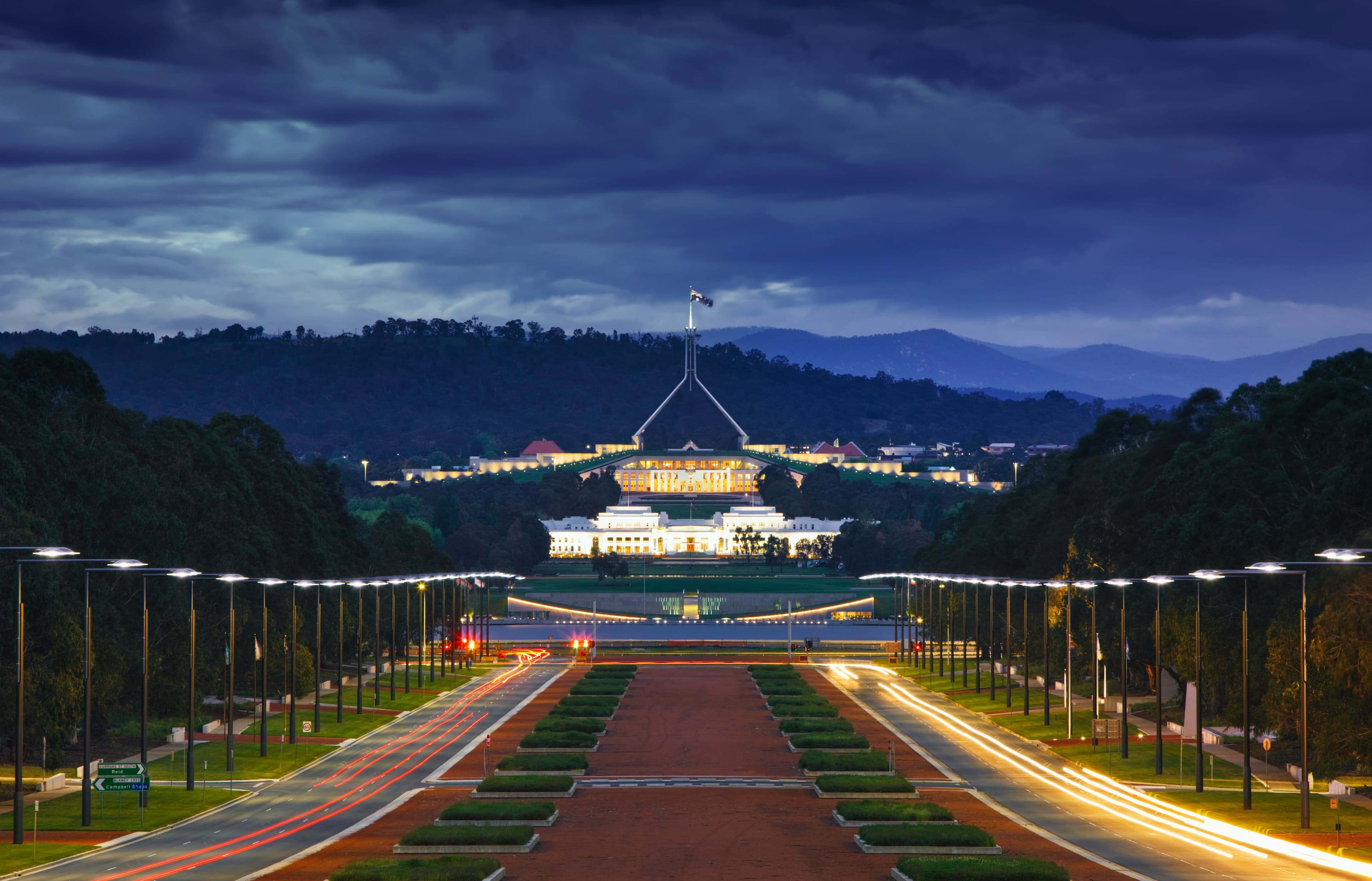
Canberra was purpose-built as Australia's capital — a political solution to the rivalry between Sydney and Melbourne, which both wanted the status. The site was selected in 1908, construction began in 1913, and the city was officially inaugurated in 1927. It was designed from scratch by American architects Walter Burley Griffin and Marion Mahony Griffin, which means it has the organised, green, slightly sterile layout of a planned city rather than the organic, chaotic energy of a city that grew naturally.
That planned character is both Canberra's greatest asset — excellent roads, abundant parkland, minimal urban sprawl, low crime, good schools — and its most frequently cited weakness. A city designed by committee tends to feel, at times, like it was designed by committee. But in 2026, the city of 470,000 people has outgrown the caricature, and the people who actually live there tend to defend it with a conviction that surprises those who've never visited.
The Job Market: Stable in a Way No Other Australian City Is
Canberra's economy is dominated by the Australian Public Service (APS) — the federal government bureaucracy that administers everything from defence and intelligence to social services, taxation, and immigration. Approximately one in three Canberra workers is employed directly or indirectly by the federal government, and the concentration of government departments, defence agencies, intelligence services, and regulatory bodies in the ACT creates a job market with characteristics that simply don't exist elsewhere in Australia.
The defining characteristic is stability. Government departments don't go bankrupt. Public service roles don't disappear in economic downturns the way private sector roles do. The APS Enterprise Agreement governs pay and conditions, providing transparent salary bands, structured leave entitlements, and career progression pathways that are more predictable than most private sector employment. For people who prioritise security and structure over the higher ceiling of private sector salaries, the APS is a genuinely excellent employer.
APS Classification and Salary Bands (2026)
The APS uses a standardised classification system. Entry-level roles typically start at APS3 or APS4; experienced professionals enter at APS5 or APS6; management roles begin at Executive Level 1 (EL1). Salary bands are publicly available and consistent across departments — there's no need to negotiate in the dark.
| APS Level | Typical Role | Salary Range (AUD) |
|---|---|---|
| APS3–4 | Administrative officer, data entry, support roles | $66,000–$80,000 |
| APS5–6 | Policy officer, analyst, adviser, specialist | $82,000–$100,000 |
| EL1 | Team leader, senior analyst, branch manager | $110,000–$128,000 |
| EL2 | Director, senior manager, program lead | $132,000–$165,000 |
| SES Band 1–3 | Deputy Secretary and above | $190,000–$500,000+ |
Beyond the APS, Canberra has a growing private sector in technology, consulting, defence contracting, and professional services. The presence of large defence contractors — Thales, Lockheed Martin, BAE Systems, Leidos — creates well-paid engineering and IT roles that exist almost exclusively in Canberra and a few other defence-heavy locations. The Australian National University (ANU) — consistently ranked among the top 30 universities in the world — and the University of Canberra together create a significant research and academic employment base.
💡 Australian citizenship or PR is required for most APS roles — but not all The majority of APS positions require Australian citizenship due to the security clearance requirements of government work. However, a meaningful proportion of roles — particularly in IT, finance, communications, and administrative support — are open to permanent residents. Temporary visa holders (including 482 skilled workers) are generally not eligible for APS roles. If you're a permanent resident or citizen, the APS job portal at apsjobs.gov.au lists all current vacancies across departments.
Cost of Living: Cheaper Than Its Reputation
Canberra's cost of living is one of the city's best-kept secrets. Most people assume that as Australia's capital — and a city with one of the highest average wages — it must be expensive. It is not. Living costs in Canberra run approximately 15–20% below Sydney and around 10% below Melbourne across most categories.
| Category | Canberra | Sydney | Difference |
|---|---|---|---|
| Share house room (inner) | $230–$330 pw | $380–$450 pw | Approx. 30% cheaper |
| 1-bed apartment | $370–$500 pw | $600–$780 pw | Approx. 30% cheaper |
| Groceries (weekly, solo) | $80–$110 | $85–$120 | Broadly similar |
| Public transport (monthly) | $70–$100 | Approx. $200 | Significantly cheaper |
| Dining out (casual dinner) | $22–$35 | $25–$45 | Slightly cheaper |
The combination of Canberra's higher-than-average wages and lower-than-Sydney costs produces a net savings rate for skilled workers that rivals Perth. An APS6 policy officer earning $95,000 and renting a share house room at $290 per week is in a considerably more comfortable financial position than a comparable professional in Sydney earning $90,000 and paying $420 per week for a similar room.
💡 Free public transport every Friday — ACT government 2026 trial The ACT government introduced free public transport on Fridays in 2026 as a one-year trial — all buses and the Canberra light rail at no cost on Fridays. Combined with Canberra's already lower transport costs compared to Sydney (the MyWay card system has a monthly cap around $100), this makes public transport in Canberra among the most affordable of any Australian capital. The Friday free transport saves regular commuters approximately $400–$500 over the course of a year if the trial continues.
The Climate: Cold Winters, Spectacular Everything Else
Canberra's climate is the most frequently cited reason people avoid it — and to be fair, the winters are genuine. Sitting at 580 metres above sea level on the Southern Tablelands, Canberra experiences frosts from May through September, temperatures regularly dropping to 0°C or below overnight in winter, and occasional snowfall in the surrounding hills. The city itself rarely gets snow on the ground, but Perisher and Thredbo — Australia's main ski resorts — are two hours away, which is either a pro or a consolation prize depending on your perspective.
What doesn't get discussed as often is the rest of the year. Canberra's spring (September–November) is spectacular — warm, clear days, the city's famous cherry blossoms and tulips in full colour, and the Floriade festival drawing visitors from across Australia. Summer (December–February) is hot and dry — 30–38°C, with low humidity — and the evenings cool down rapidly, making outdoor dining and evening activities genuinely pleasant in a way that Sydney's humid summer nights are not. Autumn brings crisp air and extraordinary foliage in the city's abundant deciduous parks and streets.
The practical implication: if you're coming from the UK, Northern Europe, or Canada, Canberra's winters are not materially worse than what you're used to. If you're coming from Southeast Asia, the Philippines, India, or equatorial Africa and you've never experienced sub-zero temperatures, the winter adjustment is real and worth preparing for.
Transport and Getting Around
Canberra is a car-dependent city by design. Its layout — large suburban districts connected by wide arterial roads, with no true urban density outside the city centre — makes public transport less convenient than in Sydney or Melbourne for many journeys. The MyWay bus network and the Canberra light rail (running from Gungahlin to the city centre) cover the main corridors well, but outer suburbs and newer developments are genuinely difficult to navigate without a car.
For people working in the CBD or near the light rail corridor, car-free living is practical. For people working at one of the outer defence or government facilities — Australian Signals Directorate in Brindabella Park, ASIO in Brindabella Business Park, various defence sites in the southern suburbs — a car is essentially required. Most Canberra residents own a car. The question is whether you need one from day one or whether you can manage without one while you get established.
Cycling is a genuine option in Canberra — the city has an extensive dedicated cycling network, relatively flat inner-city geography, and a culture of recreational and commuter cycling. For inner-suburb commutes in good weather, cycling is faster than the bus and free. The limitation is winter — commuting by bike in 2°C morning frosts is possible but requires commitment.
Social Life: Smaller Scale, Different Texture
Canberra's nightlife and entertainment scene is the most honest weakness in the city's case. It is a city of 470,000 people, and the entertainment offering reflects that. There are good restaurants, a handful of bars and live music venues, a thriving café culture in the inner suburbs of Braddon, Kingston, and Manuka, and a genuinely excellent cultural institution landscape — the National Gallery of Australia, National Museum, National Portrait Gallery, Australian War Memorial, and National Library are all free and world-class by any standard.
What Canberra doesn't have is the density of Melbourne's laneway bar scene, Sydney's harbour-side social calendar, or the sheer volume of events that characterise Australia's larger cities. Friday and Saturday nights in the Canberra CBD are noticeably quieter than equivalent evenings in Melbourne or Brisbane. People who depend on urban density and cultural programming for their social life will find Canberra limiting.
What Canberra does have — and this is consistently underrated — is proximity to nature that is genuinely exceptional. Namadgi National Park covers 46% of the ACT and begins at the city's western edge. Tidbinbilla Nature Reserve is 40 minutes from the CBD. The Snowy Mountains, with hiking in summer and skiing in winter, are two hours away. Sydney is three hours by road or 45 minutes by plane. For people whose social life involves outdoor activities — hiking, mountain biking, skiing, camping — Canberra's location is close to perfect.
I moved to Canberra expecting to hate it and stayed four years. The winters are real and the nightlife is thin. But I've never been able to buy a house in Sydney on a government salary — in Canberra, on the same kind of role, I could. That changes how you feel about a city.
Working Holiday Makers: Is Canberra Worth It?
Canberra is not a typical working holiday destination — it doesn't have the backpacker infrastructure of Sydney or Melbourne, the beach lifestyle of the coastal cities, or the farm work proximity of Queensland or regional Victoria. Most working holiday makers who end up in Canberra arrive for a specific job rather than as a first-choice destination.
That said, Canberra has consistent demand in hospitality, retail, construction, and healthcare support roles — and the lower rent relative to Sydney means a working holiday maker's savings rate in Canberra on a hospitality wage is better than the same wage in Sydney. The city's relatively small working holiday maker community also means less competition for casual work than in the more popular backpacker destinations.
The honest assessment: Canberra is a reasonable working holiday option if you have a specific job lined up or want lower costs with less competition for work. It is not the place to arrive with no plan and rely on the social infrastructure of a large backpacker community to help you settle in.
Visa Pathways: ACT State Nomination
The ACT operates a state nomination program — the ACT Skilled Migrant Program — for both subclass 190 (State Nominated) and subclass 491 (Regional Skilled Work) visas. The ACT nomination is notable for including a "Critical Skills" stream and a "Graduate" stream that specifically targets people who have studied at ANU or University of Canberra.
For skilled migrants in IT, engineering, healthcare, and professional services, ACT nomination is worth investigating — particularly if your occupation appears on the ACT's occupation list but faces long queues for NSW or VIC nomination. The nomination requirement to live and work in the ACT for a specified period is enforced, and the ACT is a genuinely liveable place to fulfil that commitment.
The Honest Verdict: Who Canberra Is For
| Canberra is a strong choice if you: | Canberra may not suit you if you: |
|---|---|
| Are a PR holder or citizen targeting APS roles | Are on a temporary visa — most APS roles require citizenship |
| Work in policy, defence, intelligence, or research | Need the nightlife and social density of a large city |
| Want high wages + lower costs than Sydney | Hate cold winters with genuine sub-zero nights |
| Value safety, clean infrastructure, good schools | Are a working holiday maker without a job lined up |
| Love outdoor activities — skiing, hiking, cycling | Need to travel interstate or internationally often |
| Are targeting ACT state nomination for PR | Work in finance, media, or creative industries |
The Bottom Line
Canberra is not for everyone — and it knows it. The city has a settled, functional, slightly unhurried quality that people either find deeply comfortable or mildly claustrophobic. The winters are cold, the nightlife is limited, and the social scene rewards patience rather than rewarding the kind of instant immersion that working holiday makers find in Melbourne or Brisbane.
But for people who come with a specific purpose — a government career, a research position, a skilled visa pathway, or simply the goal of living well on a good salary without Sydney's rent eating half of it — Canberra consistently delivers. The reputation is thirty years out of date. The reality, in 2026, is a genuinely liveable mid-sized city with excellent infrastructure, exceptional nature on its doorstep, and a job market that the rest of Australia's volatile private sector can't replicate.
It's not the city that gets the Instagram posts. It's often the city where people quietly build their Australian life.
Explore careers in the ACT
Search 1,020 Australian occupations — salary ranges, shortage ratings, and visa pathways in one place.
Explore Australian Careers →