
Chef vs Cook in Australia: The One Word That Changes Everything About Your Visa
Australia's kitchens are short-staffed and actively recruiting from overseas. But there's a distinction most applicants miss until they're already deep in the process — and it determines whether you have a pathway to permanent residency or a dead end.
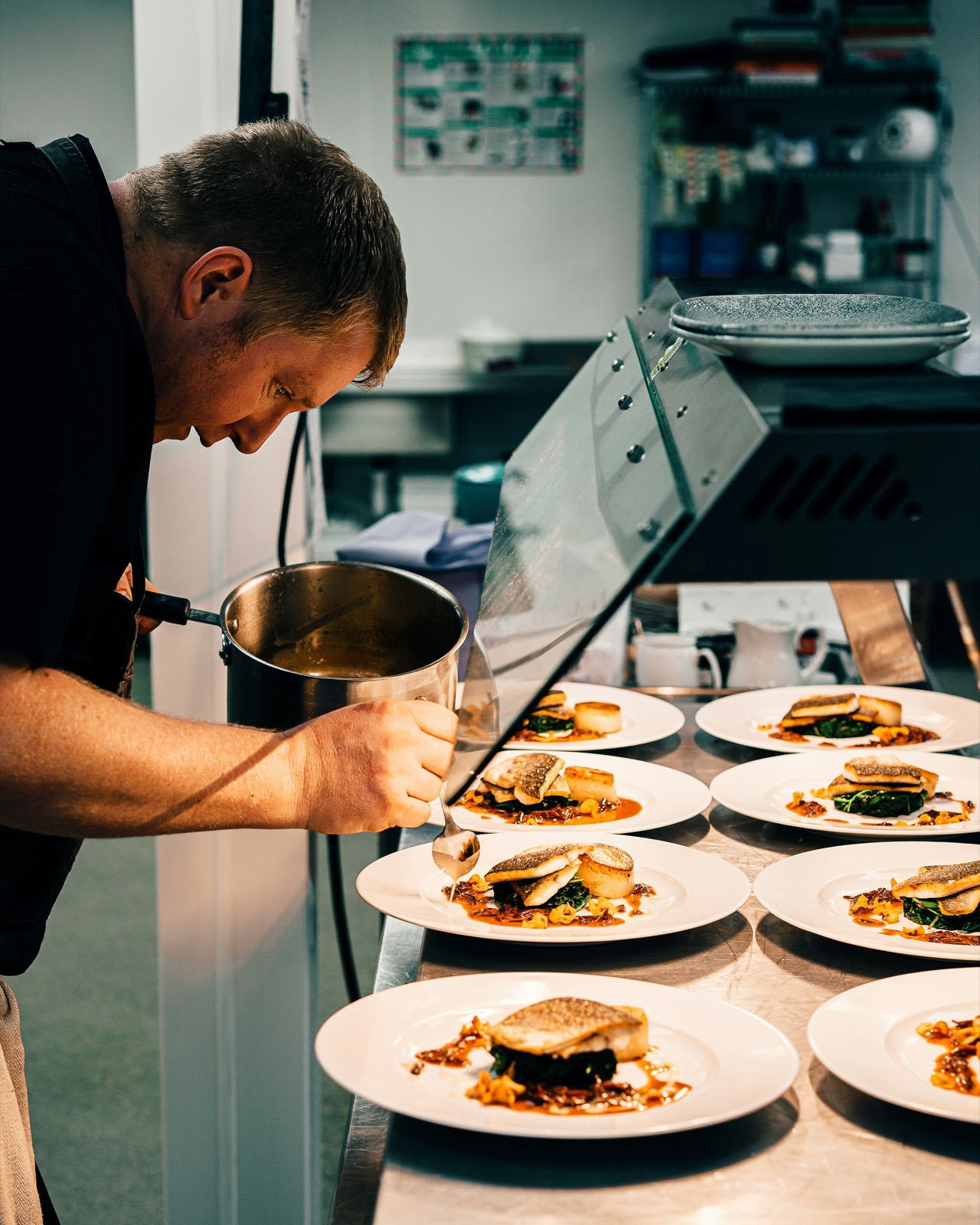
Walk into almost any restaurant in Sydney, Melbourne, or Brisbane right now and ask the owner about staffing. You'll hear the same thing everywhere: they can't find enough kitchen workers, they haven't been able to for years, and they're increasingly looking overseas to fill the gap. The shortage is real, well-documented, and showing no signs of resolving itself through domestic supply alone.
So far, so promising. But here's the thing that catches a lot of culinary professionals off guard when they start researching the move to Australia: the Australian immigration system makes a very specific distinction between a Chef and a Cook — and that distinction determines whether you have access to permanent residency pathways or not.
Most people find this out after they've already started their application. This post is for the people who find it out before.
Chef vs Cook: Why It's Not Just a Job Title
In everyday conversation, "chef" and "cook" are often used interchangeably. In Australian immigration, they are entirely separate occupations with different ANZSCO codes, different skilled occupation list placements, and critically — different visa outcomes.
⚠️ This distinction changes your entire pathway Chef (ANZSCO 351311) sits on the Medium and Long-term Strategic Skills List (MLTSSL). This means Chefs are eligible for the Subclass 189 independent skilled visa, state nomination (190), regional nomination (491), and the employer-sponsored Skills in Demand visa with a pathway to permanent residency. Cook (ANZSCO 351411) sits on the Short-term Skilled Occupation List (STSOL) only. Cooks can access the employer-sponsored stream, but under the short-term arrangement — which does not provide a direct pathway to permanent residency. If you apply as a Cook, you may arrive in Australia legally, work legally, and still find yourself with no route to stay permanently.
The distinction isn't arbitrary. In Australian standards, a Chef is responsible for managing kitchen operations — planning menus, estimating costs, supervising staff, demonstrating techniques, and making judgment calls about food preparation. A Cook primarily executes tasks. The difference is between managing a kitchen and working in one. If your actual experience and responsibilities align with the Chef definition, the ANZSCO 351311 classification is legitimate for you — and worth pursuing correctly.
The TRA Assessment: What It's Actually Checking
Before applying for most skilled visas as a Chef, you need a positive skills assessment from Trades Recognition Australia (TRA). TRA is a federal government body that evaluates whether your qualifications and experience meet Australian standards for trade occupations — and the Chef assessment is one of the more specific ones they process.
TRA assesses two things: your formal qualification and your work experience. For the Chef pathway, you generally need a qualification directly related to commercial cookery (a Certificate III or IV in Commercial Cookery or equivalent from your home country), plus a minimum of three years of full-time post-qualification experience working as a Chef.
The experience documentation is where most applications run into trouble. TRA requires:
- 1
Employment letters on official letterhead Signed by a manager or HR representative. Must specify your exact job title, employment dates (start and end), hours per week, and a description of your key duties — specifically duties that align with the Chef ANZSCO definition (menu planning, supervising, demonstrating technique, not just cooking).
- 2
Payslips or bank statements showing salary deposits As corroborating evidence that the employment was real and ongoing. TRA cross-references these against your employment letters — inconsistencies are flagged and can delay or fail an assessment.
- 3
Qualification certificates with official translations If your qualifications are not in English, certified translations are mandatory. "Certified" means translated by a NAATI-accredited translator — not a bilingual colleague or an online service.
- 4
Academic transcripts Not just the certificate — TRA wants to see the subject-by-subject breakdown of what your culinary program covered and how it maps to Australian commercial cookery standards.
Processing time is typically 8–12 weeks from a complete application. Incomplete applications are returned rather than processed, which restarts the clock. Getting the documentation right the first time is significantly faster than submitting and waiting for a request for further information.
The New Skills in Demand Visa: What Changed in December 2024
In December 2024, the Australian government replaced the Subclass 482 Temporary Skill Shortage visa with the new Skills in Demand (SID) visa. For chefs, this change is largely positive — though the structure is different enough that it's worth understanding before you apply.
Core Skills Stream
The main route for most overseas chefs. Requires an employer sponsor, a salary meeting the market rate (minimum AUD $76,515 from July 2025 for most roles), and your occupation on the Core Skills Occupation List (CSOL). Chef (351311) is on the CSOL. The visa is temporary — typically 4 years — but provides a direct pathway to permanent residency through the Employer Nomination Scheme (subclass 186) after a qualifying period, generally two years with the same employer.
Labour Agreements Stream
For employers who have a specific Labour Agreement with the Department of Home Affairs — including Designated Area Migration Agreements (DAMAs) for regional areas. Several regional DAMAs specifically include Chef as a nominated occupation with reduced requirements compared to standard sponsorship. If you're open to regional Australia, checking whether your target region has an active DAMA is worth doing before you start the standard sponsorship process — the requirements can be meaningfully more accessible.
📌 Regional is genuinely worth considering The DAMA arrangements in Northern Territory, Far North Queensland, South Australia, and regional Western Australia actively target hospitality workers including chefs. Regional restaurants and resorts often offer accommodation and meals as part of the package, which changes the financial calculation considerably. A chef earning $65K in regional Queensland with free accommodation and meals on-site has a very different net position than one earning $75K in inner Sydney paying $2,500/month in rent.
Visa Pathways: Which One Fits Your Situation
| Visa | Job offer needed? | PR possible? | Best for |
|---|---|---|---|
| SID 482 → 186 | Yes | Yes, after 2 yrs | Chef with sponsored offer in hand |
| 189 Independent | No | Yes, immediately | Strong points score (85+), Chef only |
| 190 State Nomination | Sometimes | Yes, immediately | Borderline points, flexible on state |
| 491 Regional | No | Yes, after 3 yrs regional | Open to regional, want faster invite |
| 494 Regional Sponsored | Yes (regional) | Yes, after 3 yrs | Regional employer sponsor, DAMA areas |
Finding an Employer Who Will Sponsor You
The biggest practical question for most overseas chefs isn't the visa category — it's finding an employer willing to go through the sponsorship process. And this is genuinely achievable, but it requires a different approach than standard job hunting.
I applied through SEEK for three months and heard nothing. Then I found one restaurant group that had sponsored before, sent a direct email to the head chef, and had a trial shift within a week.
The most effective strategies for finding sponsoring employers:
- 1
Target employers who have sponsored before The Department of Home Affairs publishes a list of approved sponsors. Restaurant groups, hotel chains, and resort operators that appear on this list have already done the paperwork and infrastructure. They are far more likely to sponsor again than a business doing it for the first time.
- 2
Contact head chefs directly, not HR departments In hospitality, hiring decisions for kitchen staff are almost always made by the head chef or executive chef — not a recruitment team. A well-crafted direct approach with a video of your work, references from previous employers, and clarity about your visa situation gets more traction than an application through a portal.
- 3
Use specialist hospitality recruiters Agencies like Hospo Jobs, Frontline Hospitality, and Pinnacle People actively place overseas chefs and work with employers who sponsor. They understand the immigration process in a way that general recruiters don't.
- 4
Consider luxury resorts and hotel groups over individual restaurants Large hotel groups — Crown, Marriott, Accor, IHG — have established HR and immigration infrastructure and sponsor regularly across multiple properties. Individual restaurants, even good ones, often find the sponsorship process intimidating if they haven't done it before.
What Australian Kitchen Culture Actually Looks Like
The mythology around kitchen culture — brutal hours, aggressive hierarchies, the kind of environment that Gordon Ramsay made famous — is increasingly out of step with what Australian kitchens actually look like in 2026. There's been a genuine cultural shift, driven partly by labour shortages (you can't treat staff badly when you already can't find enough of them) and partly by changing expectations from younger kitchen workers who simply won't tolerate it.
Hours are still long by most industry standards — 45 to 55 hours per week in full-service restaurants is typical. But the psychological culture in most well-run Australian kitchens is noticeably different from what many internationally trained chefs have experienced elsewhere. Speaking up, pushing back on unreasonable demands, and leaving at the end of your shift without guilt are more normalised than in many comparable countries.
The food culture itself is one of the reasons many chefs want to come. Australian cuisine in 2026 is genuinely diverse and ambitious — the influence of Southeast Asian, Japanese, Middle Eastern, and Southern European food traditions on the mainstream dining scene creates kitchens where culinary curiosity is valued rather than suppressed. If you're a chef who gets excited by cooking food that crosses traditions, you will find peers here.
Your Realistic Timeline
- 1
Confirm your correct ANZSCO — immediately Honestly assess whether your experience matches Chef (351311) or Cook (351411). If Chef, proceed. If Cook, consider whether you need to build more managerial kitchen experience before applying, or explore the limited Cook pathways through state-specific programs.
- 2
Gather TRA documentation — 4 to 8 weeks Collect employment letters, payslips, qualification certificates, and academic transcripts. Get certified translations sorted now if needed. This takes longer than expected — start before you think you need to.
- 3
Submit TRA assessment — 8 to 12 weeks processing Run your job search and EOI in parallel. Don't wait for TRA to finish before starting to look for employers.
- 4
Secure employer sponsorship or EOI invitation For employer-sponsored pathways: target approved sponsors, use specialist recruiters. For points-tested pathways: submit EOI through SkillSelect and wait for an invitation round.
- 5
Visa lodgement and grant — 3 to 9 months Skills in Demand (employer-sponsored) with a compliant sponsor typically processes in 3–6 months. Points-tested visas take longer depending on your position in the invitation pool.
Realistic total timeline from starting the process to first day in an Australian kitchen: 12–18 months. The TRA documentation and the employer search are the two longest elements — both are worth starting early and running in parallel rather than sequentially.
Is It the Right Move?
For chefs who are serious about their craft and serious about building a stable life, Australia makes a compelling case. The food scene is genuinely exciting. The shortage means your skills are valued rather than taken for granted. The visa pathway is real and well-trodden — tens of thousands of overseas chefs have navigated it successfully.
The honest note is that the salary range, while competitive, isn't transformative at the entry level. A chef starting in Australia will typically earn $65K–$75K in the first few years. What changes the picture is the totality: working conditions that are regulated and enforced, four weeks of annual leave that gets taken, a healthcare system that works, and a food culture that will genuinely challenge and develop you.
Start with the ANZSCO question. If you're legitimately a Chef by the Australian definition, the pathway is open and the demand is real. Get the TRA documentation sorted early, understand the difference between sponsored and points-tested routes, and approach the employer search directly rather than through generic job boards. The kitchen is short-staffed. They're looking for you.
See the full pathway for Chefs in Australia
ANZSCO 351311 — salary range, shortage rating, state demand, and visa eligibility mapped in one card.
View Chef Career Card →