
Dentistry in Australia: The Three-Stage Exam Nobody Budgets Enough Time For
Australia's dentist shortage is acute and growing. The salaries are among the highest in the healthcare sector. But the Australian Dental Council assessment involves three sequential stages — initial assessment, written exam, practical exam — that take 12 to 24 months to complete and cost significantly more than most applicants expect. Here's what you're actually signing up for.
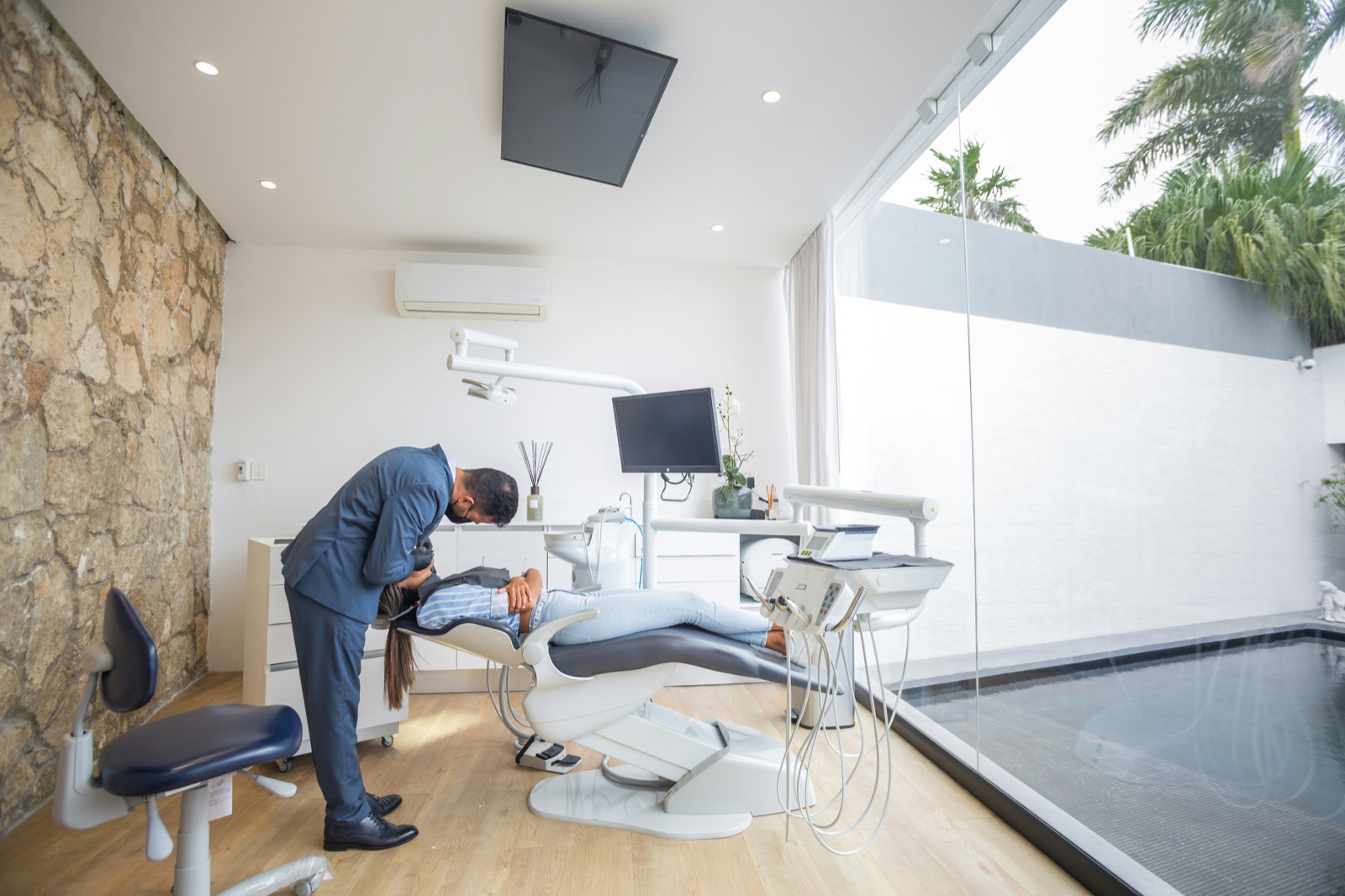
The numbers for dentistry in Australia are genuinely compelling. A shortage driven by an ageing population, increasing oral health awareness, and a domestic graduate pipeline that has never kept up with demand. Salaries that regularly exceed $150,000 for experienced practitioners and can reach $250,000+ in private practice ownership. Regional incentives that make the financial case even stronger outside major cities.
And then you read about the ADC.
The Australian Dental Council assessment is not a skills assessment in the sense that most health professions use — a document review, a qualification check, a competency mapping exercise. For most internationally trained dentists, it involves sitting two separate examinations across two days each, preceded by an initial qualification assessment, with the entire sequence taking anywhere from 12 to 24 months and costing in the range of AUD $7,000–$10,000 in fees alone before you've earned a single dollar in Australia.
This isn't a reason not to do it. Tens of thousands of overseas dentists have completed the process and built strong careers in Australia. But going in with a clear, accurate picture of what the process involves — rather than discovering each stage as you reach it — is what separates applicants who navigate it efficiently from those who are repeatedly surprised by what comes next.
The Shortage: Where It's Most Acute and Why
Australia's dental workforce shortage is concentrated in two areas: regional and remote communities, and public dental services. Metropolitan private practice in Sydney and Melbourne is competitive, well-supplied, and not where the shortage manifests. The further you get from capital city centres, the more pronounced the gap becomes — and the more actively employers, state health departments, and the federal government are trying to fill it.
The drivers are structural. An ageing population increases demand for restorative and prosthetic dental work. Growing awareness of the link between oral health and systemic conditions like diabetes and cardiovascular disease is expanding the patient base. And the domestic dental school output — approximately 700 graduates per year across all Australian universities — has never been enough to meet demand, let alone build a buffer against retirement-driven workforce attrition.
The salary figures are real but require context. New dental graduates in associate positions typically earn $80,000–$110,000 in their first Australian roles. Established dentists with 5+ years of experience in private practice earn $130,000–$180,000. Practice owners and specialists — orthodontists, oral surgeons, periodontists — regularly earn $200,000–$350,000+. Regional practitioners often earn a base rate 15–25% above metropolitan equivalents, plus relocation bonuses and accommodation support in some public health postings.
Are You Exempt From the ADC Assessment?
Before mapping out the three-stage process, it's worth checking whether you need to go through it at all — because a meaningful number of internationally trained dentists don't.
Dentists registered in New Zealand can apply for registration under Trans-Tasman Mutual Recognition without ADC assessment, regardless of where their original training was completed. This is the cleanest exemption and applies to any dentist currently holding New Zealand registration.
Dentists who qualified in the United Kingdom or Ireland may be eligible for streamlined assessment or mutual recognition arrangements that significantly reduce the assessment burden. The Dental Board of Australia maintains a list of qualifications and countries that may qualify for direct or simplified registration — it's worth checking this list specifically against your qualification before assuming you need the full three-stage process.
📌 Check the Dental Board exemption list first Before you begin any ADC process, visit the Dental Board of Australia's website and check the list of overseas qualifications eligible for simplified or direct registration. If your qualification is from the UK, Ireland, or a country with a mutual recognition arrangement, you may save 12–18 months of assessment time. This check takes 30 minutes and could save you a year.
The Three-Stage ADC Assessment: What Each Stage Actually Involves
For dentists who do need to complete the ADC assessment process — which is most internationally trained applicants — the pathway has three sequential stages. You cannot skip any stage, and each stage must be completed before the next begins.
Stage 1: Initial Assessment of Qualifications
The ADC reviews your dental degree, academic transcripts, registration history in your home country, and work experience documentation. They assess whether your qualification is substantially equivalent to an Australian dental degree — specifically, whether it spans at least four years of academic study and was completed at a recognised institution with appropriate clinical training components.
Cost: AUD $610. Processing time: approximately 8 weeks from a complete application, excluding time required for requesting additional documents. A successful Stage 1 outcome grants eligibility to sit the written examination. A negative outcome means your qualification doesn't meet the threshold for the examination pathway — in which case your options are completing an Australian dental program or pursuing a different visa pathway if one exists for your situation.
Stage 2: Written Examination
A two-day examination covering dental sciences, clinical reasoning, and clinical practice in the Australian context. Day one focuses on biomedical sciences, dental materials, and oral pathology. Day two focuses on clinical dentistry — restorative procedures, infection control, patient communication, and clinical decision-making.
The examination is held at designated centres in Australia — which means you need to be in Australia to sit it, or plan your travel around the examination schedule. Dates are published well in advance. Cost: approximately AUD $3,200 for both days. You have three attempts at the written examination. A failed third attempt ends the ADC pathway — understanding this before you sit for the first time changes how seriously you prepare.
⚠️ Preparation for the written exam is not optional The ADC written examination is set in an Australian clinical context — Australian infection control standards, the Dental Board of Australia's ethical framework, Australian clinical guidelines, and patient communication norms that may differ from your home country training. Candidates who treat this as a knowledge test of general dentistry and don't specifically prepare for the Australian regulatory and clinical context fail at a rate that surprises them. ADC preparation courses are available and worth the investment. The $3,200 examination fee is non-refundable, and you only have three attempts.
Stage 3: Practical Examination
A two-day clinical examination — a clinical skills day and a technical skills day. You demonstrate your clinical competence directly: examination and treatment planning with patients, restorative procedures, and other hands-on assessments evaluated by examiners in real time.
Cost: AUD $4,500. You are eligible to sit the practical examination for three years after passing the written examination — which provides some scheduling flexibility, but also means the clock is running. A successful practical examination results in an ADC certificate, which you then use to apply for AHPRA registration.
Total ADC costs across all three stages: approximately AUD $8,310 in examination and assessment fees, not including preparation courses, travel to Australia for examinations, accommodation, or the English test.
Then AHPRA Registration
With your ADC certificate in hand, you apply for registration with the Dental Board of Australia through AHPRA. This is the registration that allows you to practise legally. The additional requirements at this stage are:
- 1
English proficiency IELTS Academic (7.0 overall, 7.0 in each band), OET (B in each component), or PTE Academic (65 in each communicative skill). Dentists from Australia, NZ, Canada, Ireland, South Africa, UK, or USA are exempt if their secondary and tertiary qualifications were taught and assessed in English.
- 2
Certificate of Good Standing From your home country dental registration authority, confirming you hold or held registration in good standing and have no outstanding complaints or disciplinary matters.
- 3
Criminal history check AHPRA conducts a national criminal history check as part of the registration process. Overseas applicants may also need to provide an international criminal history check from their home country.
- 4
Recency of practice AHPRA requires evidence that you have practised dentistry recently — typically within the last five years. If you've had a significant gap in practice, you may need to demonstrate currency through additional means.
AHPRA registration processing after a complete application: typically 4–8 weeks. With registration granted, you can legally practise dentistry in Australia.
Visa Pathways: Which Route Fits Your Situation
Skills in Demand (482) — Employer Sponsored
The most common entry pathway for overseas dentists. A dental practice, hospital, or community health service sponsors you on a temporary visa for up to four years. After the qualifying period, permanent residency through the Employer Nomination Scheme (186). Regional public health services and dental chains with multiple locations are the most active sponsors — they have established immigration processes and genuine workforce gaps that make them motivated to see the sponsorship through.
Subclass 189 — Skilled Independent
Dentist (ANZSCO 252312) sits on the MLTSSL, making it eligible for the points-tested independent permanent residency visa. Invitations typically go to candidates in the 85–95 point range. For dentists with strong English scores, relevant experience, and an age profile under 40, this pathway offers permanent residency on arrival without employer dependency — which significantly improves your negotiating position with employers and gives you career flexibility from day one.
Subclass 491 — Regional (Strong Value Proposition)
15 extra points for regional nomination. For dentists, regional work isn't a concession — it's where the shortage is most acute, where employers are most motivated, and where financial incentives (relocation allowances, accommodation support, higher base rates) are most generous. The combination of 15 extra points and a genuinely better job market makes the 491 compelling for candidates who are close to but not comfortably above the invitation threshold.
Subclass 190 — State Nominated
State nomination adds 5 points and is worth pursuing if you're borderline for the 189 invitation pool. Western Australia and Queensland actively nominate dentists and accept offshore applications — meaning you can apply from your home country without needing to first arrive in Australia.
| Visa | Job offer needed? | Outcome | Best for |
|---|---|---|---|
| 482 → 186 | Yes | PR after 2–3 yrs | Sponsored offer, regional health services |
| 189 | No | Permanent residency | 85–95 pts, want PR on arrival |
| 190 | Sometimes | Permanent residency | WA/QLD offshore nomination |
| 491 | No | PR after 3 yrs regional | Regional flexibility, fastest invitation |
What Australian Dental Practice Actually Looks Like
Australian dentistry operates in a predominantly private model — most dental care is delivered through private practices, with patients paying a combination of private health insurance benefits and out-of-pocket costs. Public dental services exist but are under-resourced, have long waiting lists, and are means-tested. This structure shapes the practice environment significantly.
Coming from a mixed public-private system, the autonomy in Australian private practice was striking. You make clinical decisions, set your pace, and build relationships with your patients over time. It took adjustment, but I wouldn't go back.
Associate positions — where you work in an established practice on a percentage of billings — are the most common entry point for internationally trained dentists. The percentage typically ranges from 35–45% of collections, with the practice owner providing the premises, equipment, and reception. Income in associate positions is directly linked to your clinical output, which creates variability in the early months as you build a patient base and develop efficiency in the Australian clinical context.
Private practice ownership is a common long-term goal for dentists in Australia. The investment required is substantial — practice purchase prices in metropolitan areas range from $300,000 to $1,500,000+ depending on size and location — but the income ceiling for practice owners is significantly higher than for associates. Regional practice ownership carries lower entry costs and higher government support, and several regional communities actively assist dental practitioners in establishing practices as part of rural health incentive programs.
Your Realistic Timeline
- 1
Check exemption eligibility — 1 week Dental Board of Australia exemption list. NZ registration, UK/Ireland qualifications, mutual recognition pathways. If you qualify, skip the ADC entirely and go straight to AHPRA registration.
- 2
English test — book now if required IELTS Academic, OET, or PTE Academic. Allow 6–10 weeks preparation. Start this before or during your Stage 1 ADC application — the results will be needed for AHPRA anyway, and having them ready removes a step later.
- 3
ADC Stage 1 — Initial assessment: 8 weeks + document gathering Transcripts, qualification certificates, registration history, work experience documentation. Allow 4–6 weeks to gather documents before submission, then 8 weeks processing.
- 4
ADC Stage 2 — Written examination: 3 to 6 months preparation Don't underestimate this. Enrol in an ADC preparation course, study Australian clinical guidelines and the Dental Board's regulatory framework specifically. Book early — examination spots fill. Travel to Australia required.
- 5
ADC Stage 3 — Practical examination: 3 to 9 months after written Schedule within your 3-year window. Clinical preparation is essential — the examiners are assessing Australian-context competency, not just technical skill.
- 6
AHPRA registration + visa — 4 to 8 weeks each Run visa preparation (EOI, employer search) in parallel with the ADC process. Many dentists secure a job offer and begin visa processing before their ADC is complete — having both underway simultaneously compresses the overall timeline.
Realistic total timeline from starting the ADC process to first day in an Australian dental practice: 18 to 30 months for most applicants. This is longer than almost any other health profession in this series — and it's the timeline that most people don't fully absorb when they start. The dentists who navigate it most efficiently are those who start early, prepare seriously for each examination stage, and run the visa and job search process in parallel rather than sequentially.
Is It Worth the Process?
For dentists from countries where the profession is lower-paid, where private practice ownership is difficult, or where the clinical environment is constrained — the answer is almost always yes, but with clear eyes about the timeline. The 18–30 month window is real, the costs are real, and the examination failure risk is real. None of these are reasons not to pursue it. They're reasons to go in prepared.
The dentists who describe the move to Australia most positively are consistently those who prepared seriously for the ADC examinations, secured a regional or associate position as their entry point rather than holding out for the ideal metropolitan role, and gave themselves 12–18 months to establish before evaluating whether they'd made the right decision. The ones who struggled are those who underestimated the examination difficulty, arrived expecting the shortage to translate into immediate premium offers, or tried to navigate the process without understanding each stage before they reached it.
The shortage is structural. The income potential is genuine. The process is long but navigable. Start with the exemption check, then map your ADC timeline before anything else — everything else fits around it.
See the full pathway for Dentists in Australia
ANZSCO 252312 — salary range, shortage rating, state demand, and visa eligibility in one card.
View Dentist Career Card →