
The Psychological Reality of Your First Year in Australia — Nobody Talks About This Part
The Australia you imagined before you arrived and the Australia you actually land in are two different places. Not because Australia is worse than you expected — in the long run, it's often better. But the gap between the version in your head and the version you're actually standing in, jet-lagged and disoriented in week two with no job and no friends and an accent nobody quite understands, is real. This is an honest account of what the first year actually feels like — and why the hardest months are often the ones you'd most want to go back to.
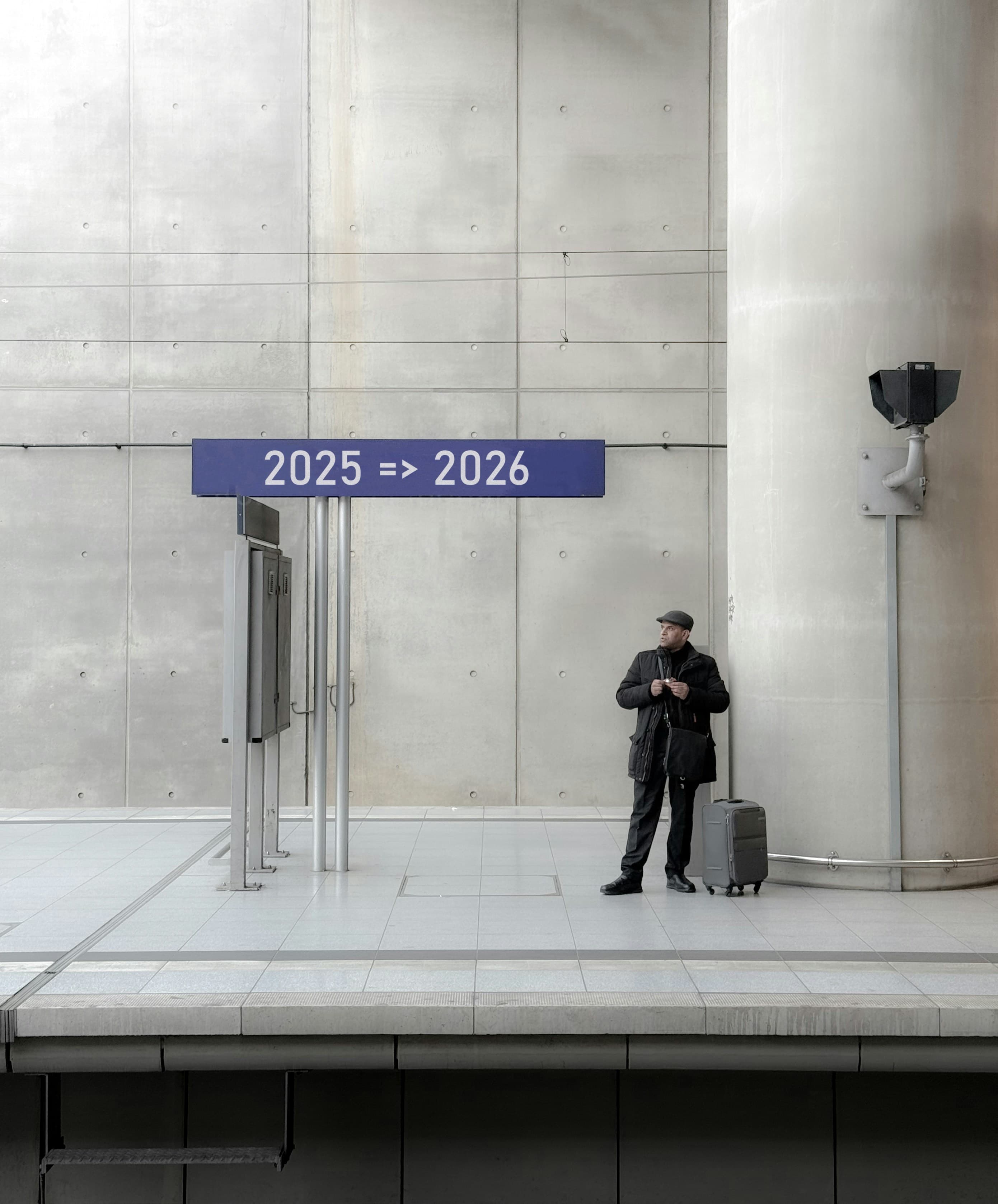
I want to be honest about something before the useful information in this article. The first few months in Australia were some of the hardest I've experienced — not because anything went catastrophically wrong, but because almost nothing went the way I'd planned, and I was dealing with that alone in a country where I didn't speak the language confidently, didn't understand the systems, and didn't yet have a single person I could call a real friend.
I also want to be honest about something else: that period is now one of the most vivid and treasured parts of my life. I would go back to it without hesitation. The people I met in that difficult stretch are still people I think about. The version of myself that emerged from it is someone I'm genuinely glad to be. None of that makes the hard parts easier while you're in them — but it might make them slightly more bearable to know that they tend to resolve into something you didn't expect.
The Plan vs. What Actually Happened
The original plan was straightforward: get a forklift licence, move to Brisbane, find work quickly, start earning. A clear three-step sequence that made complete sense in the planning phase and started falling apart almost immediately.
What I didn't know — and what almost nobody tells you before you go — is that a forklift licence in Australia isn't issued the same day you complete the training. The High Risk Work Licence is processed by the state's work safety authority, and the processing time is not a few days. It's weeks. Sometimes more than a month. I had done the training, passed the assessment, and was ready to work — and then I was waiting. Not for a job. For a piece of paper that had to come from a government office on its own schedule.
Brisbane wasn't going anywhere. But I was sitting in temporary accommodation, watching the days pass, spending money I'd budgeted for the road, and feeling increasingly like I'd made a miscalculation that I couldn't undo.
⚠️ The forklift licence processing reality — learn from this If you're planning to use a forklift licence to start work quickly in Australia, factor in the processing time for your state's High Risk Work Licence. In Queensland, NSW, and Victoria, processing can take 4–6 weeks from the date of your assessment. You cannot legally operate a forklift on a mine site or in most commercial settings on a training receipt alone — you need the physical licence. Apply for it immediately after your assessment, and plan your arrival timeline around the realistic processing period, not the theoretical one.
The Loneliness Nobody Posts About
There's a version of the working holiday experience that exists on social media — beaches, new friends, outdoor adventures, meals at long tables full of laughing people. That version is real. It also doesn't tend to be what the first few weeks look like.
The first few weeks are more likely to look like this: you wake up in a hostel or a share house where you don't know anyone. You spend several hours applying for jobs online. You get no responses, or responses that require a phone call in English that you're not yet confident making. You eat alone. You go for a walk alone because there's nothing else to do. You check your phone to see if anyone has messaged you — people from home who are asleep because of the time difference — and you feel a specific kind of loneliness that isn't about being in a bad place. It's about being in a good place and not yet knowing how to be there.
This experience is not unique to people with language barriers, though the language barrier makes it sharper. It's the standard experience of arriving somewhere new as an adult without an existing social network, and it has a specific psychological weight that is completely disproportionate to what's actually wrong. Nothing is actually wrong. You are safe, you have money (for now), you have a visa, and you are in one of the most liveable countries in the world. And you feel terrible. That combination — objective safety, subjective misery — is one of the most disorienting aspects of the first-year experience, because you feel like you have no right to feel what you're feeling.
You do have the right to feel it. It's a normal response to a genuinely difficult situation. Moving to the other side of the world, alone, without a job or a social network, navigating a new language and a new system, is hard. Being honest about that — with yourself, and with people back home — is more useful than pretending it isn't.
The English Problem — and What It Actually Feels Like
There's a difference between being able to read English, being able to write English, and being able to use English in real time in a loud café or on a phone call or in a job interview. Most people who've studied English in Korea, France, Japan, or Southeast Asia have strong reading and writing skills. The real-time spoken component — especially in Australian accents, with Australian slang, at the pace that native speakers actually talk — is a different skill, and it takes time to build.
The specific feeling is hard to describe to someone who hasn't experienced it. You understand about 70% of what someone has said. You're deciding whether to ask them to repeat it, which draws attention to the gap, or to respond to the 70% you caught and hope the 30% wasn't load-bearing. You're having this internal negotiation in real time while the conversation continues. It is exhausting in a way that doesn't go away at the end of the working day — it follows you home and sits in your body like a kind of low-grade fatigue.
What helps — and this sounds almost too simple — is time and repeated exposure. Not formal study. Not apps. Just being in situations where English is happening around you, where you're required to participate, and where the stakes are low enough that getting it wrong doesn't matter much. The hostel common room. The café where you're a regular. The workplace where your colleagues are patient. The language builds in those environments in ways that self-study never quite replicates.
The Unexpected People — the Part That Changes Everything
Here is the thing about being in a genuinely difficult situation in a new country: you are more open than you would otherwise be. The social filters that govern how you meet people at home — shared history, mutual friends, familiar contexts — don't exist. You meet people because you happen to be in the same room. Because you both looked lost at the same corner. Because one of you made a comment about something and the other one laughed.
In the difficult early months, I met people I would never have met under normal circumstances, because the circumstances weren't normal. A person from a country I'd never thought much about became one of the most significant people in my Australian experience. A conversation that started because we were both waiting for the same bus turned into a friendship that lasted the entire time I was in the country. These connections happen with a speed and an intensity that feels slightly unreal compared to how friendships form at home — because you're both equally untethered, equally in need of connection, and equally willing to make the effort.
That period of my first year — difficult, lonely, frustrating in the ways I've described — is also the period that gave me most of the people and experiences I think about when I think about Australia. Not the comfortable middle period when things were sorted and life had a routine. The uncertain, uncomfortable beginning, when everything was still possible and everyone I met was new.
The hardest three months of my time in Australia were also, I now realise, the best three months. I didn't know anyone. I didn't have a job yet. I had more time than I knew what to do with and less money than I was comfortable with. And I was more alive, more present, and more genuinely open to other people than I have been before or since. That version of the experience — uncertain, slightly scared, completely unscheduled — is the one I'd go back to if I could.
The Timeline: What the First Year Usually Looks Like
The psychological arc of the first year in Australia is consistent enough across different people and backgrounds that it's worth mapping — not because your experience will follow it exactly, but because knowing the shape of the journey makes the difficult parts feel less like permanent conditions and more like phases with an end.
- Weeks 1–3
The arrival high — everything is new and interesting The first few weeks feel like being on holiday. Everything is novel. You're exploring the city, meeting people at the hostel, trying new food. The fact that you don't have a job yet doesn't feel like a problem — it feels like freedom. This phase feels good and doesn't last.
- Weeks 3–8
The reality gap — the plan meets the actual situation This is the hardest phase for most people. The money is starting to move in the wrong direction. The job applications are not producing results at the rate you expected. The social connections from the hostel have dispersed as people moved on. You are spending more time alone than you anticipated. For many people, this is the moment when going home starts to feel like a real option. Most people who leave Australia early leave during this window.
- Months 2–4
The first anchor — a job, a living situation, a friend group The first stable element — a job, a share house with good housemates, a regular social environment — changes the experience significantly. It doesn't have to be everything sorted at once. One anchor is enough to shift the psychological weight from "this isn't working" to "this is working, the rest will come." Most people who stay through the difficult early phase reach this point by month three or four.
- Months 4–8
The integration — Australia starts to feel like somewhere you live, not somewhere you're visiting You have routines. You have people you see regularly. You have a neighbourhood that feels familiar. The language fatigue has reduced because your ears have calibrated to Australian English. You stop translating everything in your head and start thinking in the language more naturally. This is when people often describe the experience of Australia "clicking."
- Months 8–12
The question — what comes next? By the end of the first year, most working holiday makers are facing a version of the same question: stay, extend, or go home? The people who've built something — a career, a social network, a relationship with the country — often find the question harder than they expected. Going home to the life that was there before feels both right and somehow smaller than it used to. This dissonance is not a problem. It's evidence that something real happened.
What Actually Helps — Practically and Psychologically
- 1
Give yourself a realistic timeline — not a heroic one Most people take three to four months to feel settled in a new country. Not two weeks. Not one month. Three to four months. If you arrived expecting to feel at home within a few weeks and you're still struggling in month two, you're not failing — you're on a normal schedule. Adjust the expectation, not the experience.
- 2
Say yes to things that feel slightly uncomfortable The social connections that matter most in the first year almost always come from situations you weren't entirely sure about — the hostel event you nearly skipped, the colleague's invitation you almost declined because you were tired, the conversation you started because you forced yourself to. The social membrane in a new country is thinner than at home. Small initiations produce larger returns than you'd expect.
- 3
Don't make permanent decisions in the hardest weeks The impulse to go home is strongest in weeks three to six — when the novelty has worn off and the stability hasn't yet arrived. This is also the worst time to make the decision to leave, because it's the most unrepresentative period of what the experience actually becomes. If you're seriously considering leaving, give it another four weeks before you decide. Almost everyone who does reports that the feeling changed.
- 4
Stay in contact with home — but not as a substitute for being present Calling home is good. Spending four hours a day on calls with people in your home country as a way of not engaging with the country you're actually in is less good. The balance is personal, but it's worth noticing when connection with home is comfort versus avoidance.
- 5
Physical basics matter more than you think Sleep deprivation, poor nutrition, and lack of exercise amplify every psychological difficulty. The hostel environment makes all three harder. Prioritise getting enough sleep even in a shared dorm (earplugs and an eye mask are not optional purchases), eating actual food rather than convenience-store calories, and getting outside and moving every day. The mental state improves when the physical state improves, and the reverse is also true.
- 6
Acknowledge what's hard without catastrophising it There is a difference between "this week has been genuinely difficult and I'm tired and homesick" and "this was a mistake and I should never have come." The first is an accurate description of a phase. The second is a conclusion drawn from a phase that hasn't finished yet. Both feel the same from the inside. The distinction matters enormously for what you do next.
On Making Friends in Australia — the Honest Version
Making friends as an adult in a new country is genuinely hard. Harder than the working holiday brochures suggest. Australian social culture is warm and welcoming in casual interaction — people are friendly at work, pleasant in conversation, good-natured with strangers. Building that casual warmth into actual friendship takes longer and more effort than most people expect, and the working holiday framework — where everyone is transient, everyone has an expiry date on their time in Australia — creates a specific kind of social environment where connections form intensely and dissipate quickly.
The friendships that tend to last are the ones built around shared experience rather than shared location. The people you worked alongside on a difficult job. The people who were in the same difficult phase of the experience at the same time. The people who showed up for you when something went wrong, or for whom you showed up. These friendships form across every nationality and background, and they form specifically because you were all in the same uncertain situation at the same time.
The friends I made in Australia are still, years later, people I would call in a genuine emergency. We don't live in the same country. We don't see each other regularly. But the quality of those connections — forged in the particular conditions of mutual vulnerability and openness that the first year creates — is something I haven't replicated in the more comfortable circumstances of life since. That is, I think, the thing most worth knowing about the first year before you go through it.
The Bottom Line
The first year in Australia is hard in specific, predictable ways. The English is harder in practice than in theory. The job doesn't come as quickly as the plan assumed. The licence takes longer to process. The friends take longer to find. The country is bigger and more indifferent than the imagination of it was, and the version of yourself that has to navigate it alone is doing something genuinely difficult.
It is also — and this is the part that's harder to convey to someone who hasn't been through it — one of the best things that is likely to happen to you. Not despite the difficulty, but partly because of it. The people you meet in that uncertain space. The version of yourself that forms under those conditions. The specific texture of days that were hard and then, almost without your noticing, weren't anymore.
If you're in the difficult part right now: it changes. Not because you endure it, but because you stay present in it long enough for things to shift — the anchor arrives, the language clicks, the right person turns up in the right moment. Keep going. The first year is worth finishing.
Find your Australian career
Search 1,020 Australian occupations — salary ranges, shortage ratings, and visa pathways in one place.
Explore Australian Careers →