
Occupational Therapist in Australia: The NDIS Boom, the OTC Training Step, and Why AHPRA Alone Isn't Enough
The National Disability Insurance Scheme has transformed occupational therapy in Australia into one of the most in-demand and highest-paying allied health professions in the country. The AHPRA registration pathway is well-established. But there's a mandatory cultural responsiveness training module through the Occupational Therapy Council that sits between your OTC assessment and your AHPRA application — and if NDIS work is your goal, understanding what provider registration means for your employer is the step that determines whether you can actually bill for the work you do.
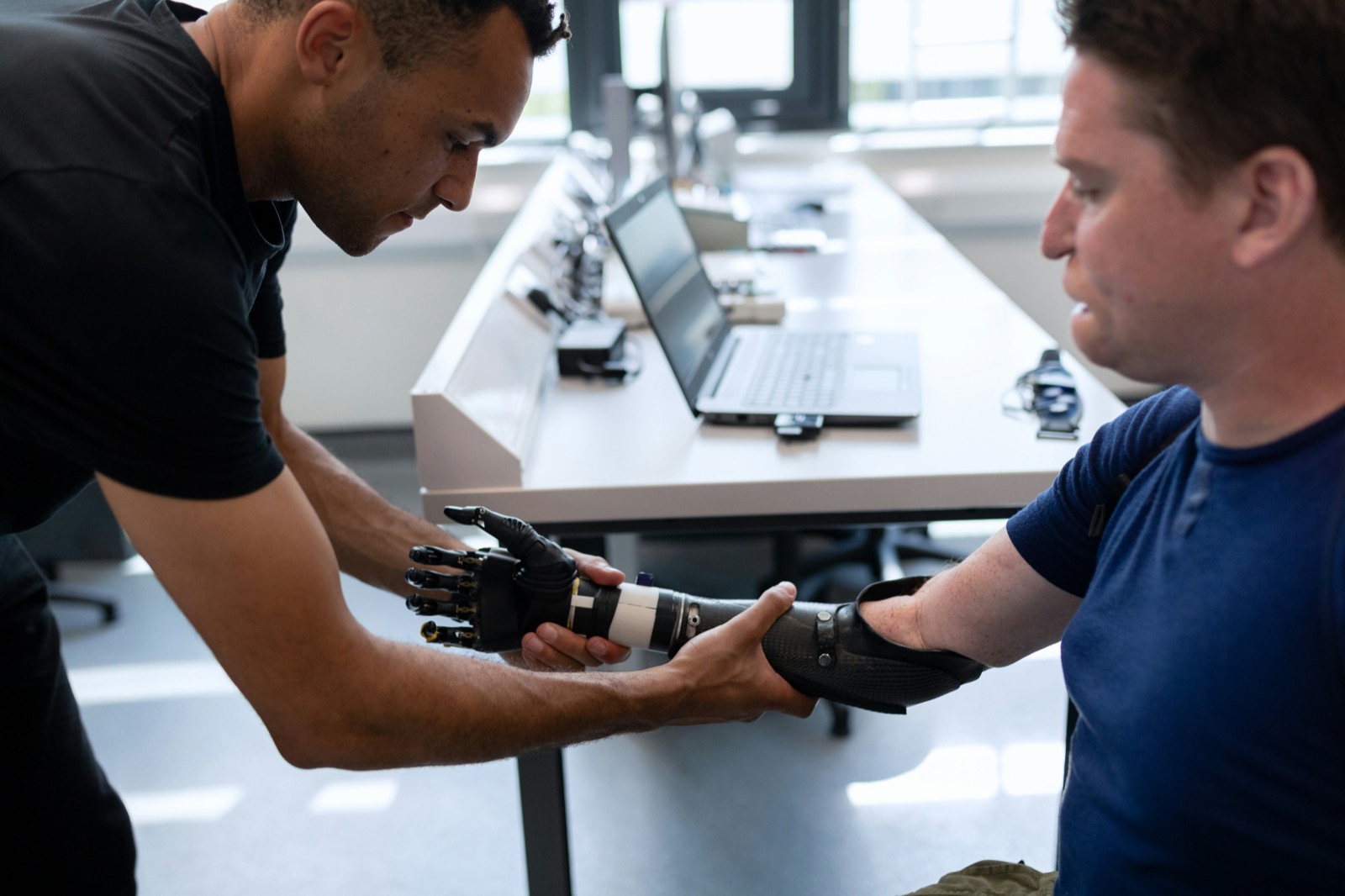
Occupational therapy has always been a respected and meaningful profession. But something shifted in Australia when the National Disability Insurance Scheme began its full national rollout. The NDIS didn't just create new demand for OTs — it created an entirely new service economy built around occupational therapy assessments, functional capacity evaluations, assistive technology recommendations, home modification reports, and NDIS plan reviews. A profession that was already shortage-listed became one of the most actively recruited in the entire healthcare system.
For internationally trained OTs, the timing is genuinely compelling. The shortage is structural and documented. The visa pathways are well-established and actively used by employers. The salaries, particularly in private NDIS practice, have risen significantly as the market has competed for limited supply. And the professional scope — from paediatric development to aged care, from workplace rehabilitation to disability support — is broader than in many comparable countries.
But there are two steps in the registration and employment process that most guides handle superficially or skip entirely. Both matter enough to shape your planning significantly before you start.
The NDIS Boom: What It Actually Means for OTs
The National Disability Insurance Scheme is a federal government program that funds supports and services for Australians with permanent and significant disability. Since its full national rollout, it has become one of the largest social spending programs in Australia's history — with over 600,000 participants and annual expenditure exceeding AUD $35 billion.
Occupational therapists are central to the NDIS in a way that few other health professions are. OT assessments determine what supports a participant needs. OT functional capacity evaluations are required for NDIS plan funding decisions. OT recommendations drive assistive technology approvals, home modification funding, and support coordination. When an NDIS participant's plan is reviewed, OT reports are frequently the key clinical evidence. This means demand for OTs in NDIS contexts isn't episodic — it's structural, recurring, and growing as the scheme matures and the participant population increases.
Salary ranges for OTs in Australia reflect the NDIS premium. Public hospital and community health OTs typically earn $75,000–$95,000. Private practice and NDIS-focused roles earn $90,000–$120,000. Senior and specialist OTs — paediatrics, hand therapy, neurological rehabilitation — earn $110,000–$140,000. OTs who operate their own NDIS-registered private practice or subcontract regularly under NDIS earn $130,000–$180,000+ depending on billing volume. Regional and remote postings carry a 15–25% premium above metropolitan base rates and often include relocation support and accommodation assistance.
The OTC Assessment: What It Is and What It Isn't
The Occupational Therapy Council (OTC) is the government-recognised skills assessing body for occupational therapists in Australia. A positive OTC skills assessment is required for your skilled migration visa application. It is also the gateway to AHPRA registration for internationally qualified OTs.
The OTC assessment evaluates whether your occupational therapy qualification is substantially equivalent to an Australian-accredited entry-level OT degree. It reviews your academic transcripts, your degree content, your clinical placement hours, and your work experience since graduation. The assessment is document-based — there is no written examination or practical component.
Documentation required for the OTC assessment:
- 1
Academic qualification documents Certified copies of your degree certificate and official academic transcripts. If your degree was completed in a language other than English, certified translations are required. The OTC compares your course content against the Australian Minimum Competency Standards for OT graduates — your transcript needs to show sufficient coverage of core OT content areas including assessment, intervention planning, activity analysis, and clinical placement.
- 2
Clinical placement documentation Evidence of supervised clinical placement hours completed during your degree. Australian OT programs require a minimum number of supervised placement hours — if your program included fewer, the OTC may request additional documentation or require a period of supervised practice in Australia before full recognition.
- 3
Employment history Employer reference letters for all post-qualification OT employment. Letters must be on official letterhead, signed by a direct supervisor, and describe the specific OT duties performed — assessment, intervention, report writing, team participation. Generic letters confirming employment dates without duty descriptions are insufficient for OTC assessment purposes.
- 4
Registration certificate Current or most recent registration certificate from your home country OT registration body, confirming you hold or held registration in good standing.
OTC processing time: approximately 8–12 weeks from a complete application. Fee: AUD $800–$1,000 depending on application type. A positive OTC assessment produces two outcomes: a Skills Assessment Letter for visa purposes, and eligibility to proceed to AHPRA registration.
The Step Between OTC and AHPRA: Cultural Responsiveness Training
This is the step that most migration guides for OTs either skip or reduce to a single sentence. It deserves more than that — because it sits directly in the path between your OTC assessment and your AHPRA registration, and not completing it blocks your application.
The Occupational Therapy Board of Australia requires all internationally qualified occupational therapists to successfully complete a cultural responsiveness and awareness training programme through the OTC before registering with AHPRA. This is not optional, not waivable, and not something that can be completed after you arrive — it must be done before your AHPRA registration application is submitted.
The training covers Australian cultural context as it applies to OT practice — specifically Aboriginal and Torres Strait Islander health and cultural safety, culturally responsive practice across Australia's diverse population, and the expectations of the Occupational Therapy Board of Australia regarding cultural competency in professional practice. It is delivered online through the OTC's professional development platform.
⚠️ Complete this before applying to AHPRA — not after The OTC cultural responsiveness training is a prerequisite for AHPRA registration, not a post-registration CPD requirement. If you submit your AHPRA registration application without completing it, your application will be assessed as incomplete. The training itself takes approximately 4–6 hours to complete and is delivered entirely online — it's not a significant time commitment. The problem is simply not knowing it's required and discovering the gap after you've already submitted your AHPRA application. Complete it immediately after your OTC positive outcome, before you start your AHPRA application.
AHPRA Registration: The Requirements
After completing the OTC assessment and the cultural responsiveness training, you apply for registration with the Occupational Therapy Board of Australia through AHPRA. This is the registration that allows you to legally practise occupational therapy in Australia.
- 1
Positive OTC skills assessment Your OTC Skills Assessment Letter is submitted as evidence that your qualification meets Australian standards. This is non-negotiable — AHPRA will not proceed without it.
- 2
OTC cultural responsiveness training certificate Your completion certificate from the OTC's cultural responsiveness program. AHPRA requires this before processing your registration application.
- 3
English proficiency IELTS Academic 7.0 overall with minimum 7.0 in each band, OET B in all components, or PTE Academic 65 in each communicative skill. Exemptions for OTs who completed secondary and tertiary education entirely in English in qualifying countries — confirm your exemption eligibility with the OT Board of Australia before booking a test.
- 4
Certificate of Good Standing From your home country OT registration body, confirming you are registered and in good standing with no outstanding complaints or disciplinary matters. Valid for three months — apply for this after your OTC assessment is underway, not at the start of your preparation.
- 5
Criminal history check National and international criminal history checks as required by AHPRA.
AHPRA processing time after a complete application: typically 4–8 weeks. Some applications take longer if additional information is requested. Apply at least three months before your intended start date.
NDIS Provider Registration: The Step After AHPRA
If your goal is to work in NDIS — as an employee of an NDIS provider, or eventually as a self-employed OT billing NDIS directly — there is an additional layer of registration that operates entirely outside the AHPRA framework.
The NDIS Quality and Safeguards Commission registers and regulates NDIS providers. To legally deliver registered supports to NDIS participants and receive NDIS funding, a provider must be registered with the NDIS Commission. This is an organisational registration — it applies to the business or practice, not the individual OT. But as an OT working in NDIS settings, understanding what it means for your employer is essential.
💡 NDIS registration applies to your employer, not to you personally As an individual OT, you don't apply for NDIS registration — your employer does. But not all OT employers are NDIS-registered providers. Some operate only in private pay or Medicare contexts. If NDIS work is your primary interest, confirm your potential employer's NDIS registration status before accepting a position. An employer without NDIS registration cannot bill NDIS for your services — which limits your client base significantly if your skills and interest are in disability support. The NDIS Commission's provider register is publicly searchable.
For OTs who eventually establish their own private practice and wish to directly register as an NDIS provider, the registration process involves: an application to the NDIS Commission, a quality audit against the NDIS Practice Standards, and ongoing compliance with NDIS reporting and incident management requirements. This is a separate process from AHPRA registration and requires planning as a business decision rather than a professional registration decision.
Where the Demand Is: Specialisations in High Need
Occupational therapy in Australia spans a wide range of practice settings. Understanding where the demand is most acute — and where the salaries and career development opportunities are strongest — helps you target your job search and position your Australian career strategically.
NDIS and Disability
The highest-demand and fastest-growing sector. OTs in NDIS contexts conduct functional capacity evaluations, recommend and justify assistive technology, write home modification reports, and develop NDIS support plans. The billing model — NDIS line items for each service type — creates a practice environment where efficient, high-quality assessment and report writing directly drives income. Private practices and NDIS specialist organisations are the primary employers. Strong written communication skills and the ability to translate clinical findings into NDIS funding language are highly valued.
Paediatrics
Paediatric OT — working with children with developmental delays, autism spectrum disorder, sensory processing difficulties, and physical disability — is consistently one of the most in-demand OT specialisations in Australia. Schools, early intervention centres, community health services, and private paediatric practices all actively recruit. The NDIS has significantly expanded funding for early childhood OT supports, and the demand for OTs with paediatric experience is particularly strong in outer suburban growth corridors where new housing estates are being built and families with young children are concentrated.
Aged Care and Hospital
Hospital OTs work in acute and subacute settings — post-surgical rehabilitation, neurological recovery, discharge planning, and return-to-function assessment. Aged care OTs work in residential facilities and community care programs, assessing and supporting older Australians to maintain independence. Both settings are in consistent demand and are the most common entry points for internationally trained OTs who are building Australian hospital experience before transitioning to private or NDIS practice.
Vocational Rehabilitation
OTs in vocational rehabilitation work within workers' compensation and insurance systems — assessing injured workers, developing return-to-work plans, and conducting worksite assessments. The billing model is different from NDIS (claims-based rather than plan-based), but the demand is consistent and the salaries are strong. Insurance companies and WorkCover-approved rehabilitation providers are the main employers.
My caseload in the first month included a 4-year-old with autism, a 78-year-old post hip replacement, and three NDIS adults with acquired brain injury. The breadth in Australia is genuinely different from the specialised role I'd been in for five years at home.
Visa Pathways: Which Route Fits Your Situation
Skills in Demand (482) → Employer Nomination Scheme (186)
The most common entry pathway for internationally trained OTs. NDIS providers, hospital networks, paediatric services, and community health organisations all sponsor OTs regularly. Employers in regional areas are the most motivated and most experienced at managing the sponsorship process — many regional health services have structured international OT recruitment programs with relocation support and supervision arrangements for AHPRA registration purposes.
Subclass 189 — Skilled Independent
Occupational Therapist (ANZSCO 252411) sits on the MLTSSL. Points-tested permanent residency with no employer dependency. Recent invitation rounds have typically started from 75–85 points — reflecting the acute shortage weighting for allied health. For OTs with strong English scores and specialist NDIS or paediatric experience, 189 provides permanent residency on arrival with maximum flexibility.
Subclass 491 — Regional (Particularly Strong for OTs)
Regional Australia's OT shortage is the most acute of any setting. Regional hospitals, NDIS providers in non-metropolitan areas, and community health services all have genuine, immediate demand and active employer support for incoming international OTs. The 15-point regional bonus combined with employer-assisted relocation makes this pathway compelling for OTs who are flexible about location. Many regional OT roles offer structured career development, broad caseloads, and genuine clinical autonomy that metropolitan roles don't match.
Subclass 190 — State Nominated
NSW, Victoria, Queensland, Western Australia, South Australia, and ACT all actively nominate occupational therapists. The occupation consistently appears on state priority occupation lists across multiple states simultaneously — which is relatively unusual and reflects how acute the shortage is. State nomination adds 5 points and is available both onshore and offshore for OTs in most states.
| Visa | Job offer needed? | Outcome | Best for |
|---|---|---|---|
| 482 → 186 | Yes | PR after 2–3 yrs | NDIS providers, hospital networks |
| 189 | No | Permanent residency | 75–85 pts, NDIS/paeds specialist |
| 190 | Sometimes | Permanent residency | All major states nominate actively |
| 491 | No | PR after 3 yrs regional | Regional shortage, broadest scope |
Your Realistic Timeline
- 1
Prepare OTC documentation — 3 to 6 weeks Degree certificate, official transcripts, clinical placement evidence, employer reference letters with duty descriptions, and home country registration certificate. Employer letters are the most time-sensitive — contact previous employers immediately and provide a duty description template to guide their letters.
- 2
OTC assessment — 8 to 12 weeks processing Submit complete application. Begin English test preparation and EOI in parallel. Do not wait for OTC result before starting other steps — IELTS or OET preparation typically takes 6–10 weeks and can run alongside the assessment period.
- 3
OTC cultural responsiveness training — complete immediately on positive OTC result Online, approximately 4–6 hours. Do this the same week your positive OTC outcome arrives. It's the prerequisite for your AHPRA application — completing it immediately keeps your timeline moving without interruption.
- 4
AHPRA registration — 4 to 8 weeks after complete application Submit with OTC assessment letter, training completion certificate, English proficiency evidence, Certificate of Good Standing, and criminal history check. Apply at least three months before your intended start date.
- 5
Visa and employer search — run in parallel with OTC and AHPRA Begin employer outreach during your OTC assessment period. Target NDIS-registered employers in your preferred specialisation — confirm their NDIS registration status before investing time in the application process. Regional employers and NDIS specialist providers are the most active in managing international OT recruitment.
Realistic total timeline from starting OTC documentation to first day in an Australian OT role: 10 to 18 months for most candidates. The cultural responsiveness training, if completed promptly, adds less than a week to the overall timeline. The candidates who move fastest are those who complete the training immediately on receiving their OTC positive outcome and have already begun employer outreach before their AHPRA registration is finalised.
Is It the Right Move?
For occupational therapists whose home country offers limited scope of practice, constrained salary ceilings, or a smaller disability services sector — Australia's NDIS-driven transformation of the profession offers something genuinely different. The breadth of practice available, the professional standing of OT within the Australian healthcare system, and the income potential in private NDIS practice have all improved significantly in the past decade and continue to improve as the scheme matures.
The cultural responsiveness training is a genuine contribution to your professional development — not a bureaucratic hurdle. The expectation that OTs practise in a culturally safe and responsive way with Aboriginal and Torres Strait Islander Australians and with Australia's diverse multicultural population is embedded in how the profession operates here. OTs who engage with it genuinely — rather than treating it as a box to tick — find it shapes their Australian practice in ways that matter.
The NDIS is where the demand is. AHPRA registration gets you the licence to practise. The OTC training gets you to AHPRA. Complete them in order, and the rest follows.
See the full pathway for Occupational Therapists in Australia
ANZSCO 252411 — salary range, shortage rating, state demand, and visa eligibility in one card.
View OT Career Card →