
Perth: Why Migrants Quietly Choose It — And What Nobody Tells You Before You Go
Perth rarely makes the shortlist when people are planning their move to Australia. It's too far away, too isolated, or simply not the city anyone's heard of in the same way as Sydney or Melbourne. But among people who've actually lived there — particularly working holiday makers who started in the east and eventually moved west — Perth has a reputation that's almost aggressively positive. High wages, lower rent than Sydney, 3,000 hours of sunshine a year, and beaches within 20 minutes of the CBD. This guide covers all of it honestly — including the isolation, the car dependency, and the things that frustrate people who come expecting a smaller Sydney.
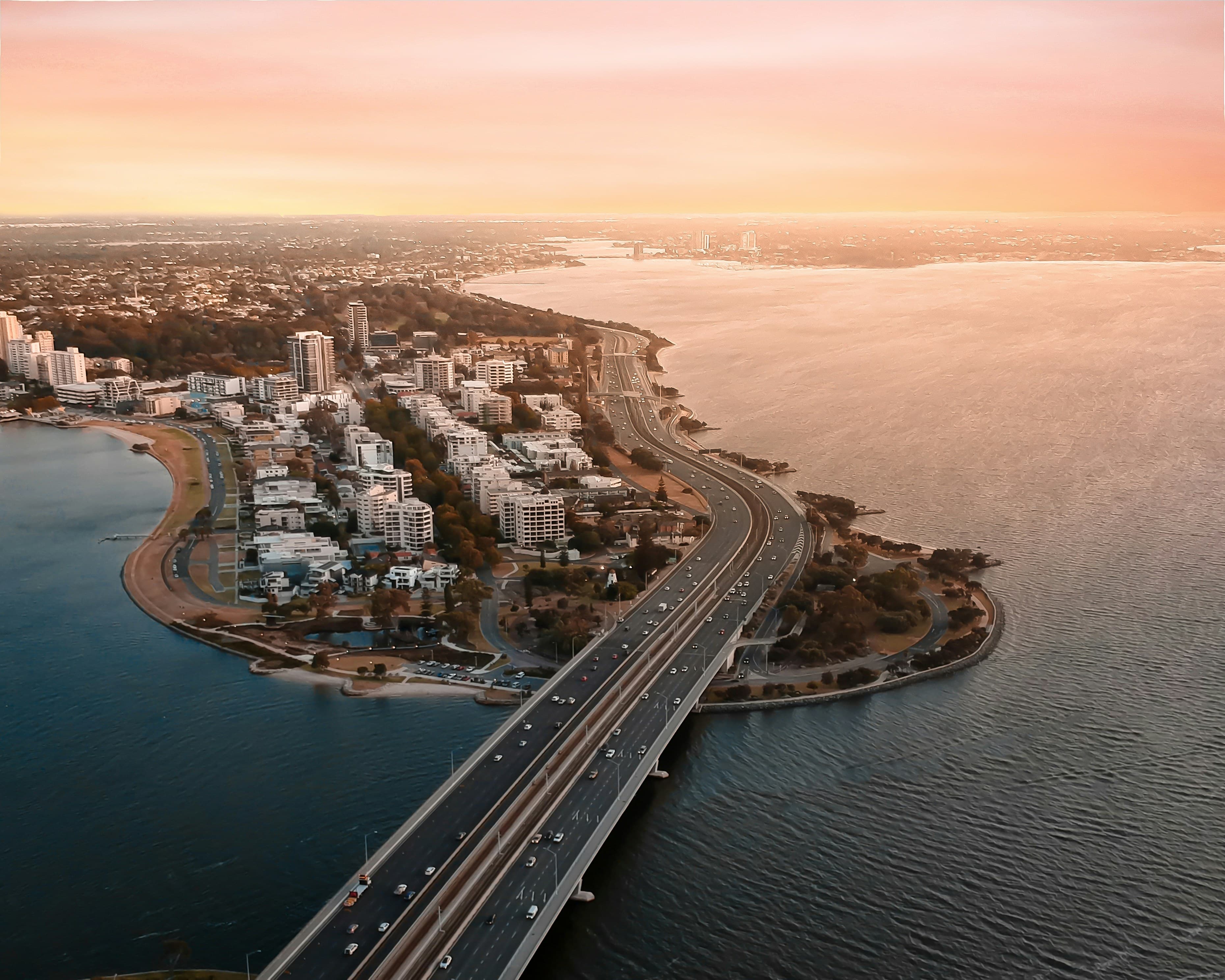
Perth is the most geographically isolated major city in the world. The nearest city of comparable size is Adelaide — 2,700 kilometres away. This is not a minor detail. It shapes the culture, the economy, the job market, the social life, and the daily experience of living there in ways that are worth understanding before you book a one-way flight from Melbourne expecting a similar experience in a sunnier setting.
It is also — for the right person, in the right situation — one of the best cities in Australia to live and work in. The question is whether you are that person.
The One Reason Most People End Up in Perth: The Money
Perth's economy is built on Western Australia's resources sector — iron ore, gold, lithium, natural gas, and nickel. The Pilbara region north of Perth is one of the most productive mining regions on Earth, and the infrastructure, professional services, logistics, and engineering support industries that surround it are concentrated in Perth as their base city.
The result is an average salary of approximately AUD $100,000 — the highest of any Australian capital city — driven by mining and resources wages that sit 20–40% above the national average for equivalent roles. A tradesperson who earns $85,000 in Sydney routinely earns $100,000–$120,000 in Perth, often with FIFO arrangements that include accommodation and meals provided on site.
The combination of higher wages and lower rent than Sydney produces the highest net savings rate of any major Australian city for skilled and trade workers. A carpenter earning $105,000 in Perth and paying $310 per week for a share house room is in a fundamentally different financial position than a carpenter earning $85,000 in Sydney paying $420 per week for an equivalent room. The Perth carpenter saves approximately $2,500–$3,000 more per month, before any FIFO benefits are factored in.
FIFO: The Perth Work Model Nobody Else Has
Fly-In-Fly-Out (FIFO) work is a defining feature of Perth's labour market that doesn't exist at the same scale anywhere else in Australia. Mining, oil and gas, and major resources companies fly workers from Perth to remote mine sites in the Pilbara, Goldfields, and offshore platforms on rosters that typically run two weeks on, one week off — or variations like 8/6, 5/2, or 21/7, depending on the operation and role.
The financial arithmetic of FIFO is compelling for people without family obligations or strong ties to a fixed location. On a two-week-on, one-week-off roster, accommodation, meals, and flights are typically paid by the employer. For those two weeks, your expenses are effectively zero — no rent, no groceries, no transport. Your entire wage for the fortnight is savings. For a labourer earning $40 per hour on a FIFO roster, it is common to accumulate AUD $40,000–$60,000 in savings in a single year.
💡 FIFO and working holiday visas — what's possible Working holiday makers (visa 417 and 462) can legally work FIFO mining and resources jobs. Many do. The barrier is not the visa — it's the pre-employment medical (mandatory for most mine sites), drug and alcohol testing (also mandatory and zero-tolerance), and the requirement for specific tickets and licences (HR licence for heavy vehicles, RII units for certain plant operation roles, White Card for construction). The qualifications take days to weeks to obtain, not months. If you arrive in Perth with a White Card and are willing to do the medical, the path to a FIFO labouring role is shorter than most people realise.
The Job Market: What's Available and What Isn't
Perth's job market is strong but specialised. If your career is in mining, resources, engineering, construction, trades, or the professional and commercial services that support those industries, Perth's job market is excellent — often better paid and less competitive than equivalent roles in Sydney or Melbourne.
If your career is in finance, media, fashion, arts, advertising, or other industries concentrated in eastern capital cities, Perth's job market is significantly thinner. The city's economy runs on resources, not on the financial and creative services industries that dominate Sydney and Melbourne. This is not a criticism — it's a factual description of the industry mix, and it matters enormously for where you look for work.
| Field | Perth Job Market | Salary vs National Average |
|---|---|---|
| Mining / Resources | Excellent — 50% of national mining jobs in WA | +20–40% |
| Trades (electrician, plumber, carpenter) | Very strong — persistent shortage | +15–25% |
| Civil / Structural Engineering | Strong — resources and infrastructure | +10–20% |
| Healthcare / Nursing | Good — growing demand | Comparable to national |
| Hospitality / Café | Moderate — smaller city scale | Comparable |
| Tech / Software | Growing but smaller than Sydney/Melbourne | Slightly below eastern cities |
| Finance / Banking | Limited — most senior roles in Sydney | Below eastern cities |
| Creative / Media / Arts | Small market — fewer opportunities | Below eastern cities |
Cost of Living: The Honest Numbers
Perth's cost of living sits below Sydney and roughly comparable to Brisbane for most categories. The exception is housing — Perth's rental market has tightened significantly since 2022, and prices have risen faster than in most other Australian capitals. Despite this, Perth remains meaningfully more affordable than Sydney.
| Category | Perth (pw) | Sydney (pw) | Difference |
|---|---|---|---|
| Share house room (inner) | $250–$360 | $380–$450 | Approx. 30% cheaper |
| 1-bed apartment (inner) | $430–$580 | $600–$780 | Approx. 25% cheaper |
| Groceries (weekly, solo) | $80–$110 | $85–$120 | Broadly similar |
| Public transport (monthly) | $130–$160 | Approx. $200 | Slightly cheaper |
| Dining out (casual dinner) | $22–$35 | $25–$45 | Slightly cheaper |
⚠️ Perth's rental vacancy rate is the tightest in Australia As of early 2026, Perth's rental vacancy rate sits at approximately 0.8% — the lowest of any Australian capital. This means competition for rental properties is fierce. Properties receive multiple applications within hours. If you're moving to Perth, start searching on realestate.com.au and Domain before you arrive, have all documentation prepared (ID, proof of income or employment offer, references), and be ready to apply immediately after an inspection. Walking into Perth with no accommodation lined up and expecting to find a room in a few days is genuinely risky in the current market.
The Isolation: This Is the Real One to Think About
Perth is 2,700 kilometres from Adelaide. 3,300 kilometres from Melbourne. The flight to Sydney takes five hours. This is not an abstract geographical fact — it has real daily-life consequences that affect almost every Perth resident at some point.
Flying home for a weekend — to another Australian city, let alone to Europe, Asia, or the UK — is expensive and time-consuming in a way it simply isn't from Melbourne or Sydney. A return flight from Perth to Melbourne costs AUD $300–$600 and takes 3.5 hours each way. A return flight to London costs AUD $2,000–$3,500 and takes 17–19 hours. People who have strong family ties overseas or who plan to travel frequently feel this more acutely than people who are genuinely settling into Perth life.
Within Perth itself, the city is spread across a north-south coastal strip approximately 130 kilometres long. Car dependency is high — public transport exists and covers the main corridors reasonably well, but the city's layout makes living without a car significantly more limiting than in Melbourne or inner Sydney. Most Perth residents own a car; the question is not whether you need one, but what kind.
The isolation got to me at first. You can't just hop on a train to Melbourne for the weekend like you could from Brisbane. But after about six months, I stopped thinking about it. Perth sort of becomes its own world — and it's a world with incredible beaches, a relaxed pace, and more money in my bank account every month than I'd ever managed anywhere else.
The Climate: Actually Australia's Best
Perth receives more sunshine hours per year than any other Australian capital — over 3,000 annually. The climate is Mediterranean: hot, dry summers (December–February, averaging 30–38°C), mild wet winters (June–August, averaging 13–18°C), and spectacular spring and autumn seasons with warm days and cool evenings.
The summer heat is genuine and requires air conditioning — Perth regularly reaches 40°C+ in January and February, and heatwaves of several consecutive days above 38°C are not unusual. But the heat is dry rather than humid, which most people find significantly more tolerable than Brisbane's hot, humid summer. And Perth's winter — compared to Melbourne's cold, grey, wet winters — is consistently cited by Perth residents as one of the city's most underrated advantages.
The beaches deserve their reputation. Cottesloe, Scarborough, City Beach, Trigg — Perth has approximately 19 metropolitan beaches within easy reach of the city. The Indian Ocean water is clear, warm enough to swim in most of the year, and consistently less crowded than Sydney's Bondi or Melbourne's Port Phillip Bay beaches.
Social Life and Community: Smaller City, Different Energy
Perth has a population of approximately 2.3 million — large enough to have a full range of urban amenities, but small enough that coincidental social encounters happen more readily than in a city of five million. The social culture is notably relaxed and outdoor-oriented: weekends centre around beaches, BBQs, national parks, and sport rather than the café-and-laneway culture that defines Melbourne.
Perth has Australia's largest British expat community — approximately 25% of the city's population is British-born, a legacy of decades of direct migration programs between the UK and Western Australia. For British migrants in particular, this creates an immediately familiar community. For migrants from other backgrounds, Perth is less culturally diverse than Melbourne or Sydney, though its Asian community — particularly its significant Malaysian, Singaporean, Chinese, and Korean populations — is well-established and growing.
Nightlife and cultural programming are thinner than in Melbourne. Perth has good restaurants, a few live music venues, and a growing arts scene — but it doesn't have Melbourne's density of cultural events, its laneway bar culture, or its internationally recognised food scene. People who move to Perth for the lifestyle are generally not moving for urban cultural richness — they're moving for the outdoor lifestyle, the pace, and the financial opportunity.
Visa Pathways: Western Australia's State Nomination
Western Australia operates one of Australia's most active state nomination programs, and for certain occupations, WA nomination is both more accessible and faster than NSW or VIC nomination. The WA State Nominated Migration Program (SNMP) prioritises occupations in critical shortage in WA — which, given the resources sector, means trades, engineering, healthcare, and certain IT roles consistently appear on the list.
For skilled migrants targeting a 190 (State Nominated) or 491 (Regional Skilled Work) visa, checking WA's current nomination occupation list before choosing a city is worthwhile. In some years, certain trades and healthcare roles that face long queues for NSW or VIC nomination can be nominated by WA within months. The trade-off is committing to living and working in WA — a condition of state nomination that is actively monitored.
The Honest Verdict: Who Perth Is For
| Perth is a strong choice if you are: | Perth may not suit you if you: |
|---|---|
| In mining, resources, or trades | Work in finance, media, or creative industries |
| Maximising savings on WHV or skilled visa | Need to travel interstate or internationally often |
| Want beaches and outdoor lifestyle over urban culture | Rely on public transport and don't want a car |
| A UK citizen — large established community | Find big-city cultural density important to wellbeing |
| Targeting WA state nomination for PR | Struggle with feeling geographically cut off |
| Open to FIFO work for exceptional savings | Want to road-trip between Australian cities on weekends |
The Bottom Line
Perth is not for everyone. The isolation is real, the car dependency is real, and the cultural gap with Melbourne and Sydney is real. If you're a finance professional, a graphic designer, or someone who needs the energy and density of a major eastern city to feel alive, Perth will frustrate you.
But if you're a tradesperson, an engineer, a nurse, a miner, or simply someone who wants to maximise their savings rate while living near some of the best beaches in the country — Perth is one of the best-value cities in the developed world for your situation. The wages are high, the rent is reasonable by Australian standards, the sun is almost always out, and the pace of life is genuinely easier than what most people experience in Sydney or Melbourne.
The people who move to Perth expecting a smaller Sydney are disappointed. The people who arrive knowing what Perth actually is — a resource-economy city with world-class beaches, strong wages, and a pace of life that's genuinely different — tend to stay longer than they planned.
Explore careers in Western Australia
Search 1,020 Australian occupations — salary ranges, shortage ratings, and visa pathways in one place.
Explore Australian Careers →