
Radiographer in Australia: Three Different Professions, One Assessment Body, and a Licence Nobody Mentions
Australia's medical imaging sector is expanding rapidly and the shortage of qualified radiographers is real across all modalities. But what most overseas applicants don't realise is that "radiographer" covers three entirely separate registered professions in Australia — each with its own ANZSCO code and AHPRA registration stream. And after you've sorted that, there's a state-based radiation use licence that the AHPRA process doesn't mention at all.
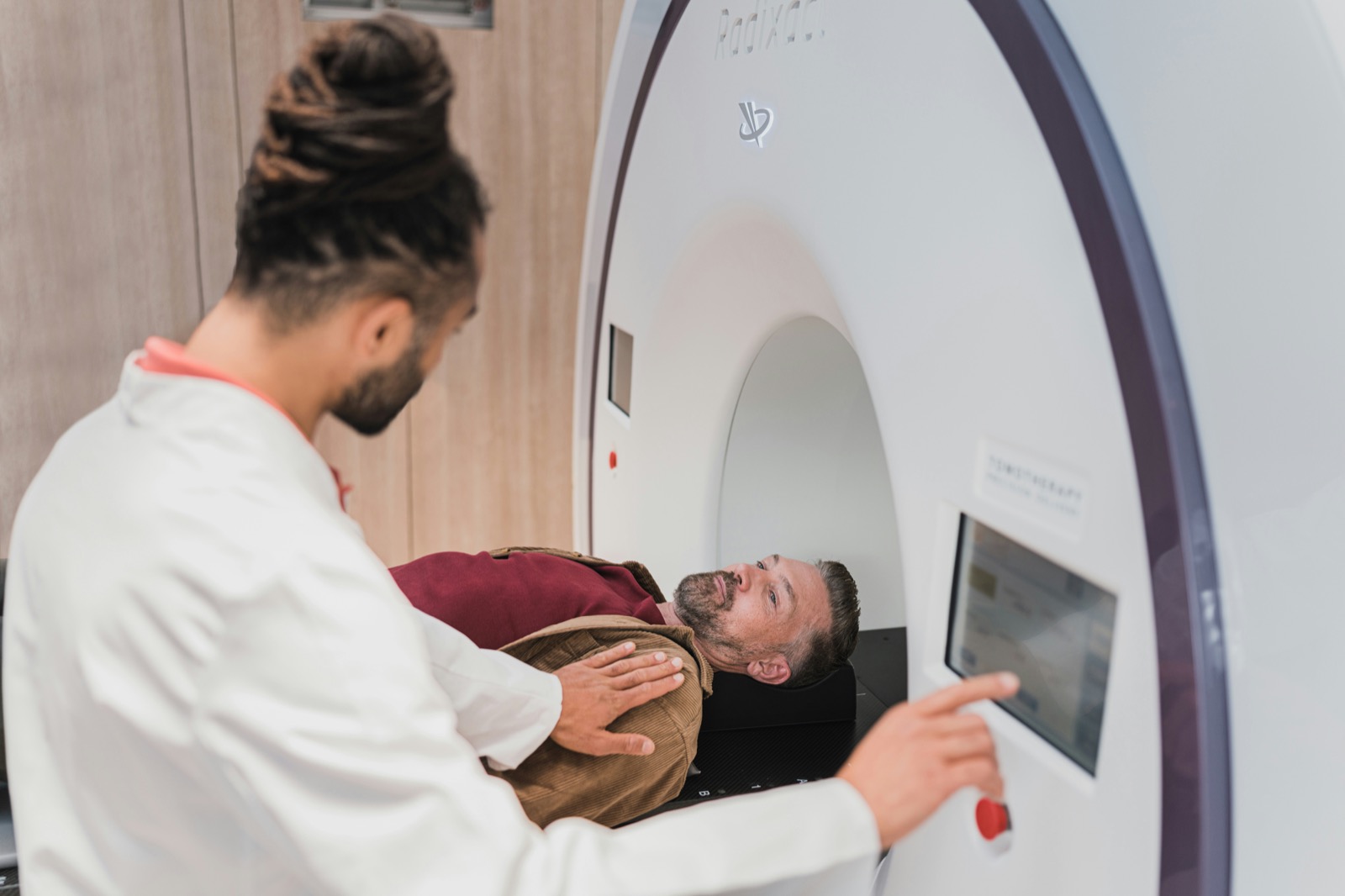
In most countries, "radiographer" is a broad term that encompasses the professionals who operate medical imaging equipment — X-ray, CT, MRI, ultrasound, nuclear medicine, and radiation therapy. The title covers a wide range of modalities under one professional umbrella, and registration or licensing treats the group broadly.
Australia draws much sharper distinctions. The Australian medical radiation professions are divided into three formally separate disciplines — Diagnostic Radiographer, Radiation Therapist, and Nuclear Medicine Technologist — each registered separately under the Medical Radiation Practice Board of Australia through AHPRA, each assessed by the same body (ASMIRT) but through distinct assessment streams, and each carrying a different ANZSCO code for migration purposes. If you practice in more than one modality — which is common internationally — Australia will register you in the one that most closely matches your primary qualification, and working across disciplines requires separate credentialling in each.
And then, entirely separate from the AHPRA registration process, most states and territories require a radiation use licence before you can legally operate imaging equipment. This licence is not issued by AHPRA. It's not part of the ASMIRT assessment. And it's the step that surprises almost every internationally trained radiographer who assumes that AHPRA registration is the last thing standing between them and their first shift.
The Shortage: Which Modalities Are Most in Demand
Australia's medical imaging sector is growing on the back of an ageing population, increasing chronic disease prevalence, and a deliberate expansion of diagnostic imaging capacity across both public hospitals and private radiology networks. The demand is not concentrated in one modality — it spans the full imaging suite.
Diagnostic radiography covering general X-ray, CT, and MRI is the largest employment category and faces consistent demand in both metropolitan and regional settings. Regional hospitals are acutely short — many run with a single radiographer per shift covering multiple modalities, which creates working conditions that are demanding but also professionally rich. Sonography (ultrasound) has a separate assessment pathway through ASAR and is one of the highest-demand and highest-paid subspecialties in the sector. Radiation therapy — the treatment arm of medical radiation — faces a shortage driven by expanding cancer incidence and the rollout of new radiation treatment technologies across public and private oncology centres. Nuclear medicine has the smallest workforce of the three disciplines and a highly specialised demand profile tied to PET/CT expansion and new theragnostic applications.
Salary ranges by discipline and experience reflect significant variation. General radiographers in entry-level roles typically earn $65,000–$80,000. Experienced diagnostic radiographers with CT and MRI competency earn $85,000–$105,000. Senior and team leader radiographers earn $100,000–$120,000. Sonographers — assessed separately through ASAR — earn $95,000–$140,000, making it the highest-paid modality in the sector. Radiation therapists earn $75,000–$105,000 with strong growth to senior and treatment planning roles. Regional postings typically add 15–20% above metropolitan base rates, plus relocation and accommodation support in many public health positions.
The Three Disciplines: Which One Are You?
Before you approach ASMIRT or AHPRA, you need to identify which Australian discipline most accurately describes your primary qualification and practice. This determines your ANZSCO code, your registration stream, and your assessment pathway.
Diagnostic Radiographer — ANZSCO 251211
The largest discipline and the most common entry point for internationally trained radiographers. Covers general X-ray, fluoroscopy, CT, MRI, mammography, and interventional radiology. If your primary qualification and the majority of your clinical practice has been in diagnostic imaging — producing images for interpretation by radiologists — this is your discipline.
AHPRA registration: Medical Radiation Practice Board of Australia, under the Diagnostic Radiographer division. Assessment body: ASMIRT. Fee for overseas assessment: AUD $1,041 for applicants residing overseas.
Radiation Therapist — ANZSCO 251212
The treatment discipline — radiation therapists plan and deliver radiotherapy treatment to cancer patients, working within the radiation oncology team alongside radiation oncologists and medical physicists. Distinct from diagnostic imaging in both clinical purpose and daily practice. If your training and practice has been in treatment planning, linear accelerator operation, and patient treatment delivery, this is your discipline.
AHPRA registration: Medical Radiation Practice Board of Australia, under the Radiation Therapist division. Assessment body: ASMIRT. Same assessment fee applies.
Nuclear Medicine Technologist — ANZSCO 251213
The most specialised discipline — nuclear medicine technologists administer radiopharmaceuticals and operate SPECT, PET, and PET/CT scanners to produce functional imaging studies. The theragnostic expansion — using nuclear medicine not just for diagnosis but for targeted treatment of cancer — is driving renewed demand in this discipline. If your qualification and practice has been in nuclear medicine specifically, this is your discipline.
AHPRA registration: Medical Radiation Practice Board of Australia, under the Nuclear Medicine Technologist division. Assessment body: ASMIRT.
⚠️ Multi-modality practitioners: Australia will register you in one In many countries, radiographers train and practise across multiple modalities — diagnostic imaging and some nuclear medicine, or diagnostic and therapeutic applications. Australia's registration system registers you in a single discipline based on your primary qualification. If you trained primarily as a diagnostic radiographer but have additional nuclear medicine competency, you'll be registered as a diagnostic radiographer. Working across disciplines after registration requires additional credentialling with your employer and, in some cases, further assessment. Be clear with ASMIRT about your primary qualification when applying — do not try to claim dual discipline registration based on cross-modality clinical experience without a formal dual qualification.
Sonography: A Completely Separate Assessment Pathway
Sonographers — ultrasound practitioners — are not registered under the Medical Radiation Practice Board of Australia. They are credentialled through the Australasian Sonographers Accreditation Registry (ASAR), which is an entirely separate body from AHPRA and ASMIRT. Overseas sonographers apply to ASMIRT for assessment, but ASMIRT assesses ultrasound qualifications on behalf of ASAR — and the outcome is a Certificate of Recognition in Ultrasound, not an AHPRA registration.
This matters because sonography is not a nationally registered profession in Australia the same way diagnostic radiography and radiation therapy are. The ASAR credential is the professional standard, and most employers require it, but it operates outside the AHPRA framework. If you are purely a sonographer — without a concurrent diagnostic radiography qualification — your pathway is ASMIRT assessment for ASAR credentialling, not AHPRA registration. The migration skills assessment outcome is still used for visa purposes, but the professional practice pathway is different.
If you hold both a diagnostic radiography qualification and significant ultrasound experience, you may be assessed under both streams — which typically involves an additional assessment fee.
The ASMIRT Assessment: What It Involves
The Australian Society of Medical Imaging and Radiation Therapy (ASMIRT) is the government-gazetted skills assessing body for all three medical radiation disciplines. There is no alternative assessing body — all internationally trained radiographers, radiation therapists, and nuclear medicine technologists must go through ASMIRT for their migration skills assessment.
ASMIRT's assessment process evaluates your qualification against the Australian standard for your nominated discipline at the time you graduated. It is not an examination — it is a document-based review of your academic qualification and clinical experience. The assessment panel considers whether your degree covered the required content areas to the required depth, and whether your post-qualification clinical experience meets Australian standards.
The Pre-Approved (Accelerated) Pathway
Graduates of New Zealand-accredited diagnostic radiography, medical imaging technology, and radiation therapy programs are the only internationally trained practitioners eligible for ASMIRT's accelerated pre-approved pathway. If you hold a New Zealand qualification from a currently accredited program, you can apply via the Statement of Qualification pathway — a faster, simplified assessment requiring at least one year of full-time equivalent clinical experience within the past five years. No other overseas qualifications currently qualify for this accelerated pathway, regardless of the reputation of the institution or the country of training.
📌 NZ qualification = accelerated assessment. Everything else = standard pathway. ASMIRT is explicit: there are no other pre-approved courses from any other country on the accelerated list. Graduates from the UK, India, South Africa, the Philippines, Ireland, and every other country follow the standard assessment pathway. This is not a reflection of qualification quality — it reflects the mutual recognition framework between Australia and New Zealand. Standard pathway processing typically takes longer than the accelerated pathway, and documentation requirements are more extensive.
The Standard Assessment Pathway
For all non-NZ overseas applicants. The assessment requires:
- 1
Academic qualification documentation Certified copies of your degree certificate, official academic transcripts, and course syllabi or handbooks documenting the content covered in your program. ASMIRT assesses whether your qualification is equivalent to an Australian three or four-year Bachelor of Medical Radiation Science in your nominated discipline.
- 2
Clinical experience documentation Employer reference letters for all positions held — on official letterhead, signed by a department head or chief radiographer. Letters must state the date range of employment, hours per week, the full range of modalities performed, and the proportion of time spent in each modality. Generic letters describing your job title without modality-specific detail are insufficient. ASMIRT specifically asks for the breakdown by modality — prepare employers for this level of detail before asking them to write your letters.
- 3
Three years of CPD evidence Continuing Professional Development records for the last three years — a minimum of 20 hours per year. A list of activities is not sufficient; ASMIRT requires evidence of completion. Certificates, event programs with attendance confirmation, or other verifiable records for each CPD activity.
- 4
Current registration certificate Your registration or licence from your home country's relevant authority, confirming you are currently or were recently registered as a practising radiographer, radiation therapist, or nuclear medicine technologist.
Assessment outcomes from ASMIRT are: unconditional recognition (a Statement of Qualification issued, and a skills assessment letter for visa purposes), conditional — meaning additional documentation or experience is required, or rejection. Processing time for standard pathway: approximately 10–16 weeks from a complete application. Fee: AUD $1,041 for applicants residing overseas; AUD $1,143 for applicants already in Australia.
AHPRA Registration: After ASMIRT, Before Work
A positive ASMIRT skills assessment letter is used for your visa application. Separately — and this is a step that confuses many applicants — you must also apply for registration with the Medical Radiation Practice Board of Australia through AHPRA before you can practise in Australia. These are two separate processes with two separate bodies, and ASMIRT is explicit that its assessment is not a registration process.
AHPRA registration requirements for internationally trained medical radiation practitioners:
- 1
Positive ASMIRT assessment outcome Your Statement of Qualification from ASMIRT is submitted with your AHPRA registration application as evidence that your qualification meets Australian standards.
- 2
English proficiency IELTS Academic 7.0 overall with minimum 7.0 in each band, OET B in each component, or PTE Academic 65 in each communicative skill. Exemptions for practitioners who completed secondary and tertiary education entirely in English in qualifying countries.
- 3
Certificate of Good Standing From your home country registration or licensing authority, confirming you hold or held registration in good standing and have no outstanding complaints or disciplinary matters. Valid for three months from date of issue — apply for this after your ASMIRT assessment is underway, not at the start of the process.
- 4
Criminal history check National and international criminal history checks as required by AHPRA.
AHPRA registration processing: initial review within 30 days, full assessment typically 4–6 weeks from a complete application. Apply at least three months before your intended start date. Some documents — particularly the Certificate of Good Standing and criminal history check — are only valid for three months, so timing your AHPRA application to avoid resubmission is worth planning carefully.
The Radiation Use Licence: The Step AHPRA Doesn't Handle
This is the step that surprises almost every internationally trained radiographer who has done their research carefully, obtained their ASMIRT assessment, applied for AHPRA registration, and arrived in Australia ready to work.
In most Australian states and territories, operating radiation-producing equipment — X-ray machines, CT scanners, linear accelerators — requires a radiation use licence or radiation safety certificate issued by the relevant state authority. This is a regulatory licence under state radiation safety legislation, entirely separate from AHPRA registration and not part of the ASMIRT assessment process.
The issuing bodies vary by state:
- 1
NSW — Environment Protection Authority (EPA) Radiation Use Licence required for all operators of radiation-producing equipment. Application requires evidence of AHPRA registration and qualification. Processing time: 2–4 weeks.
- 2
Victoria — Australian Radiation Protection and Nuclear Safety Agency (ARPANSA) / Radiation Advisory Committee Radiation Use Certificate. Processing via the Victorian Department of Health radiation safety function. Typically 2–4 weeks from complete application.
- 3
Queensland — Radiation Health Unit (Queensland Health) Radiation Use Licence. Queensland has been actively improving its processing times for healthcare worker radiation licences. Typically 2–4 weeks.
- 4
WA, SA, Tasmania, ACT, NT Each has its own radiation safety authority. Processing times and requirements vary — ACT and Tasmania are typically fastest due to lower application volumes.
I had my AHPRA registration. I had my job offer. I arrived and my employer said "where's your radiation licence?" I didn't know it existed. It took three weeks to process. Three weeks of sitting at home while my colleagues were working.
The radiation use licence application is typically straightforward — it requires your AHPRA registration confirmation, your qualification documents, and in some states, a basic radiation safety knowledge assessment. The processing time of 2–4 weeks is the issue: if you're not aware of it and don't apply immediately on arrival (or even before arrival if you already know which state you're working in), you create an unnecessary gap between landing and being able to work your first shift. Apply for it as soon as you have your AHPRA registration number — don't wait until you've arrived and found accommodation.
Visa Pathways: Which Route Fits Your Situation
Skills in Demand (482) → Employer Nomination Scheme (186)
The most common pathway for internationally trained radiographers. Public hospitals, private radiology networks (I-MED, Integral, Capitol Health, Healius), and specialist oncology centres all sponsor radiographers under the 482 visa. Major radiology networks have established immigration processes and often have dedicated HR support for internationally trained practitioners. The 482 runs for up to four years with a PR pathway through the 186 ENS. Regional public hospitals are the most motivated employers and often provide structured relocation support and accommodation assistance.
Subclass 189 — Skilled Independent
All three medical radiation ANZSCO codes sit on the MLTSSL. Points-tested permanent residency with no employer dependency. Recent invitation rounds have typically gone to candidates with 80–90 points. For radiographers with strong English scores and relevant specialist experience — particularly MRI, CT, or radiation therapy specialisation — 189 provides permanent residency on arrival with maximum flexibility to choose your employer and negotiate from strength.
Subclass 491 — Regional (Strong for Radiographers)
Regional hospitals are where the radiographer shortage is most acute. A single radiographer covering multiple modalities in a regional hospital has a workload and clinical breadth that metropolitan positions rarely match — it's demanding but professionally rich. The 15-point regional bonus combined with genuine employer demand and active relocation support makes 491 one of the most compelling options for radiographers who have flexibility on location. Many regional public health services specifically target internationally trained radiographers and have experience managing the ASMIRT, AHPRA, and radiation licence process for incoming practitioners.
Subclass 190 — State Nominated
Medical diagnostic radiographer appears on the ACT Critical Skills List, Queensland's offshore skilled occupation list, Western Australia's priority occupation list, and Tasmania's list with an accelerated nomination pathway after just three months of employment. State nomination adds 5 points and is worth pursuing if you're within range of the invitation threshold.
| Visa | Job offer needed? | Outcome | Best for |
|---|---|---|---|
| 482 → 186 | Yes | PR after 2–3 yrs | Radiology networks, public hospitals |
| 189 | No | Permanent residency | 80–90 pts, CT/MRI specialist |
| 190 | Sometimes | Permanent residency | ACT/QLD/WA/TAS nomination |
| 491 | No | PR after 3 yrs regional | Regional hospitals, broadest clinical scope |
Your Realistic Timeline
- 1
Identify your discipline — Week 1 Diagnostic Radiographer, Radiation Therapist, or Nuclear Medicine Technologist. If sonography is your primary practice, your pathway is ASAR credentialling, not AHPRA registration. Choose based on your primary qualification, not your broadest experience.
- 2
Prepare ASMIRT documentation — 4 to 8 weeks Degree certificates, transcripts, course syllabi, modality-specific employer letters, three years of CPD evidence, and current registration certificate. The CPD evidence and modality-specific employer letters take the longest to gather — start both immediately.
- 3
ASMIRT assessment — 10 to 16 weeks Submit and immediately begin English test preparation and EOI. Do not wait for ASMIRT result to start other steps — process them in parallel.
- 4
AHPRA registration — 4 to 6 weeks after complete application Apply three months before your intended start date. Request your Certificate of Good Standing only after ASMIRT is submitted — it's valid for three months and you don't want it expiring before AHPRA processes your application.
- 5
Radiation use licence — apply immediately on receiving AHPRA registration number Do not wait until you arrive. Apply online to your target state's radiation authority as soon as you have your AHPRA registration confirmation. Allow 2–4 weeks processing. This is the step that determines when you can legally start your first shift.
- 6
Visa and employer — run in parallel with ASMIRT and AHPRA Begin employer outreach and EOI submission while your ASMIRT assessment is processing. Having an employer engaged early means you can provide your radiation licence application with a confirmed work address — which some states require.
Realistic total timeline from starting ASMIRT documentation to first shift in an Australian imaging department: 14 to 24 months for most standard pathway applicants. NZ-qualified radiographers using the accelerated pathway can compress this to 8 to 14 months. The radiation use licence, if applied for promptly, adds only 2–4 weeks — but if discovered after arrival, it adds 2–4 weeks at the worst possible moment. Apply for it early.
What Medical Imaging in Australia Actually Looks Like
Australian medical imaging practice is broadly familiar in its technical content — the modalities, the equipment manufacturers, and the clinical workflows are recognisable to internationally trained practitioners from comparable countries. What's different is the professional culture and the scope of independent practice.
Australian radiographers operate with a degree of clinical autonomy that varies by setting but is generally higher than in some comparable countries. In regional hospitals, a single radiographer may be responsible for the full imaging suite — making independent clinical judgments about positioning, protocol modification, and image quality on a shift-by-shift basis without immediate radiologist oversight. In metropolitan private radiology practices, the workflow is higher-volume and more protocol-driven, but the expectation of individual professional accountability remains.
The professional body — ASMIRT — actively promotes the scope of practice of medical radiation practitioners, including extended scope roles in CT colonography, fluoroscopy, and image-guided interventional procedures. The trajectory for experienced radiographers who are interested in advanced practice is real and actively supported by the sector. This is meaningfully different from countries where the radiographer role is more narrowly defined and advancement requires moving into management rather than extended clinical practice.
Is It the Right Move?
For radiographers from countries where the profession is underpaid, where equipment access is limited, or where clinical autonomy is constrained by hierarchical structures — Australia offers a genuinely different experience. The shortage is real across all modalities. The demand for specialist CT, MRI, and radiation therapy practitioners is particularly acute and commands salary and conditions that reflect it.
The process has more steps than most professions in this series — ASMIRT, then AHPRA, then the radiation use licence, all separate and sequential. But each step is documented, processable, and manageable with planning. The radiographers who arrive smoothest are those who know all four steps before they start the first one, and who apply for the radiation use licence the day their AHPRA registration number appears in the register.
The imaging suite is growing. The demand is structural. And the radiation use licence, whatever surprise it gives you on paper, takes less than a month to sort out. Start with your discipline, start your CPD evidence, and let everything else follow.
See the full pathway for Radiographers in Australia
ANZSCO 251211 — salary range, shortage rating, state demand, and visa eligibility in one card.
View Radiographer Career Card →