
Sydney vs Melbourne vs Brisbane: An Honest 2026 Comparison for People Who Actually Have to Live There
Sydney has the harbour. Melbourne has the coffee. Brisbane has the weather. You've read that sentence — or some version of it — in every city comparison article ever written about Australia. It tells you nothing useful if you're trying to decide where to actually live and work. This guide compares all three cities on the things that determine your day-to-day reality: rent, wages, job market, transport costs, the visa pathways available, and the specific situations where each city wins. With real 2026 numbers throughout.
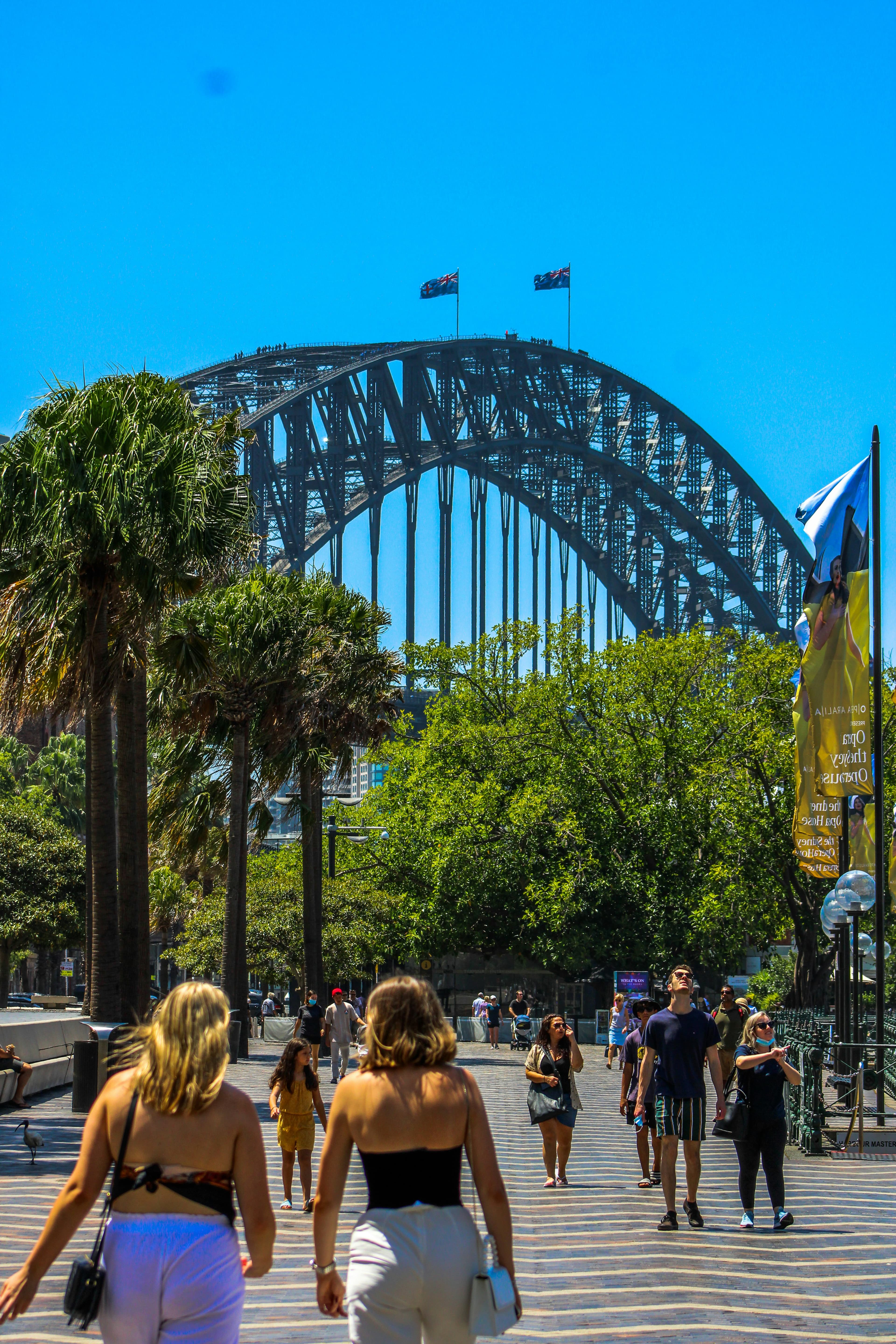
Most people arriving in Australia for the first time default to Sydney or Melbourne — they're the cities everyone has heard of, the ones with the most flights, the ones that feel like a safe bet. Brisbane is often chosen as a second move, after someone has been in Australia for a few months and realised that warm weather and lower rent are more important to their daily happiness than proximity to a famous harbour.
All three cities are genuinely good places to live. The honest question is not which city is best — it's which city is best for your specific situation: your visa type, your profession, your budget, and what you actually want from your time in Australia.
The One Number That Settles Most Arguments: Net Monthly Savings
The most useful single comparison across cities is not the cost of living or the wages in isolation — it's the combination: how much do you actually keep each month after paying for rent, food, transport, and utilities? This is your net savings rate, and it varies dramatically between cities even on identical salaries.
| Sydney | Melbourne | Brisbane | |
|---|---|---|---|
| Median full-time wage | Approx. $95,000 | Approx. $88,000 | Approx. $85,000 |
| Monthly take-home (approx. $90K salary) | Approx. $5,800 | Approx. $5,800 | Approx. $5,800 |
| Rent (share room, inner area) | $1,600–$1,800 | $1,100–$1,400 | $950–$1,200 |
| Transport (monthly) | Approx. $200 | Approx. $185 | Approx. $20–$40 |
| Groceries + utilities | Approx. $700 | Approx. $680 | Approx. $650 |
| Eating out / lifestyle | Approx. $500 | Approx. $450 | Approx. $400 |
| Est. monthly savings | Approx. $1,000–$1,200 | Approx. $1,600–$1,900 | Approx. $2,100–$2,500 |
On the same salary, a single person in Brisbane saves roughly twice what the same person saves in Sydney. The wages are slightly lower — but the rent difference alone is $600–$700 per month, and Brisbane's 50-cent public transport (extended through 2026) cuts the transport line item to almost nothing compared to Sydney's $200 monthly Opal spend.
💡 Brisbane's 50-cent public transport — the biggest cost advantage in Australia right now The Queensland government introduced a flat 50-cent fare for all public transport (trains, buses, ferries) across South East Queensland in August 2024, extended through the end of 2026. A daily commute in Brisbane costs AUD $1.00 — return. A week of commuting costs $5.00. Compare this to Sydney's Opal card weekly spend of approximately $50 or Melbourne's Myki at approximately $45. For someone working five days a week, Brisbane's transport policy saves approximately $180–$190 per month compared to Sydney or Melbourne — that's $2,160–$2,280 per year from transport alone. This single policy makes Brisbane's real cost of living advantage over Sydney significantly larger than the rent figures suggest.
Rent: The Number That Dominates Everything
Rent is 40–60% of most people's total monthly budget in Australia. The city you choose determines your rent category before you've made any other financial decision.
| Accommodation Type | Sydney (pw) | Melbourne (pw) | Brisbane (pw) |
|---|---|---|---|
| Share house room (inner) | $380–$450 | $280–$370 | $260–$340 |
| Share house room (outer) | $280–$350 | $200–$280 | $190–$260 |
| 1-bed apartment (inner) | $600–$780 | $450–$600 | $420–$560 |
| 2-bed apartment (inner) | $800–$1,000 | $600–$780 | $540–$700 |
Melbourne's rent is approximately 29% lower than Sydney's for equivalent properties. Brisbane's vacancy rate is currently the tightest of the three cities — around 0.8–1.0% in 2026, meaning the rental market is extremely competitive. Sydney and Melbourne have slightly higher vacancy rates (1.5–2.0%) which makes finding a rental somewhat easier despite the higher prices.
⚠️ Brisbane's rental crisis is real — start searching before you arrive Brisbane's population has grown faster than its housing supply for several years, and the 2032 Olympics construction boom has added further demand pressure. Vacancy rates below 1% mean rental properties receive multiple applications within hours of listing. If you're moving to Brisbane, start searching on Domain and realestate.com.au at least two weeks before arrival, have all your documentation ready (proof of income, references, ID), and be prepared to apply on the same day you inspect. Walking into Brisbane without a place lined up and expecting to find a room within a few days is a plan that works in Melbourne — it is significantly riskier in Brisbane right now.
Job Market: Where to Find Work in Your Field
The right city for your career depends entirely on your profession. The three cities have meaningfully different industry concentrations, and choosing the wrong city for your field can make the job search significantly harder than it needs to be.
Sydney: Finance, Tech, and the Volume Game
Sydney is Australia's financial capital — the headquarters of all four major banks, most large ASX-listed companies, and the country's dominant tech sector are concentrated in the CBD and North Sydney. For anyone in finance, investment banking, fintech, professional services, or corporate law, Sydney has more roles at more levels than any other Australian city. The competition is also higher — Sydney attracts migrants from across Australia and internationally, and the job market reflects that.
For hospitality and retail work, Sydney plays what one industry guide calls the "volume game" — there are more jobs than any other city, but also more workers competing for them. High turnover means persistent job seekers find work, but the process takes longer than in Brisbane or some regional areas.
Melbourne: The Broadest Job Market
Melbourne has the most diversified job market of the three cities. Finance, tech, healthcare, education, construction, manufacturing, arts, and hospitality all have significant presences. For most professions, Melbourne offers comparable or only slightly lower job volumes than Sydney — with meaningfully lower rent and a slightly less intense competitive atmosphere.
Melbourne is also Australia's healthcare employment capital per capita — the concentration of major hospitals, research institutes, and allied health providers in Melbourne is exceptional, and nurses, doctors, physiotherapists, and allied health professionals find Melbourne particularly well-supplied with roles at competitive salaries.
One genuine disadvantage: Melbourne's winters. The city is cold and grey from June to August — not extreme by European standards, but enough to affect the mood of people who came to Australia partly for the weather. Farm work opportunities also drop sharply in winter months due to the climate, which matters for working holiday makers completing their 88-day regional work requirement.
Brisbane: The Growth Story of 2026
Brisbane's job market has been growing faster than Sydney or Melbourne for several consecutive years, driven by population growth, infrastructure investment, and the long runway of 2032 Olympics preparation. Construction, trades, healthcare, hospitality, and logistics are all experiencing strong demand. For tradespeople — carpenters, electricians, plumbers, concreters — Brisbane's construction pipeline is generating consistent work at strong rates.
The city's workforce has roughly doubled in the past two decades, and infrastructure investment at a scale rarely seen outside of Olympic host cities is creating sustained employment across multiple sectors. For working holiday makers, the combination of growing hospitality demand, available farm work in surrounding Queensland regions, and the transport cost advantage makes Brisbane an increasingly compelling first-choice city.
| Profession | Best City | Why |
|---|---|---|
| Finance / Banking | Sydney | Undisputed financial capital, most senior roles |
| Tech / Software | Sydney = Melbourne | Both strong; Melbourne slightly lower competition |
| Nursing / Allied Health | Melbourne | Highest concentration of major health employers |
| Trades / Construction | Brisbane | Olympics pipeline, fastest construction growth |
| Hospitality | Melbourne | Australia's hospitality capital, highest venue density |
| Education / Academia | Melbourne | Most universities and research institutions per capita |
| Working holiday / Casual | Brisbane | Lower costs, 50c transport, farm work proximity |
Transport and Getting Around
Transport quality varies more between these three cities than most things on this list — and the differences are not subtle.
Sydney has the most extensive public transport network of the three, with trains reaching most suburbs, ferries across the harbour, and light rail in the inner city. The Opal card system is well-integrated. The weakness: Sydney is geographically vast and sprawling, and outer suburb commute times of 60–90 minutes each way are common for workers who can't afford inner-city rent. The city's road network is also chronically congested, making car commutes unreliable.
Melbourne has an extensive tram network — the largest in the Southern Hemisphere — that makes inner-city and inner-suburban movement genuinely pleasant without a car. The train network extends into the suburbs but has less reach than Sydney's for outer areas. Cycling infrastructure in Melbourne is good by Australian standards. Melbourne's grid layout in the inner city makes navigation intuitive in a way that Sydney's organic, harbour-shaped road network does not.
Brisbane's public transport is objectively the least extensive of the three — the network is smaller, train lines fewer, and coverage patchier. But the 50-cent flat fare fundamentally changes the economics. The strategy many Brisbane residents use is to live in an outer suburb (Wynnum, Caboolture, Logan) where rent is $190–$250 per week rather than $300–$380, and commute by train for $1.00 return per day. The combination of low outer-suburb rent and near-zero transport cost produces the lowest total housing-plus-transport cost of any major Australian city.
Climate: More Important Than You Think
Climate affects daily wellbeing more than most people factor into their city choice — particularly for people coming from Europe or the Northern Hemisphere, who may be moving to Australia partly for the lifestyle and weather.
| Sydney | Melbourne | Brisbane | |
|---|---|---|---|
| Summer (Dec–Feb) | Hot, humid, occasional extreme heat | Hot with heatwaves, dry | Very hot, very humid, storm season |
| Winter (Jun–Aug) | Mild, 8–17°C, some rain | Cold, 6–13°C, grey and wet | Warm and dry, 10–21°C, minimal rain |
| Best season | Spring and autumn | Spring and autumn | Winter and spring |
| Air conditioning necessity | Recommended | Summer only | Essential in summer |
Brisbane's winter is genuinely exceptional — warm, dry, sunny days with cool evenings. It's the season when people who've endured Melbourne winters quietly pack their things and drive north. The trade-off is Brisbane's summer: December through February is hot, humid, and interrupted by severe thunderstorms that can be genuinely dramatic. Air conditioning in a Brisbane summer is not a luxury — it's a utility expense you need to budget for.
Melbourne's weather has a deserved reputation for unpredictability. The local saying — "four seasons in one day" — is not much of an exaggeration. Cold fronts can sweep in from the Southern Ocean and drop temperatures 10–15°C within hours. For people who find grey winters psychologically difficult, Melbourne from June to August is a real consideration.
Community and Social Life: The Honest Version
Sydney's social culture is often described as beautiful but harder to penetrate. The city is large, geographically dispersed, and residents tend to have established social networks that don't naturally expand to include new arrivals. People are friendly at surface level; forming genuine friendships takes longer. The city's focus on outdoor lifestyle — beaches, harbour, weekend activities — can feel exclusionary if you haven't yet built the network to be invited to those things.
Melbourne has a reputation for being more socially accessible, with a culture built around neighbourhoods, cafés, and cultural events that create organic opportunities to meet people. The laneway bar scene, live music culture, and density of community events make it easier to develop a social life from scratch. Melbourne also has Australia's largest and most established communities of many migrant backgrounds — including very large Korean, Vietnamese, Chinese, and Indian communities — which can matter enormously for people who want cultural familiarity alongside the Australian experience.
Brisbane is the most socially relaxed of the three. Smaller city scale means less anonymity, and the outdoor-focused culture — beaches within an hour, national parks accessible for weekend trips, a climate that encourages outdoor socialising — creates a more casual social environment. The working holiday maker and backpacker community in Brisbane is active and well-connected, with hostels and share houses that function as genuine social hubs. For people arriving alone, Brisbane often produces friendships faster than Sydney simply because the scale of the city makes coincidental repeated encounters more likely.
Visa Pathways: Does Your City Choice Affect Your PR Prospects?
For people on skilled visas working toward permanent residency, city of residence can affect visa pathway options in ways that are worth understanding before you commit.
State nomination — the mechanism through which states sponsor skilled migrants for state-nominated visas (subclass 190, 491) — varies significantly between states. Victoria (Melbourne), New South Wales (Sydney), and Queensland (Brisbane) all have state nomination programs, but their occupation lists, requirements, and competitiveness differ each year. Queensland's state nomination program has historically been more accessible for certain trade and healthcare occupations, and the 491 Regional Skilled Work visa — which requires living and working in a regional area — opens pathways for people willing to live outside the major cities of any state.
The practical implication: if your visa pathway includes state nomination, check the current occupation lists for NSW, VIC, and QLD before choosing a city. Being in the right state for your occupation can make the difference between a 12-month wait and a 3-year wait for nomination.
The Verdict: Which City for Which Person
| Your Situation | Best City |
|---|---|
| Working holiday, maximising savings | Brisbane — lowest net cost, 50c transport, farm work nearby |
| Hospitality or café work | Melbourne — highest venue density, best tipping culture |
| Finance, banking, corporate | Sydney — no real competition |
| Nursing or allied health | Melbourne — best employer concentration |
| Trades and construction | Brisbane — Olympics pipeline, strongest demand |
| Tech / software engineering | Sydney or Melbourne — similar markets, Melbourne lower cost |
| First time in Australia, don't know anyone | Melbourne — most accessible socially, best balance of everything |
| Hate cold weather | Brisbane — non-negotiable if winters matter to you |
| Permanent residency via state nomination | Check current occupation lists for all three states first |
I spent six months in Sydney, eight in Melbourne, and ended up staying in Brisbane for two years. The harbour is genuinely spectacular. Melbourne's food scene is genuinely the best. But Brisbane is the only place where I consistently had money left at the end of the month and felt like I could actually breathe.
The Bottom Line
Sydney is the right choice if your career is in finance or corporate sectors where Sydney's concentration of senior roles justifies the cost premium. It's also the right choice if you have significant savings, a confirmed high-paying job, and the city's lifestyle genuinely matters to you.
Melbourne is the right choice for most people who don't have a strong reason to be in Sydney specifically. Better rent, a more accessible social environment, the best food culture in Australia, and a job market that covers almost every profession make it the most balanced option.
Brisbane is the right choice if you're maximising savings on a working holiday, working in trades or construction, or if you've tried the other two and want warm winters and lower costs. The 2032 Olympics timeline means Brisbane's job market and infrastructure investment cycle has years left to run — it's not a city that's finished growing.
None of them are wrong. They're different bets on different things — and knowing which bet matches your situation is the whole point.
Find your Australian career
Search 1,020 Australian occupations — salary ranges, shortage ratings, and visa pathways in one place.
Explore Australian Careers →