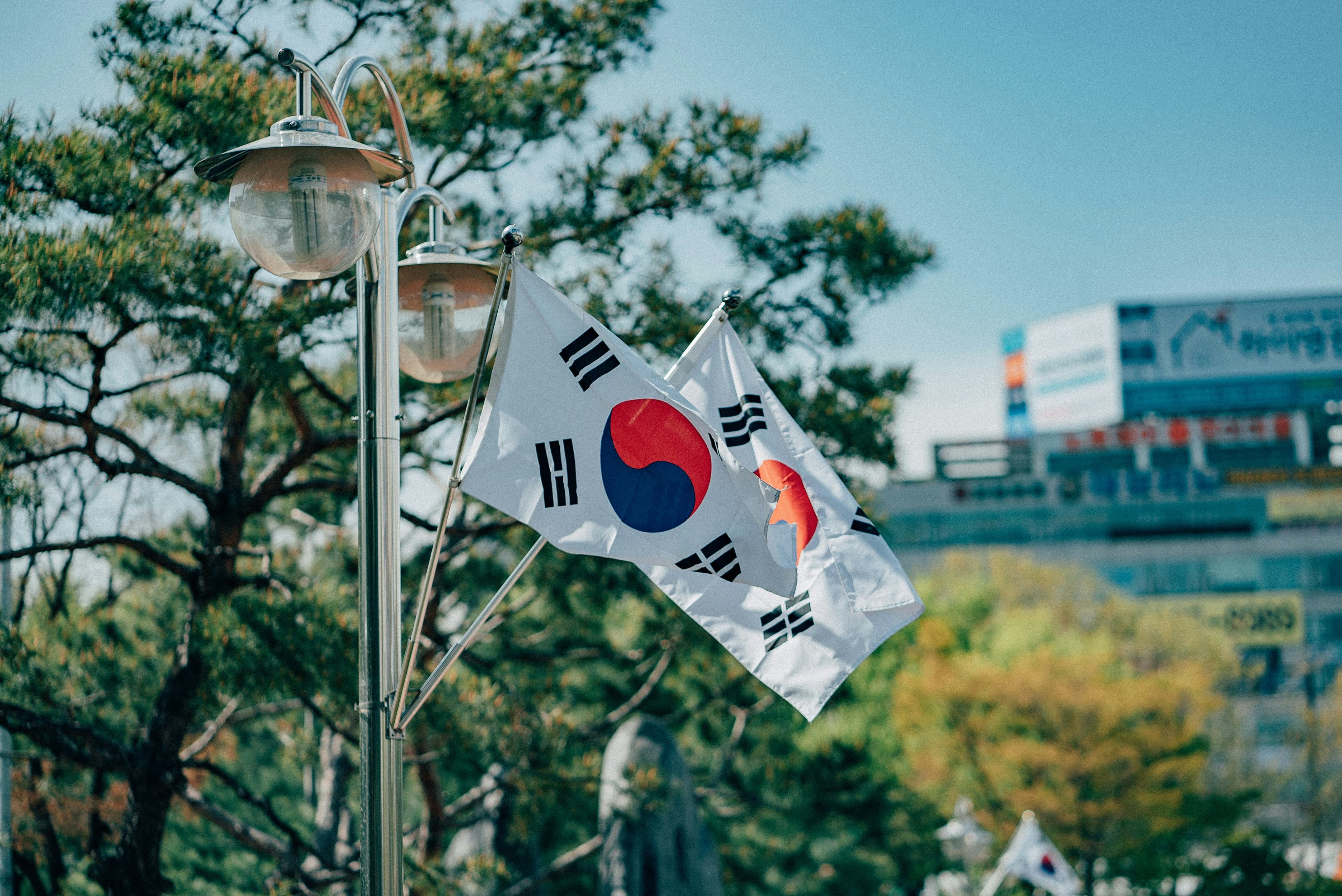
South Korea sends more students abroad per capita than almost any OECD country. In 2022, over 220,000 Korean nationals were enrolled in universities overseas — a number that makes Korea one of the world's most active study abroad nations relative to its population of 52 million. Most go to the United States. A growing number are choosing Australia, Canada, and the UK. A small but increasing cohort is looking at Ireland as a gateway to European careers.
What makes the Korean decision different from the calculation for Indian, Chinese, or Vietnamese students is the combination of factors at play. Korean students navigate one variable that no other nationality faces to the same degree: mandatory military service for males, which shapes the timing of study abroad in ways that affect degree selection, program length, and post-graduation work planning. Beyond military service, Korean students are often weighing a question other nationalities rarely ask explicitly: do I want to come back, or do I want to stay?
The country that is best for a Korean student planning to return to Seoul and join a chaebol or public institution after five years abroad is different from the country that is best for one who wants to build a long-term career and eventually permanent residence in an English-speaking country. This guide breaks down both scenarios — and every variation in between.
What Korean students are actually deciding
Most international study guides treat all nationalities as interchangeable. For Korean students, several factors are either unique or weighted differently than for other nationalities.
The returnee vs settler question
Korean students broadly split into two camps when thinking about life after graduation:
Camp A — Returnees: Plan to complete their degree, gain 1–3 years of international work experience, and return to Korea. Goals include: improving English fluency and international credentials, gaining a foreign degree recognised by Korean employers, and potentially working at a Korean subsidiary of an international firm before transferring back to Seoul.
Camp B — Settlers: Open to — or actively planning — long-term residence in the country of study, with permanent residency as a potential goal. May return to Korea eventually, but building a career abroad is a realistic scenario.
The right country for Camp A and Camp B is often different. For returnees, the UK's 3-year degree structure and strong institutional prestige offers efficient time-in-country without committing to a long immigration process. For settlers, Canada's Express Entry system or Australia's PR pathway offers more certainty than the US H-1B lottery.
Military service: the planning variable no guide mentions
Korean males between the ages of 18 and 28 must complete approximately 18–21 months of mandatory military service (병역). The timing of this service is the most consequential planning variable for male Korean students considering study abroad, yet almost no international study guide addresses it.
Key rules as of 2026:
- You can defer military service while enrolled at a Korean or recognised foreign university (입영연기)
- Deferment is applied for through the Military Manpower Administration (병무청) and must be renewed annually
- Deferment is generally possible until the age of 28 (some conditions allow extension to 30)
- You cannot simply remain abroad indefinitely — you must return to complete service or face legal consequences
- After completing service, you can return abroad to complete your degree or begin work
Practical implications by scenario:
| Scenario | Impact |
|---|---|
| Complete service before studying abroad | Cleanest approach — no interruption to studies or post-graduate career; begin abroad at 21–23 |
| Defer during undergraduate degree (4 years), then complete service | Completes degree abroad, returns to Korea for 18–21 months, then begins career or further study |
| Defer during combined bachelor's + master's (5–6 years), then serve | Maximum study completion; may push final career start to mid-30s for some students |
| UK 3-year degree: defer, complete degree, serve, then work abroad | Efficient — completes degree in 3 years (vs 4), returns for service, then still young enough for international career |
⚠️ Military deferment requires active annual renewal — consult 병무청 directly
Military deferment while studying abroad is not automatic. You must apply for deferment (입영연기) through the Military Manpower Administration (병무청) before leaving Korea, and renew it annually for the duration of your foreign enrollment. Failure to renew can result in a call-up notice even while you are abroad. Rules also change — verify current requirements directly at mma.go.kr or through a Korean military law specialist before finalising your study timeline.
Country-by-country breakdown for Korean students
USA 🇺🇸 — Prestige ceiling, immigration uncertainty
Why Korean students choose the US: The United States has the largest Korean diaspora outside Korea and the world's highest-ranked universities. Nearly 45,000 Korean students were enrolled in US universities in 2023–24 (IIE Open Doors), making it by far the most popular destination. For Korean students targeting the highest salary ceiling in technology, finance, or consulting, US universities — particularly MIT, Stanford, Ivies, and strong state schools like UC Berkeley, Georgia Tech, and UIUC — offer outcomes that no other country can match.
The immigration reality for Korean nationals in the US: Korean nationals are in a meaningfully better position than Indian or Chinese nationals in the US immigration system — the EB-2 and EB-3 green card queues for Korean nationals are typically 1–5 years after H-1B, rather than the decades that Indian nationals face. However, the H-1B lottery itself (approximately 30% selection rate per year) remains a genuine obstacle.
| Factor | Detail |
|---|---|
| Post-study work | OPT 12 months; STEM OPT +24 months |
| H-1B lottery probability | ~30–35% per year; 3 chances during STEM OPT |
| Green card queue — Korean nationals | Approximately 1–5 years after H-1B sponsorship |
| Time from graduation to PR | Realistically 5–10 years; possible faster for STEM with H-1B luck |
| Korean community | Very large — Los Angeles (largest Korean community outside Korea), NYC/NJ, Chicago, Seattle |
Best for Korean students when:
- Targeting elite technology, finance, or consulting careers where the US salary premium is essential
- Academic research career in a field where US institutions lead globally
- Comfortable with H-1B lottery risk and 5–10 year PR timeline
- Financial aid at need-blind schools (MIT, Harvard, Princeton, Yale) materially reduces cost
Avoid if: PR certainty within 3–5 years is a primary goal.
Australia 🇦🇺 — The Korean community favourite
Australia is the second most popular study destination for Korean students, and for understandable reasons: strong universities, a documented PR pathway, a large and well-established Korean community, and a time zone that is geographically closer to Korea than North America or Europe.
Korean community in Australia:
- Sydney: approximately 70,000–100,000 Korean residents, concentrated in Strathfield, Eastwood, and Campsie — among the most developed Korean communities outside Korea and Los Angeles
- Melbourne: approximately 50,000–70,000, concentrated in Box Hill, Glen Waverley, and Doncaster
- Brisbane: growing community; significantly smaller than Sydney/Melbourne
- Korean restaurants, grocery stores (HMart, Korea Foods), cultural centres, and churches are plentiful in Sydney and Melbourne
The Australian PR pathway for Korean students: Australia's Temporary Graduate Visa (subclass 485) gives graduates 2–4 years of post-study work rights depending on their degree:
| Degree Level | 485 Duration (Go8 graduate) | 485 Duration (other) |
|---|---|---|
| Bachelor's | 4 years | 2 years |
| Master's by coursework | 4 years | 2 years |
| Master's by research | 4 years | 3 years |
| PhD | 4 years | 4 years |
After the 485, graduates can apply for a skilled migration visa (subclass 190, 189, or 491) based on state/territory nomination or a points test. The Australian PR pathway is more complex and slower than Canada's Express Entry but is well-trodden by Korean graduates — particularly in nursing, engineering, accounting, and IT.
| Factor | Detail |
|---|---|
| Post-study work | 485 visa: 2–4 years depending on degree and university |
| PR pathway | Skilled migration (189/190/491) — 2–5 years post-485 typically |
| Korean community | Excellent — Sydney's Strathfield is one of the largest Koreatowns outside Korea |
| Time zone vs Seoul | AEST is UTC+10/11 — 1–2 hours ahead of Korea in summer; closest of any major English-speaking destination |
| Flight from Seoul | 9–10 hours to Sydney (direct); 9 hours to Melbourne (direct) |
| Safety | Consistently among the safest countries for international students |
💡 Sydney's Strathfield: the most developed Korean community outside of Los Angeles
If community infrastructure during study is important to you — Korean food, Korean churches, Korean language newspapers, Korean-run hagwons and tutoring, Korean banks — Sydney's Strathfield neighbourhood offers it all. For students who are abroad for the first time and want the security of a strong community while adapting to English-language study, Sydney has an advantage over every other non-American city. Melbourne's Box Hill area offers a similar, slightly smaller Korean hub.
Canada 🇨🇦 — The fastest PR route
Canada's primary advantage for Korean students is unambiguous: Express Entry offers the fastest, most predictable pathway to permanent residency of any major English-speaking destination.
The Express Entry advantage:
- Canadian degrees qualify graduates for the Post-Graduation Work Permit (PGWP) — up to 3 years open work permit
- After 12 months of skilled work experience in Canada, graduates qualify for the Canadian Experience Class (CEC)
- Express Entry draws happen every 2 weeks; most CEC candidates receive an Invitation to Apply within 1–2 years
- No country-of-birth cap — Korean, Indian, and Chinese nationals compete on equal footing
- Realistic total timeline: 3–4 years from starting a 2-year master's to PR grant
For Korean students who want to settle in North America and value immigration certainty over salary premium, Canada is the superior choice compared to the US.
Korean communities in Canada:
- Toronto: Koreatown on Bloor Street West is one of Canada's most established Korean communities; large Korean populations also in North York, Scarborough, and Mississauga
- Vancouver: large Korean community in Burnaby, Coquitlam, and Richmond
- Korean grocery chains (H-Mart, Korean-owned supermarkets), Korean restaurants, and cultural infrastructure are well-developed in both cities
The 2024 study permit cap caveat: Canada capped study permits at approximately 360,000 in 2024 (down from 560,000 in 2023). University-level programs are less affected than college programs, but Korean students should apply significantly earlier than they would have in 2022. The Student Direct Stream (SDS) is not available to Korean nationals — apply through the standard stream with a minimum 12-week lead time before your intended start.
| Factor | Detail |
|---|---|
| Post-study work | PGWP up to 3 years (open work permit) |
| PR pathway | Express Entry / CEC — typically 2–4 years from graduation |
| Korean community | Large — Toronto, Vancouver; established cultural infrastructure |
| Tuition | CAD $28,000–$52,000/year (varies by province) |
| Flight from Seoul | ~11 hours to Vancouver (direct); ~14 hours to Toronto |
UK 🇬🇧 — Efficiency for returnees, prestige for all
The UK occupies a specific strategic position for Korean students: it offers the highest institutional prestige density outside the US (Oxford, Cambridge, UCL, Imperial, LSE, Edinburgh), a 3-year undergraduate degree that saves one full year of tuition and living costs compared to four-year degrees in Australia, Canada, and the USA, and a Korean community concentrated in London's New Malden — the largest Koreatown in Europe.
Why the UK is uniquely attractive for Korean returnees: A Korean student completing a 3-year bachelor's at UCL or Edinburgh spends approximately:
- 3 years tuition + living: approximately £25,000–£35,000/year × 3 = £75,000–£105,000 total
- Equivalent 4-year program in Australia: approximately AUD $35,000/year × 4 + living = significantly more
For students who are 100% returning to Korea and want to maximise the credential-to-cost ratio — particularly for humanities, law, business, and social sciences where UK degrees carry strong recognition with Korean employers — the UK's 3-year structure is efficient.
Post-study work rights: The UK Graduate Route provides 2 years of post-study work rights (3 years for PhD graduates) for graduates of recognised UK universities. This allows work experience in the UK after graduation, but the Graduate Route is not extendable and does not directly lead to a streamlined PR pathway. Korean students who want to stay in the UK long-term face a more complex immigration process than in Canada or Australia.
London's New Malden — the European Koreatown: New Malden in south-west London is home to the largest Korean community in Europe — approximately 20,000–30,000 Korean residents, with Korean restaurants, Korean supermarkets, Korean churches, and community associations in concentrated density. For Korean students studying in or near London, the cultural adjustment is significantly easier than in other European cities.
| Factor | Detail |
|---|---|
| Post-study work | Graduate Route: 2 years (3 for PhD) — not extendable, no direct PR pathway |
| Undergraduate duration | 3 years — saves one year vs USA, Canada, Australia |
| Prestige | Oxford (#3), Cambridge (#5), Imperial (#8), UCL (#22), Edinburgh (#22) — QS 2026 |
| Korean community | New Malden, London — largest Koreatown in Europe |
| Tuition | £25,000–£38,000/year (international students) |
| Flight from Seoul | ~12 hours to London Heathrow (direct Asiana, Korean Air) |
Ireland 🇮🇪 — The emerging option
Ireland is the smallest of the five countries by international student volume, and the Korean student community is correspondingly smaller. But it occupies a unique strategic position: Dublin is home to the European headquarters of Google, Meta, Apple, Microsoft, LinkedIn, Airbnb, and dozens of other major technology companies. A degree from Trinity College Dublin or University College Dublin, combined with the right post-study work positioning, can serve as an effective gateway into European careers that no other English-speaking country provides.
The Irish Critical Skills Employment Permit allows international graduates to work for qualified employers after a short transition, and Ireland's path to long-term residence — while not as simple as Canada's Express Entry — is manageable for skilled technology workers with qualifying job offers.
Who Ireland makes sense for:
- Korean students specifically targeting careers at major tech companies' European operations (Google, Meta, Apple Dublin offices)
- Students who want a European base from which to access the wider EU job market
- Students considering permanent residence in Europe rather than North America
- Cost-conscious students: Ireland's tuition and living costs, while not cheap, are lower than London
| Factor | Detail |
|---|---|
| Post-study work | Third Level Graduate Scheme: 12–24 months job-seeking permission |
| Top universities | Trinity College Dublin (#89 QS), University College Dublin (#181) |
| Tech hub | Dublin hosts European HQ of Google, Apple, Meta, Microsoft, LinkedIn |
| Korean community | Small but growing — approximately 8,000–10,000 Korean residents in Ireland |
| Tuition | €14,000–€25,000/year (international) — cheaper than UK |
| Flight from Seoul | ~14 hours via Amsterdam or Frankfurt (no direct) |
Cost comparison in Korean Won terms
The actual cost burden for Korean families is felt in Won, not in the destination currency. Exchange rate fluctuation is a real planning variable — the KRW/USD rate has ranged from 1,100 to 1,450+ in recent years, significantly affecting the real cost of US study in particular.
Total estimated annual cost (tuition + accommodation + living) in KRW equivalents (March 2026 rates):
| Country | Est. Annual Total Cost | KRW Equivalent (approx.) | Notes |
|---|---|---|---|
| USA (private T-50) | USD $70,000–$90,000 | KRW 93M–120M | Highest absolute cost; need-blind aid can reduce dramatically |
| USA (public flagship) | USD $45,000–$60,000 | KRW 60M–80M | Best US value; competitive programs |
| UK (London) | £40,000–£55,000 | KRW 73M–100M | 3-year degree saves 1 year total |
| UK (non-London) | £33,000–£45,000 | KRW 60M–82M | Edinburgh, Manchester, Leeds significantly cheaper than London |
| Australia (Sydney/Melbourne) | AUD $55,000–$75,000 | KRW 50M–69M | Large Korean community offsets adjustment cost |
| Australia (other cities) | AUD $45,000–$60,000 | KRW 41M–55M | Adelaide, Brisbane, Perth notably cheaper |
| Canada (Toronto/Vancouver) | CAD $55,000–$75,000 | KRW 55M–75M | Expensive cities; Montreal saves CAD $10,000–$15,000/year |
| Canada (Montreal/other) | CAD $38,000–$55,000 | KRW 38M–55M | McGill + Montreal is exceptional value |
| Ireland (Dublin) | €35,000–$50,000 | KRW 52M–75M | Cheaper than UK; EU access premium |
Exchange rates used: USD 1,330 / GBP 1,825 / AUD 920 / CAD 1,000 / EUR 1,490 per KRW (approximate March 2026).
💡 Montreal is the best-kept cost secret for Korean students wanting a North American degree
McGill University ranks #46 globally (QS 2026) and offers programs in English. Montreal's cost of living — roughly CAD $1,800–$2,400/month all-in for a shared apartment, food, and transport — is approximately 40% lower than Toronto and 50% lower than Vancouver. The Korean community in Montreal is smaller than Toronto or Vancouver, but the French-English bilingual environment and low cost make it genuinely exceptional value for Korean students who are comfortable with a lower-density Korean community during study.
What Korean chaebols actually look for in foreign degrees
For Korean students planning to return and join a major Korean corporation, the institutional name and field matter more than the country.
Samsung Electronics, SK Hynix, LG Electronics (engineering and technology roles): The most valued international engineering credentials are from MIT, Stanford, Caltech, Carnegie Mellon, Georgia Tech (USA), ETH Zurich (Switzerland), and the top UK engineering schools (Imperial, Cambridge). Among non-US English-speaking countries, Australian NUS-equivalent positions are less developed — though UofT engineering and Waterloo CS carry strong recognition.
Samsung, Hyundai, Lotte (business / management roles): Top MBA programs from Wharton (UPenn), Harvard Business School, INSEAD, and LBS carry the strongest brand recognition. McKinsey and Bain & Company experience from overseas offices is highly valued. Undergraduate degrees from Ivies, Oxford, and Cambridge are well-recognised; other foreign undergraduate degrees are treated more neutrally — the specific institution and GPA matter more than the country.
Korean government, public sector, academia: Domestic degrees (SNU, KAIST, POSTECH, Yonsei, Korea University) remain strongly preferred for government and academic positions. Foreign PhDs from top US/UK programs are well-received in academia; foreign undergraduate and master's degrees for government positions carry less automatic weight.
General perception of foreign degrees in Korean hiring: Korea has become significantly more international-degree-friendly over the past decade. Most major Korean companies now have formal recognition processes for foreign degrees from accredited universities. The most important factors for returning Koreans are: institutional rank, GPA, English proficiency (demonstrated by degree completion), and any Korean-market work experience through internships during study.
Situation-based recommendations
If you want to return to Korea after 3–5 years abroad
→ UK (London, Edinburgh, Manchester) or Australia
The UK's 3-year degree is time-efficient and carries strong institutional prestige. Combine a 3-year UK bachelor's with 1–2 years of Graduate Route work experience and you have a compact, high-credential 4–5 year package that Korean employers recognise well.
Australia's strength for returnees is the 485 visa giving 2–4 years of work experience in an English-speaking environment, which is precisely what Korean corporations value. The large Korean community makes adjustment easier.
If you want to stay abroad long-term — maximum PR certainty
→ Canada (Express Entry is the answer)
For Korean students who want a clear, predictable path to permanent residence, Canada is unambiguously the best choice. Express Entry treats Korean nationals the same as everyone else, PR timelines are documented and achievable in 2–4 years post-graduation, and the Korean community in Toronto and Vancouver makes the adjustment manageable.
If you are targeting elite technology or finance careers and willing to accept immigration uncertainty
→ USA (MIT, Stanford, CMU, UC Berkeley, Georgia Tech)
The US salary premium in technology is real and substantial. Bay Area software engineering salaries of USD $150,000–$200,000 for new graduates significantly exceed what comparable Canadian or Australian careers offer. Korean nationals face better H-1B and green card odds than Indian or Chinese nationals. For students who can access elite US programs and are career-focused on high-compensation fields, the US case is strong.
If you are completing military service in your mid-20s and want maximum time efficiency
→ UK (3-year degree) or Australia (2-year master's on PGWP + 485)
A male Korean student completing military service at age 23–24 who then does a 3-year UK bachelor's finishes at 26–27 — still young enough for a good career start in either the UK or Korea. Alternatively, a 2-year Australian master's (completing at 25–26) followed by a 2-year 485 visa provides substantial international work experience before a return decision is required.
If cost is the primary constraint
→ Australia (regional cities) or Canada (Montreal)
University of Adelaide, Griffith, Deakin, and other regional Australian universities provide quality degrees with substantially lower costs than Sydney or Melbourne — and still qualify for the 485 visa. Canada's McGill in Montreal combines a #46 global ranking with a living cost approximately 40% lower than Toronto or Vancouver.
Frequently asked questions
Can I maintain my military deferment if I change universities while abroad? Military deferment is tied to enrollment at an accredited educational institution. Transferring universities does not automatically cancel deferment, but you must notify the Military Manpower Administration (병무청) and ensure the new institution is recognised for deferment purposes. Gaps in enrollment — including gap semesters or years — may affect deferment eligibility. Verify any changes with 병무청 before acting.
Do Korean dual nationals face different military obligations? Korean dual nationals who hold Korean citizenship are subject to Korean military service law regardless of their other citizenship. Males born with Korean citizenship generally cannot renounce Korean citizenship to avoid military service before age 18 without penalty. If you have dual nationality, consult a Korean lawyer specialising in nationality and military law for your specific circumstances — the rules are complex and fact-specific.
Is Korean food and community quality a realistic factor when choosing a country? Yes, for many students it is. The psychological adjustment to studying abroad is significantly affected by the availability of familiar food, social community, and cultural connection. Students who underestimate this factor often struggle with isolation during the first year. Sydney's Strathfield, Toronto's Bloor Koreatown, and LA's Koreatown are genuinely developed communities — not just a few restaurants. If this matters to you, it is a legitimate data point in your decision, not a superficial one.
Will a foreign degree hurt my chances of joining a Korean government position? For most Korean government positions, candidates with foreign degrees undergo a credential evaluation (학력인정) through the Korean Ministry of Education's affiliated bodies. Degrees from accredited universities in the USA, UK, Australia, and Canada are generally recognisable. However, for positions where domestic degree networks and connections matter — such as in the foreign affairs ministry, major government-adjacent institutions, or highly competitive civil service tracks — domestic degree holders may have structural advantages. Research your specific target agency before making degree decisions based on government career goals.
Do any of these countries have Korean-language support at universities? Yes. Most major universities in Australia, Canada, the UK, and the US that enrol significant Korean student populations offer Korean student associations (한인 학생회), some Korean language support during orientation, and connections to local Korean church communities that provide informal support networks. Sydney, Toronto, Vancouver, and Los Angeles universities in particular have well-organised Korean student communities that provide substantial peer support during the adjustment period.
How much does it cost Korean students to visit home from each country? Return flights Seoul–Sydney: approximately KRW 500,000–1,000,000. Seoul–Vancouver: approximately KRW 700,000–1,200,000. Seoul–London: approximately KRW 800,000–1,400,000. Seoul–New York: approximately KRW 900,000–1,500,000. Seoul–Dublin: approximately KRW 1,000,000–1,700,000 (via connection). Australia's geographic proximity to Korea is a real lifestyle advantage — a 9–10 hour direct flight is more practical for occasional home visits than 14+ hours to North America or Europe.
📊 Compare countries by ROI for Korean graduates
See tuition costs, graduate salaries, and payback periods for Australia, Canada, the UK, the USA, and Ireland — side by side and filterable by field.
Will your degree actually get you a visa — and PR?
CampCareer scores any major across employment, visa pathway, market demand, AI exposure, and ROI — using verified government and labour-market data. Get your result in about a minute.
Statistics on Korean students studying abroad are drawn from KEDI (Korean Educational Development Institute) 2022–23 data and IIE Open Doors 2024. Military service rules reflect the Military Service Act as of early 2026 — rules are subject to amendment and individuals should verify current requirements directly with the Military Manpower Administration (병무청) at mma.go.kr. Exchange rates are approximate March 2026 values and will fluctuate. University rankings from QS World University Rankings 2026. This guide is for informational purposes — it does not constitute immigration, legal, or financial advice.