Salary range
EUR 54k–64k
Destatis national median-to-mean benchmark · median EUR 54k
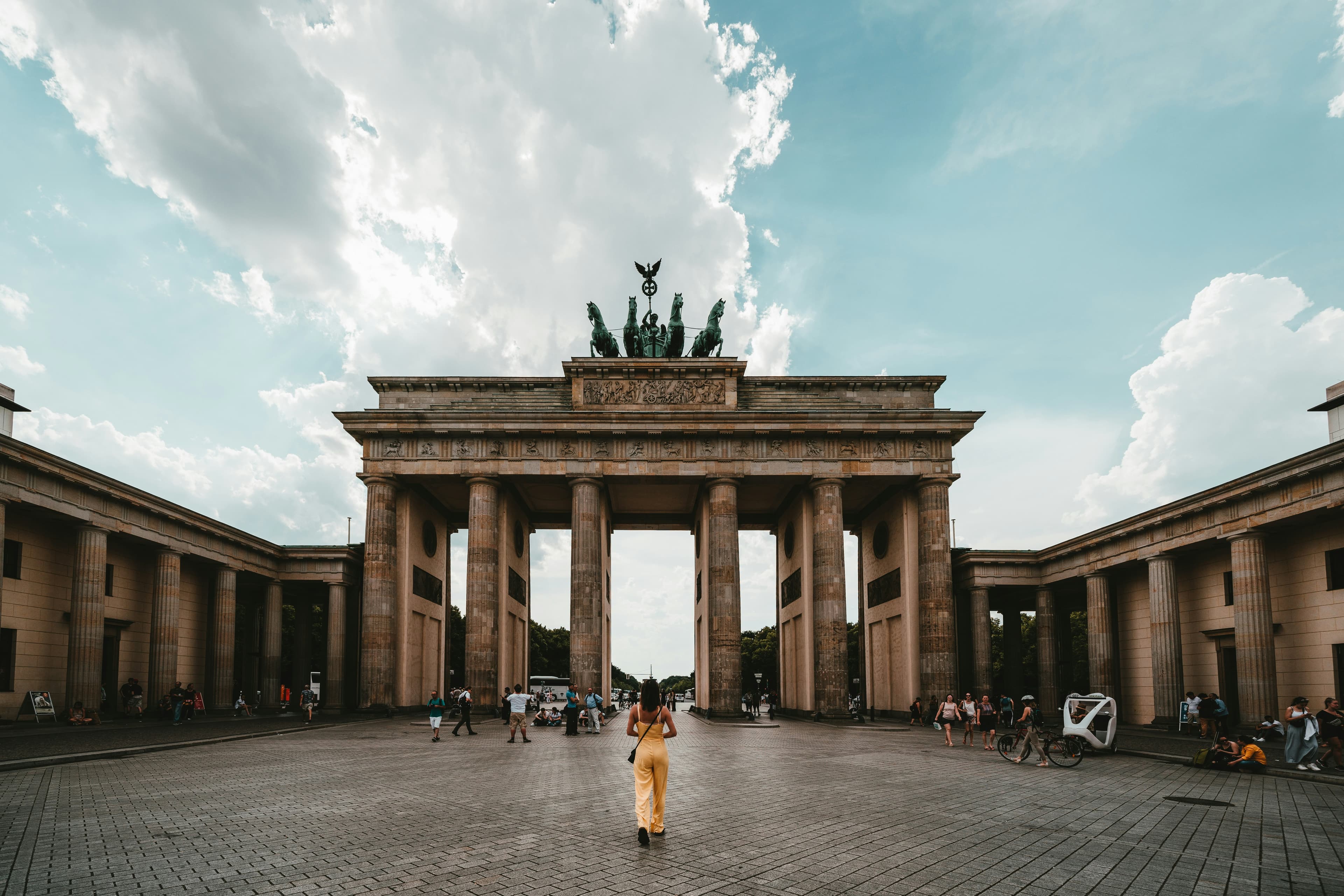
Countries
DE · 7 regions · 17 cities · EUR
Explore career demand, study options and regional context across Germany before comparing your next step.
Germany offers a large public-university and applied-sciences sector alongside deep engineering, industrial, digital and healthcare labour markets.
Visa options
6
Study, EU Blue Card and skilled-worker pathways
Salary range
EUR 54k–64k
Destatis national median-to-mean benchmark · median EUR 54k
Living costs
EUR 992–1.2k
Visa funding requirement to DAAD planning benchmark · tuition excluded
Winter and summer semesters
The winter semester commonly begins in October and the summer semester in April. Application deadlines and teaching dates vary by institution and programme.
Mechanical, Electrical & Industrial Engineering
Engineers and technical specialists remain central to Germany's industrial base.
Computer Science, Software & Cybersecurity
IT specialists are highlighted among professions in demand.
Nursing, Medicine & Health
Healthcare and nursing roles face persistent staffing demand.
Energy & Environmental Technologies
Energy transition and infrastructure investment support technical demand.
Civil Engineering & Construction
Construction and skilled technical work remain important shortage areas.
Business, Logistics & Supply Chain
Germany's export economy supports logistics, operations and business analytics.
Technical University of Munich
Research university · Munich
LMU Munich
Research university · Munich
Heidelberg University
Research university · Heidelberg
Humboldt University of Berlin
Research university · Berlin
Free University of Berlin
Research university · Berlin
RWTH Aachen University
Research university · Aachen
Karlsruhe Institute of Technology
Research university · Karlsruhe
TU Berlin
Research university · Berlin
Hamburg University of Applied Sciences
College / Polytechnic · Hamburg
Munich University of Applied Sciences
College / Polytechnic · Munich
Professions in demand